



Even as gambling’s relationship with sports marketing continues to face intense scrutiny, Paddy Power continues to be lauded for its partnership with the Darts World Championship.
While the Professional Darts Corporation provides a unique opportunity, Paddy Power’s support of the Championships has laid out a blueprint for the positive impact the industry can have.
Since taking the mantle of title sponsor three years ago, the Flutter brand has committed to using its platform to raise money for Prostate Cancer UK, initially donating £1,000 for every maximum checkout, before expanding its commitment to include £60,000 for every perfect nine-dart leg achieved.
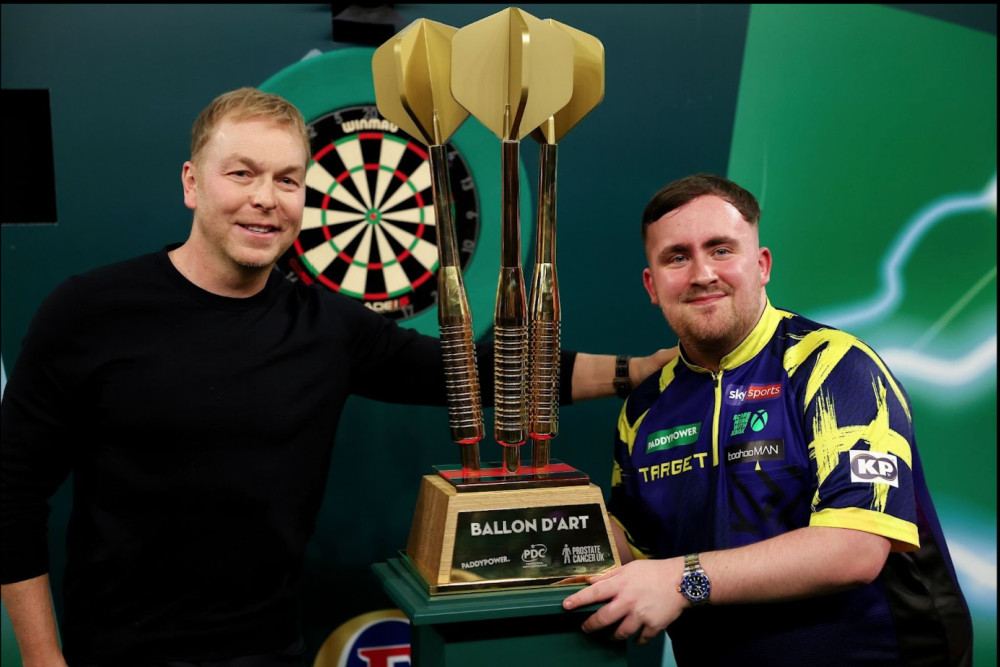
This has resulted in the operator donating over £1m each year, peaking this year, following the victory of Luke Littler on 3 January, with £1,127,000 raised despite a drought of nine-dart legs.
By rolling out such initiatives, Paddy Power has demonstrated how activations can not only provide vital funds to a charity such as Prostate Cancer UK but also generate positive headlines and maximise brand exposure throughout the tournament.
The partnership has added a layer of extra anticipation to the tournament, heightening excitement around the event and the possibility of a nine-darter changing the life of a fan.
Increased prize money… and viral moments
Like most successes in life, Paddy Power has enjoyed some level of good fortune along the way.
Its decision to sponsor the tournament coincided with the debut of the teenage sensation Luke Littler. The now two-time world champion shot to fame with a meteoric run to the final at just 16-years old, capturing the imagination of fans around the world and supercharging the rising popularity of darts in the last three years.
In light of the growing popularity, this year the PDC made the decision to increase the number of players in the tournament from 96 to 128, while also hiking prize money.
Littler became the first player to scoop a £1m prize in darts when he hit double 15 to complete a 7-1 rout of the Dutchman Gian van Veen.
While not wholly responsible, it would be remiss not to acknowledge the role Paddy Power has played in promoting the sport during the stewardship of its biggest tournament, and in doing so, boosting darts’ complete ecosystem beyond the world championships.
From an operator standpoint, facilitating a larger playing field also offers greater opportunity for viral moments that can further boost brand exposure.
The latest iteration saw David Munyua, Kenya’s first-ever participant in the tournament, take social media by storm with his opening round win, while Justin Hood’s run to the quarter finals on debut also created further headlines.
MUNYUA MAKES HISTORY! 🇰🇪
— PDC Darts (@OfficialPDC) December 18, 2025
INCREDIBLE!
David Munyua produces one of the biggest shocks in World Championship history to dump out Mike De Decker!
What a moment for Kenyan darts!#WCDarts | R1 pic.twitter.com/XRkKcaErfd
For Paddy Power, having its branding associated with such moments is invaluable in creating a positive link between its brand and the tournament.
Making a positive impact
Although there are countless examples of when gambling brands have used their sponsorship to make a positive impact, none have hit the headlines like Paddy Power and the darts.
An example of this was the decision to blur its logo on promotional material during the semi-finals to raise awareness for the challenges faced by professional darts player Ryan Searle, who suffers from the hereditary eye condition called Autosomal Dominant Optic Atrophy.
A quick search on X during the broadcast showed swathes of viewers questioning why the Paddy Power logos appeared blurry, prompting them to learn more about the condition and keeping the conversation focused on Paddy Power.
Epitomising the Paddy Power approach, the operator clearly saw the partnership as far more than being reliant on assets, as they engaged fans across various social media platforms with creative and sometimes mischievous activations.
Looking forward, it’s clear that gambling brands will remain synonymous with sporting events. This is despite moves like the Premier League choosing to limit industry exposure through measures such as the front-of-shirt ban for gambling sponsors, which will come into effect at the start of next season.
Unprecedented initiatives like Paddy Power’s bigger 180 campaigns over the last three years have shown others that maximising sponsorship of events requires taking an approach focused on creating positive headlines and a buzz around a brand, rather than relying on a sporting event’s prestige and organic publicity.