


Affiliate Leaders speak to industry professionals to gauge their reaction to the recent updates from Google on how it is evolving its search model with AI.
The phrase ‘SEO is dead’ has been thrown around a lot in the last few days, months, and even years – and it seems the industry is getting closer and closer to the end of SEO as we know it with each Google update, or is it? And what do marketing professionals actually think?
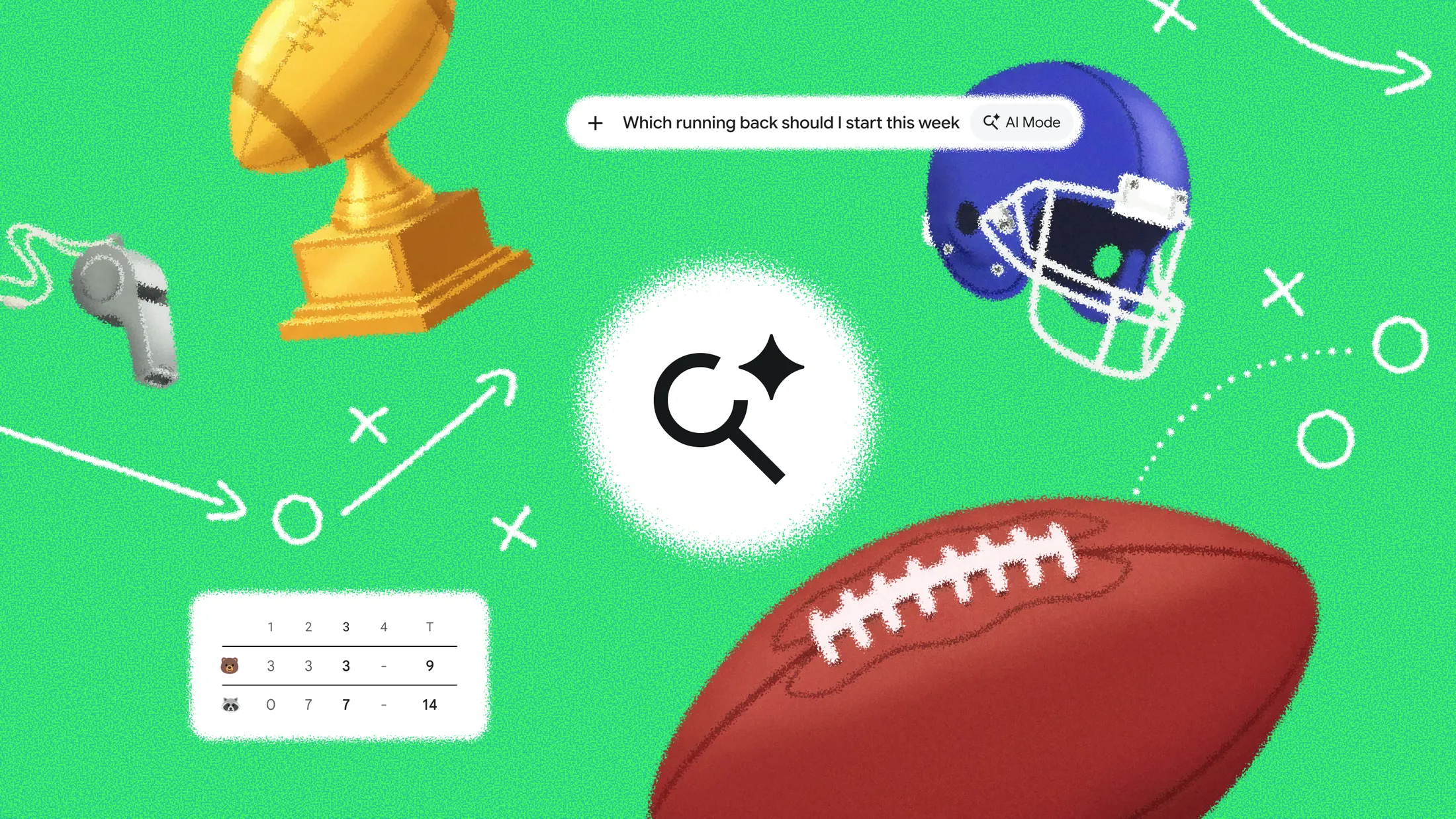
Google’s latest update, announced at I/O 2026, has outlined its plan to transform AI Mode into an intent-based search model, moving away from keyword search.
This includes an intelligent search box with Google ditching the infamous ten blue links and replacing them with an interactive experience using “information agents” designed to scrape content.
Affiliate Leaders spoke to a range of the best and brightest in SEO and marketing professionals to find out how this will affect the landscape.
“For a while now, we’ve been preparing for a full integration of AI search, and this feels like another significant step forward,” says Haider Ali, head of organic performance at ROAST.
This mirrors the evolution of search behaviour, Ali explains, as the discovery journey becomes more conversational and personalised.
“The challenge brands will come across will be a continued impact on traffic and CTR [click-through rate], which again is something we’ve been preparing for. What matters more than ever is building your brand as a trusted, reputable source, strengthening your brand entity, and pushing/ focusing on organic discoverability across multiple platforms, not just Google.”
The AI-forward shift
Of course, AI is at the centre of this new update – and although the current changes are only being applied to AI Mode search, it represents a broader industry shift away from traditional search models and methods, which is reshaping discovery all-round.
“Visibility is no longer about SEO rankings or paid search positions, but about your brand’s eligibility to even enter the conversation,” explains Ella Kersey, growth director at Brandwidth.
“Eligibility now spans across all digital touchpoints, from PR and content to reviews, social and customer experience signals. Brands that stand out will build consistent authority that AI systems can recognise and trust. It’s looking at the full digital ecosystem and how it works together,” she explains.
For advertisers, this means that paid inclusions in AI answers are likely to become just as important as organic eligibility – and Google has already started trialling ads inside AI search.
‘AI search expertise matters’
“This is also why AI Search expertise matters more than ever,” adds Neil Goddard, head of SEO and content at TUG agency.
Discovery is increasingly happening before audiences ever click through to a website, and algorithms are deciding what is pushed, summarised, and recommended. Brands now have two challenges – fragmentation and measurement.
If your brand is fragmented across the web, Goddard explains, the likelihood of AI systems including your content drops as AI systems reward consistency, confidence, and consensus.
Marketers also need to re-evaluate their measurements. Traditional search reporting already overstates certainty. He says: “In a world of AI summaries, zero-click journeys and agent-led discovery, last-click attribution becomes even less reliable.
“We’re entering a period of complete reinvention across search, media and digital discovery. The pace of change is moving faster than most internal teams can realistically keep up with alone. Brands need partners who understand not just the technology itself, but how to test, measure and adapt commercially as behaviours shift.”
Brands have the opportunity to use AI to dramatically accelerate learning, and better understand intent – but those who chase “automation for automation’s sake”, will be outperformed by those who can deeply understand the tools, he concludes.
“Additionally Google’s aggressive focus on the developer community via its expanded AI Ultra plans mirrors its historic Android playbook,” adds Eoin O’Neill, chief technology officer at TUG.
“Just as Google subsidised early Android development to build an app ecosystem that drove mass adoption, it is now courting AI developers to ensure the next generation of digital tools are built natively on Gemini infrastructure.”
SEO is not dead
So, is the sensational ‘SEO is dead’ headline an exaggeration? Well, partly. This is a very drastic change for AI Mode users, and signals an intent from Google to move towards search as an experience, rather than a discovery process. But it’s not the end of the road for search itself.
“This update isn’t the end of search traffic. It’s the end of search traffic for one specific business model (sites whose only job was to be the page Google sent the click to),” explains Michael Norris, chief marketing officer at Youtech.
“Ad-supported publishers and thin affiliate sites built around informational queries are going to feel this fast, and a lot of them won’t make it.”
He explains that search has always been “two different things wearing the same uniform: research and transaction”. The first half will be encompassed by AI Mode – queries that feed the affiliate and ad ecosystem are now answered in the box, and those clicks aren’t coming back.
The transaction side though, is resilient to this. “Someone might absolutely use AI Mode to find a plumber, a dentist, or a personal injury attorney,” he points out, “it doesn’t matter how they got there, because the transaction still ends in a phone call”.
How does this affect brands, advertisers, and businesses? Well, Norris explains there are a few that should be worried, such as content sites that monetise impressions, affiliate sites in commoditised review categories, and “any brand that built its entire funnel on top-of-funnel informational SEO”.
“The real shift for marketers isn’t ‘SEO is dead’. It’s that the value of being mentioned (cited as a source inside AI Mode, recommended by a search agent, surfaced in a generative UI) is going to start outpacing the value of being clicked,” he says.
“The ranking that matters now is whether the AI trusts you enough to point at you, and that’s a fundamentally different optimisation problem than what most agencies have been selling for the last 20 years.”
The industry is clearly not surprised by this update – it is the natural next step in search after years of Google investing in AI, agentic AI, and search discovery. This is a transformational shift not just for SEO, but for a number of different sectors that rely on traffic and search. It is also likely to be the beginning of the end for some, especially those that can’t evolve their business models in the little time they have.