



The Affiliate Leaders team reported live at Advertising Week Europe in London this week. Read below to see the latest news, debates and chatter among marketers at the conference.
Day 3
4.00pm: Until next time
Well, that’s all from us. Thank you for following our first ever live blog.
We’ll leave you with three key takeaways from AWE2026, and hopefully you’ll join us at the next one!
- Authenticity amplifies the message. Connecting with your audience in a way that will resonate with them is much more valuable than an extensive reach with low exposure.
- Be customer obsessed. Customers are the core of any advertising journey, so you need a deep understanding of the audience; how they show up, how they feel about your brand, and what channels this translates to.
- Get rid of marketing fluff. Journalists are overwhelmed with pitches, and agencies often leap into ‘sell mode’. To cut through, prioritise relationships and quality connections with agencies and marketers that understand your brand and your vision.
See you all at AWE2027!
3.20pm: Pirelli’s storytelling journey
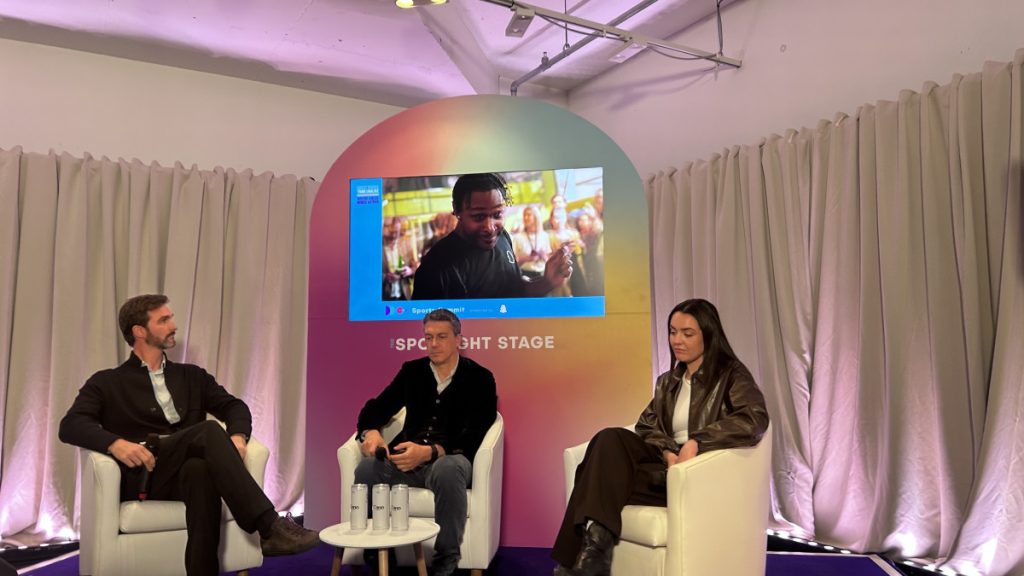
For the next session of the day, we’re with Pirelli, hearing about how it turned sponsorship into “emotionally resonant, platform-native storytelling”. This panel features Marco Marranini, chief operations officer of Open Influence, presenter Becky Evans, and Gianluca Renato, head of sponsorships and digital communities management at Pirelli.
Renato explains he realised that sponsorship wasn’t enough because it was limited to where the brand was exposed, so Pirelli found creators and influencers who were experts in the industry to amplify, participate, and create emotion and content for the audience, and could talk about the value they add to the motorsport world.
Evans, who was one of the influencers invited to the Vegas GP for that reason, says that Pirelli is a heritage brand which opened up the “behind the scenes” to allow fans to view the story differently, being more relaxed about the content that they gave to influencers and giving them flexibility to create authentic content.
2.40pm: Authenticity in sport
Next up, Pablo Dopico, head of growth marketing services at Sportradar, explores how brands can identify and leverage real-time sports moments while staying both relevant and authentic.
Being there, no matter the result, can add value to the brand and helps build authenticity. He points to a sponsor like Heineken: “If the team wins they can celebrate by having a beer. But you can also play a little bit on the humour side and say, well, you know, we’ve lost again. At least we can have a beer and think about the next game.”
Big brands are able to be reactive, with war rooms following huge sports events, monitoring for opportunities to take advantage of big moments – but increasingly, brands don’t need that extensive infrastructure to effectively react. Smaller teams can create quickly and social media means ads can be spread quickly without huge budgets.
“They don’t need to have that big war room anymore, they’re getting all the capabilities of a war room, all the capabilities of the campaign, but they don’t have to do anything else. It’s running, it’s ready, it’ll happen automatically,” he says.
1.40pm: Community and fandom drives conversation
Now, we’re listening to ‘Sport has entered the chat’, hosted by Kahlen Macaulay of Snapchat, featuring Mark Alford, director of Sky Sports News, and Ruesha Littlejohn, Ireland and Crystal Palace footballer.
Snapchat is at a record audience level, and that, Macaulay explains, is because it is a “conversation driver”.
The community, fandom, and shared connection with the audience is what Littlejohn values about the platform. She enjoys the authenticity, saying “you can’t go back and edit”, which helps build real connections with the audience.
Athletes are often overly media trained, Alford explains, but Sky Sports is trying to change that. They are legitimising fan voices and giving platforms to influencers who are excited about the sports.
“Our role at Sky Sports is to be that bit in-between the live match and the conversation [.] It’s all part of a very valid ecosystem,” he explains.
“We’re past the point of thinking the audience must come to us, we need to go and meet the audience where it’s at.”
12.30pm: Good content has no marketing fluff
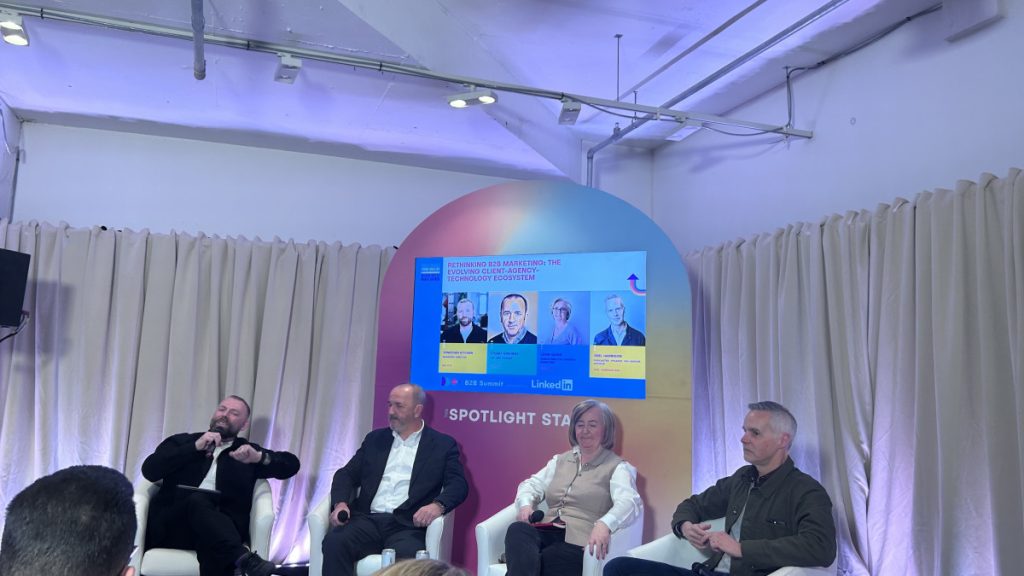
Next up, we’re listening to a dynamic discussion about the ‘evolving agency-technology ecosystem’ featuring Red Kite’s managing director Jonathon Kitchen, Beettoo chief exec, Stuart Giddings, Medidata senior director of growth marketing, Leigh Quigg, and Joel Harrison, podcaster and influencer.
The B2B world has gone full circle they agree. Agencies are now functioning as an “extensions of the marketing teams”, Quigg explains. Partnerships are crucial to help both agencies and client side marketing teams to adapt to a tumultuous landscape, especially given with the introduction of AI and the disruption of marketing teams, adds Harrison.
Quigg explains that she ran chemistry meetings to determine whether a good relationship with agencies who could understand the business, listen to the company’s needs, and not “immediately leap into sell mode”.
“You can’t have a good relationship If it’s not built on trust and honesty. You have to be able to disagree agreeably,” she says.
“Good content is without marketing fluff,” Quigg explains.
It has to have reasoning and value. A neutral opinion of your marketplace or industry can be an example of true thought leadership that can build trust, Giddings adds.
12.00pm: ‘We are in a trust recession’
Sam Anderson, intelligence editor for The Drum hosted a session with Christina Minshull, chief exec of The Brand Audit and Jennifer Roebuck, chief marketing officer and co-founder of Tortilla Mexican Grill, on attention in B2B marketing.
B2B marketing is evolving at an unprecedented rate, with buyers now expecting the same creativity and authenticity they experience in B2C.
It’s meant attention is become harder for brands, but not impossible.
Roebuck points to the rise of X, formerly Twitter, as one of the first places to go now – a platform many marketers had dismissed a few years go.
“In fintech, one of the most common go to market strategies we had for a product was community driven activation. So we would incentivise the community, bring them into the business, build in partnership with them, and then they would become the audience.
“This is very common on X as well. So if you’re into the frontier side of technology, most of that breaks on X first. I would say LinkedIn is about a month behind.”
Minshull, who says she remained on X after a lot of people left, because “there are a lot of brilliant minds on there”, you just have shut out the toxic stuff. And that brings in the trust factor.
“We’re in a trust recession right now… There’s so many charlatans out there right now, and so many sales bros promising things that, frankly, are just like not reality,” she says.
“We have to think very carefully about our news consumption. I think we have to think very carefully about who we’re paying attention to, who we’re giving platforms to.”
10.40am: The old ways are no longer working in B2B
‘The thing about innovation is… nobody wants it,” says Mimi Turner, head of Marketplace Innovation, LinkedIn. “Businesses don’t want change.”
B2B is often considered to be a more complex category for advertisers, despite it being a $20trn sector – that’s more then three times B2C which sits at $5.5trn
For the past 25 years, Turner says B2B marketers have relied on a framework, which in part relied on social and political cultures than anything else.
However, in todays world that is no longer is working. The industry is experiencing change: AI is the technotic shift that’s happening; there is a generational shift – most of buyers are now millenials and gen’s Turner points out.
And the final one, is something “we don’t want to talk about” and this is “sales plays a much smaller part of the conversation than it used to”.
The buyers journey doesn’t unfold in the sequential way it used: awareness > consideration > purchase .
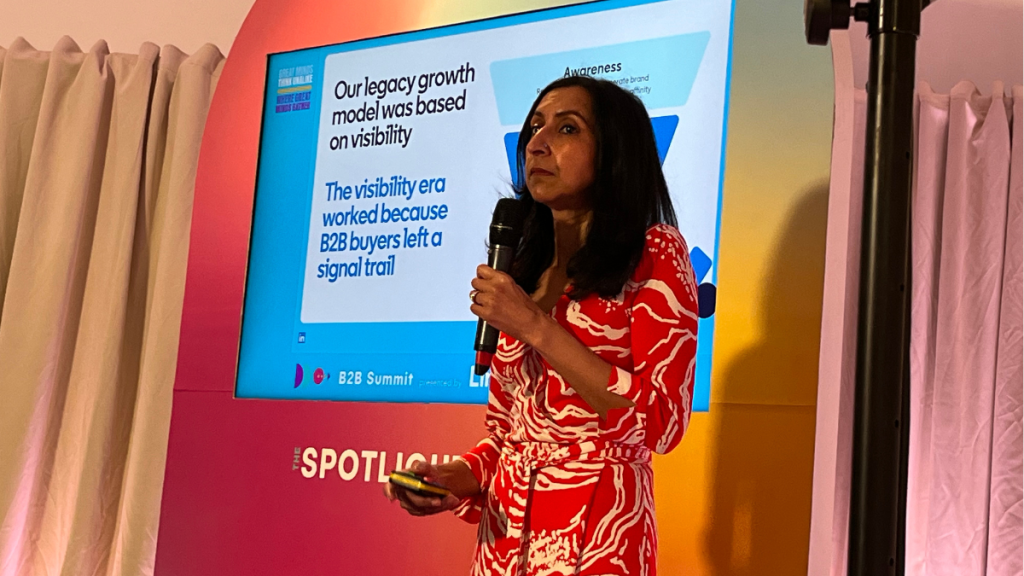
Buyers are going to LLMs such as ChatGPT, Gemini etc before they consider and make a purchase. This is opening up new opportunities for perhaps younger brands.
Buyers ask very human questions, that means, if you are brand that is newer but you have content that “contours to the buyers questions”, you can gain visibility in the LLMs.
Equally legacy brands, they might be famous because of their presence, but if they are not relevant or able to answer buyer queries, they may not appear.
9.00am: Final day and ready to go
We’ve fuelled up and ready to go for the final day of Advertising Week Europe. Things to look forward to today include the latest on sports marketing, B2B brands navigating search and creator economy.
Day 2
3.10pm: Until tomorrow
That’s all from us today, join us again tomorrow for the final day of Advertising Week Europe!
2.20pm: A journalist’s perspective
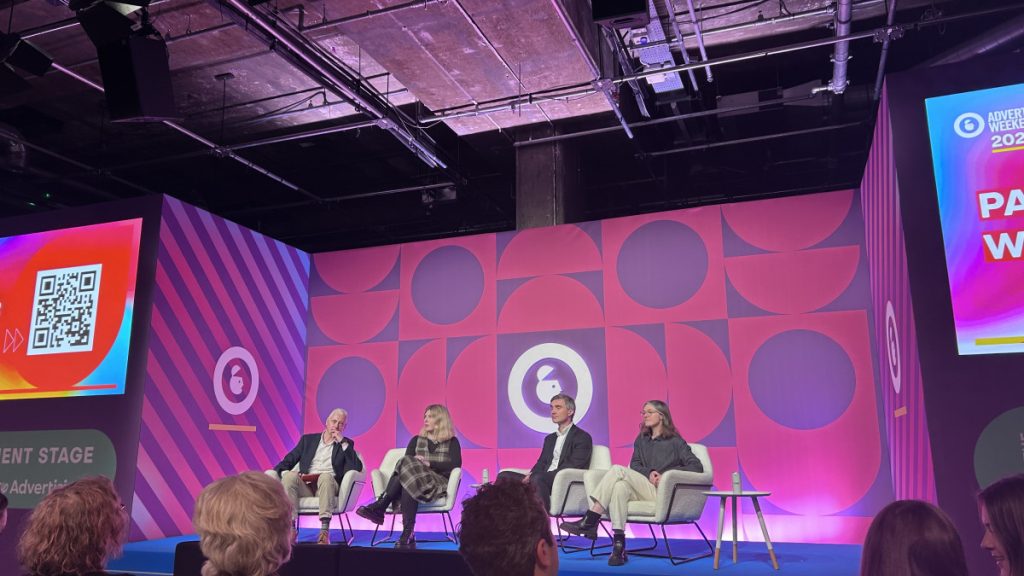
Finally, we’re listening to: ‘Crack the Code: Industry Journalists Tell All’.
This brings together Bramwell Johnson, director of content at the Propeller Group; Niamh Carroll, senior reporter at Marketing Week; Daniel Thomas, global media editor at Financial Times; and Hannah Bowler, editor at The Subrthread.
Journalists are looking to bring value to stories, Carroll explains, and pitches should reflect the evolving media landscape. Publications increasingly need to offer something different to their competitors, which means news analysis and ‘deep dive’ pieces.
They give some advice to PR and comms personnel; “introduce me to people”, says Bowler adding that perspectives and connections are places where journalists can build a more in-depth story are more likely to get through.
Journalists can spot AI-generated pitches and storylines, they confirm, and it is off-putting to editors. But, if it’s a good story “you can send it by carrier pigeon,” Thomas jokes.
1.15pm: The evolution of targeting
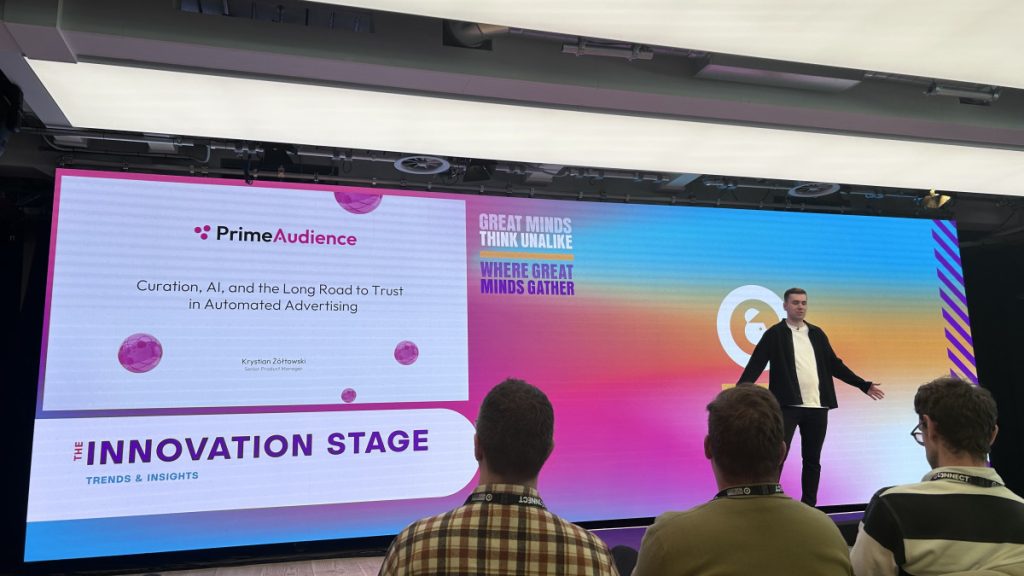
Now, we’re listening to Krystian Zoltowski of PrimeAudience. He’s talking about the evolution of trust towards targeting and his experience in the industry.
The first era, he explains, was manual control. Adjusting settings in your campaign manually, analysing them each individually.
From there, it moved towards rules and keywords: ‘If X then do Y’ – in this era, the archetype of the data provider was born.
The next stage was the machine learning era and non-explainable models, but, as Zoltowski points out, “no explainability equals no trust”.
Finally, we have entered the era of, you guessed it, AI. The improvement from the machine learning stage is the explainability. “It seems like, for the first time, automated optimisation doesn’t feel like a black box anymore, because we can get all the explanations from AI that we need.”
12.00pm: Lunch time
We’re breaking for a quick lunch, but will be back this afternoon to give you more updates on the panels we’ve seen.
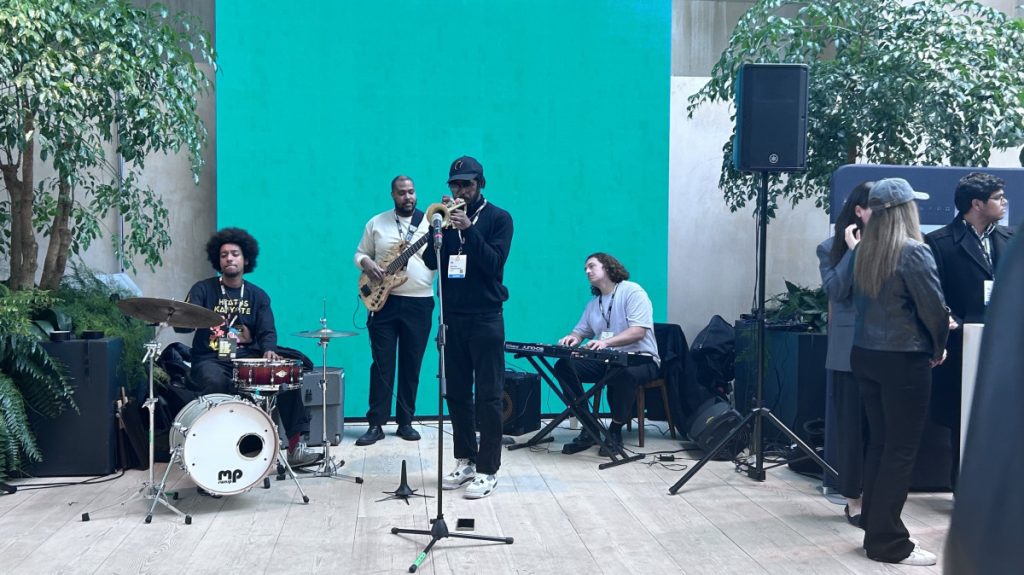
I had a quick stop off to watch the Amaris Media band in the hall first – a great way to liven up the afternoon!
11.00am: AI in industry
Next up, Kate Ingram, director of Europe for Advertising Week, and Ariel Madway, director of brand experience at Cint. talk about AI and its impact on the industry (a pretty broad topic!).
How do people actually feel about AI, and how has this sentiment changed? Almost three-quarters (72%) of brits say they use AI in their personal lives, mostly as a ‘daily assistant’/ ‘personal coach’, or for travel and logistics.
There is still a very big gap between managers and non-managers. Managers are far more likely to be using AI, far less likely to be afraid of AI, and far more encouraged by their workplaces to be using AI. Managers are excited to be using AI, which Ingram says is an interesting point on human psychology. It should be noted though, that entry level jobs have been replaced by AI in many companies, so it doesn’t seem particularly surprising that the most vulnerable are the most resistant.
How does this relate back to the advertising space? Even though people are using AI, they don’t want to see it used in creative materials. The Cint survey found that 80% of respondents had concerns in AI being used in the creation of ads. This changes significantly from industry to industry, but overwhelmingly, there remains some scepticism in AI ads.
Two out of three British consumers believe that brands have a duty to disclose if AI is being used in ads, and a third say that knowing AI was used in an ad would negatively impact their views on the brand.
10.00am: The funnel holds the key to brand growth
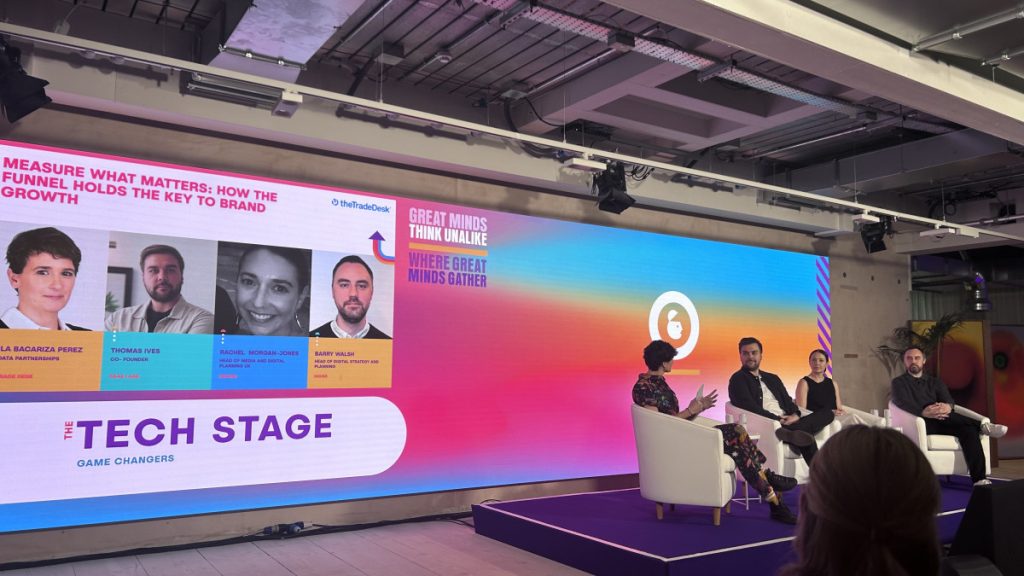
First up, its a panel discussing how “the funnel holds the key to brand growth”, featuring Paula Bacariza Perez, general manager of data partnerships at The Trade Desk, Thomas Ives, co-founder of RAAS labs, Rachel Morgan-Jones, head of media and digital planning UK at Diageo, and Barry Walsh, head of digital strategy and planning at Havas.
Mixing branding and performance (brandformance) can dilute the potency of both, Perez suggests, but Walsh responds that both are working towards the same goal.
Ives points out that the bottom of the marketing funnel works fantastically when the top of the funnel is also successful. When you’re properly measuring data, you’ll most likely see a strong performance on a full-funnel strategy, but it needs to be considered holistically.
We should move on from “measuring for the sake of measuring”, Walsh says. Metrics should ladder up to the comms networks. Reach without product understanding means nothing – it takes time for a message to get across, Perez points out, but increasingly ads are being shown through platforms with tiny exposure times. That’s why it’s important to measure more than just reach and clicks.
Relevance can really help with brand awareness, Ives agrees, and when done right, brand awareness can help performance. There are opportunities
to have small, low exposure ads that work, but you have to “earn the right to do it”, Walsh argues. He gives the example of Guinness or Coca Cola, which have each put a hundred years into strengthening their brands – low exposure ads can work well for them because their long-term branding is so strong.
“Be absolutely customer obsessed,” Walsh advises. “If you really think about how you want to show up, how you want them to understand and feel about your brand that will really, really help with your channel, your format, your tactics, decision making, and everything else falls in line under that. Your measurement falls in line, your organisational structure falls in line again.”
9.15am: Conference essentials
A quick coffee to start as I plan the day ahead. I’ll be around again today, so feel free to come and say hi!

8.45am: Here we go again
Ellen Jennings-Trace is on the ground again today to bring you the latest of everything happening at Advertising Week Europe. From sessions on measurement, gaming and of course AI.
Day 1
5.00pm: That’s a wrap
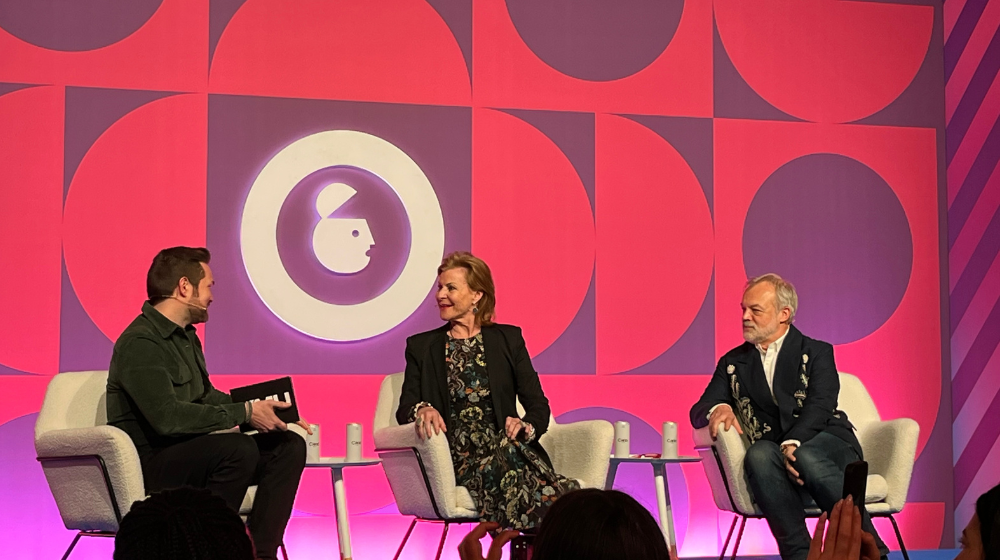
Day 1 came to a close with Graham Norton and Maria McErlane, who took us behind the scenes of their hit podcast, Wanging On. A key takeaway from this was how brands can integrate sponsored content or ads seamlessly into podcasts, with the hosts.
Other highlights from the afternoon included Filippo Gramigna, co-chief exec of Onetag, on how programmatic advertising has moved from a “volume game to a value game”. It’s still built around automation, efficiency and scale, but today, quality matters more than quantity.
In a session with LiveRamp’s chief connectivity and ecosystem officer and general manager, Travis Clinger spoke about AI search and how it is evolving. He asked the audience how many people had made a purchase via an LLM – no hands went up.
A little surprised, he said it was a different story when he asked the same question to a group of marketers in San Francisco and believes this will soon be the case in Europe. He concluded by saying all LLMs will have ads, despite the likes of Claude pulling away from this… after all Google once said it wouldn’t do ads and now it has a whole ecosystem.
1.00pm: Gaming’s superpower is attention
Gaming is not like traditional media, it’s not seen as a safe bet,” says Chris Bailes, head of EMEA sales at XBOX Media Solutions.
But the reality is actually that it is an extremely safe bet, given that there are 3.4 billion gamers globally, which is about a third of the world’s population, he explains.
“Gaming has grown up in terms of the accessibility… and proven its place on the plan [media],” alongside social media and YouTube.
Bailes believes gaming superpower is attention, making it a powerful cultural space, because “when people play, they are leaned in, they are active not passive”.
Gaming offers fandom, its social space, a place for streaming, so brands should be thinking about it as an entertainment environment. After all, it has become gaming has become bigger than film and music.
So how can advertisers tap into this. Bailes points out one of the misconceptions is “gaming is complex, it’s not”, but not all platforms are equal.
If there is a clear value exchange, there “you can’t go wrong”. “Players don’t hate ads, they hate bad ads and being interrupted,” he warns.
12:40pm: Redefining audience intelligence
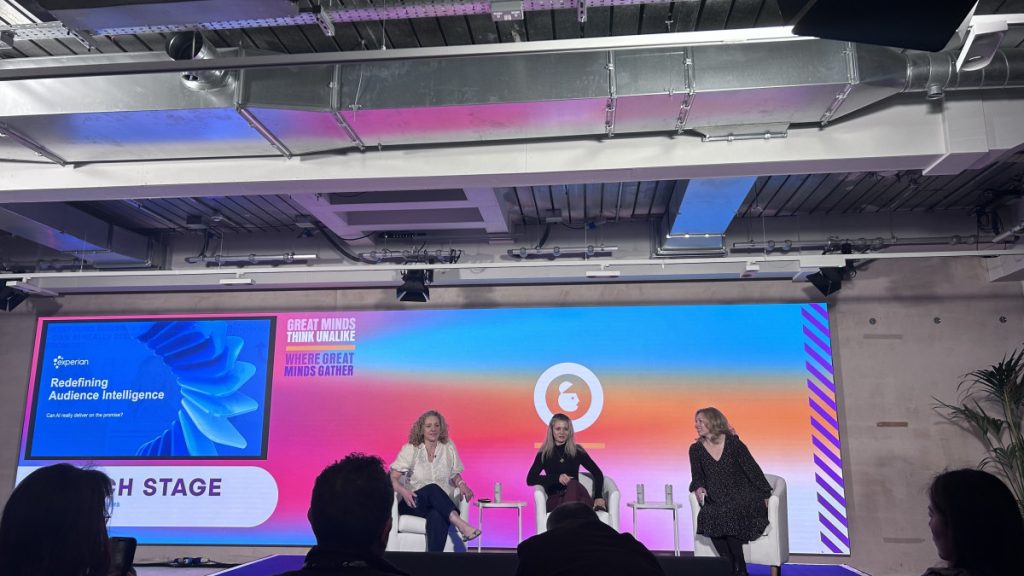
Now, we’re back to the tech stage with Sarah Robertson, chief product officer at Experian, Kara Osborne Gladwell, global product architect officer at Dentsu Media Global, and Olva Dvachuk, data driven media director at Heineken. This session’s focus is the AI revolution, and what this means for planning, targeting, and activation.
Robertson asks the audience, who would trust AI to make a document, start to finish, that they could send to their boss (without review)? No hands go up. This shows where we’re at with AI, she says. People are comfortable with AI to help them become more efficient, but that behaviour is evolving.
The quality of data is the biggest challenge in any campaign, Dvachuk argues. Understanding the depth of data and measuring the data performance over time must be grounded against identity to ensure that your campaign moves in the right direction.
“We’re not one dimensional. One signal is not going to do it for a campaign. We’ve got to think about everything that that consumer really is interacting with,” Gladwell explains.
“AI is the engine, and the engine runs on the type of fuel you’re putting into it. That fuel is the data,” – some data clogs up the system, Robertson argues, and there are risks around built-in bias from data having an affect on brand safety and brand identity. The amount of data available can be overwhelming, but driving growth is about cutting through that in a responsible and purposeful way.
12.00pm: Allocating media budget in the AI era
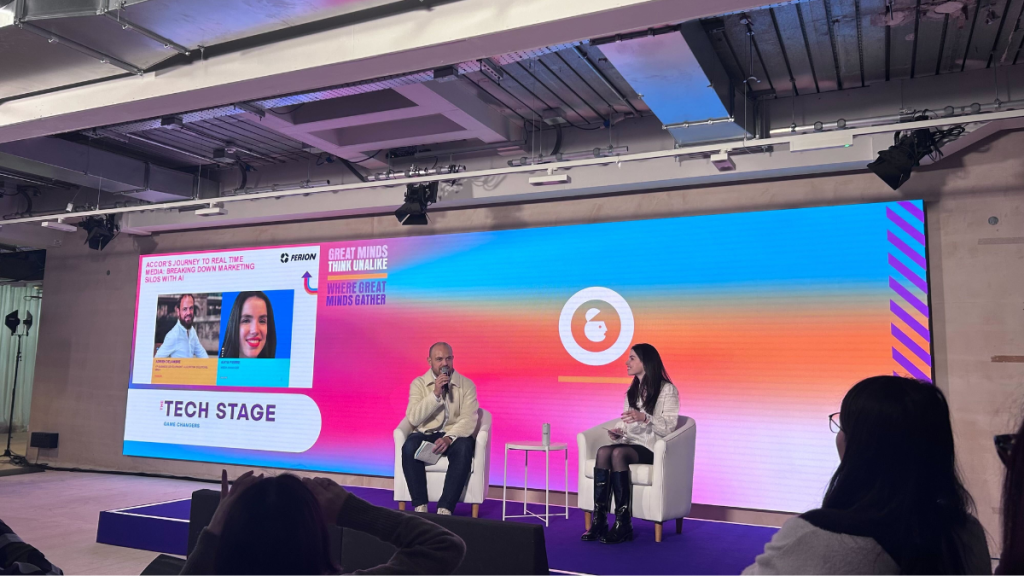
Next up, we’re hearing from Adrien Delambre, vice president of business development at adtech firm Perion, and Anya Pierre, media manager at Accor. This discussion is about AI integration within campaigns and workflows – where do you allocate the budget for maximum impact? Where is the revenue generated?
For media specifically, Accor invests in awareness using specific AI tools for campaigns for budget allocation, with insights into emissions, performance, and output.
Pierre says creative AI tools are in the intention within the agency, but also integrating new images, wordings, and landscapes thanks to generative AI.
When it comes to test and learn, Pierre advises, “it’s never a failure if you’re learning”. Transitioning to one integrated agency was a challenge, Pierre agrees, with Accor recently moving to Publicis. But, their expertise and knowledge matches their objectives and campaigns within a full-funnel approach. They are the first link with the partners.
As an advertiser, Pierre argues that it is difficult to predict what the landscape will look like even in just a years time. But using 50% new tools and 50% legacy approach, she believes they have optimised their setup to explore the best media strategies and campaigns.
11.40am: Allwyn on tapping into cultural moments
Culture and fandom is becoming a big part of advertising with two-thirds (66%) of the audience here saying that brand support “legitimises the importance” and can influence purchasing decisions, James Cornish, senior vice president, international sales and partnerships at Vevo highlights in his session with Ben Brown from Allwyn.
Brown, media director for the National Lottery operator, told delegates this is a key part of their advertising strategy because they have to “balance purpose with play”.
“The overarching objective of the lottery is to raise money for good courses,” adding that the company current brings in £30m a week and by the end of its 10-year licence, they want to raise £60m a week for causes.
“Everything is designed to to get people playing lottery sensibly, carefully and to dream big,” Brown says, which means they have to ensure they have the right message across all marketing channels. And to do that, you have to tap into the cultural moments and find the right contexts.
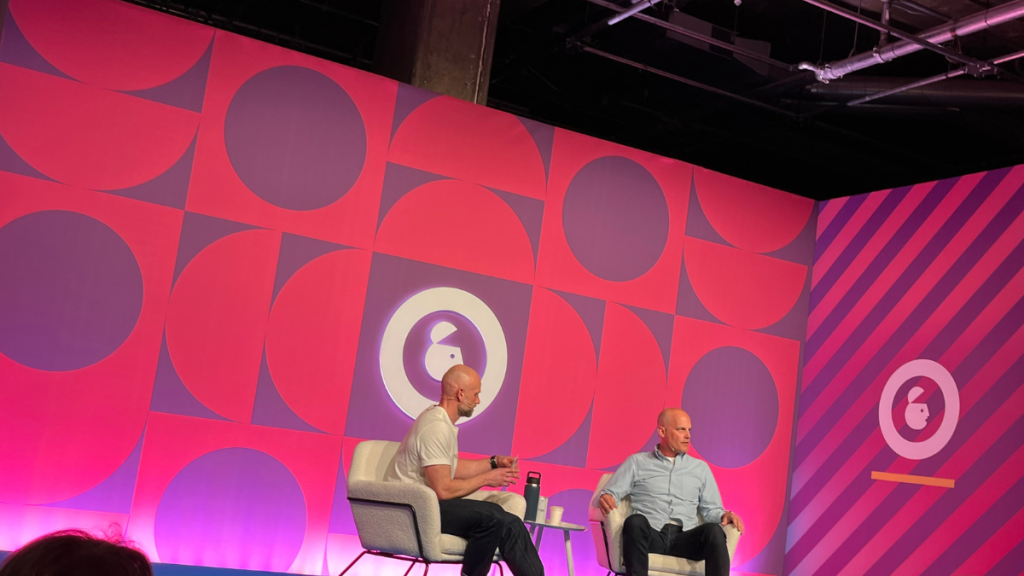
Allwyn’s marketing strategy is telling the stories of the good causes the National Lottery has tapped into and now it is launching a new music initiative, ‘Everywhere all at once’, which is the alternative to Glastonbury this year.
“Music is a real passion… we can start bringing that out to the whole nation,” says Brown. “A lot of these venues have had national lottery funding, as have some of the artists.”
More information on that to come later, but as part of their marketing, Allwyn’s message is simple: “Re-engaing and re-awakening the nation to the national lottery,” in order to raise funds for good causes.
10.30am: Breaking down marketing silos
First up, We’re hearing from Louise Diiulio, chief client officer at Advertising Week, Jennifer Andre, global VP of business development at Expedia Group, and Jessica McGrogan, vice-president of growth EMEA at the Trade Desk. The topic for this one isn’t just travel data, it’s engaging with consumers at every point in their journey to connect with an increasingly fragmented audience.
One in three travellers are now “set jetting” – travelling to places they’ve seen on TV, and among young people, it’s as much as 80%.
Travelling isn’t linear, and consumers are exposed to all sorts of media all the time, so you need a rich data set and a platform to connect these channels in a meaningful way, McGrogan explains. This improves the experience for the audience and makes the message more convincing for the audience.
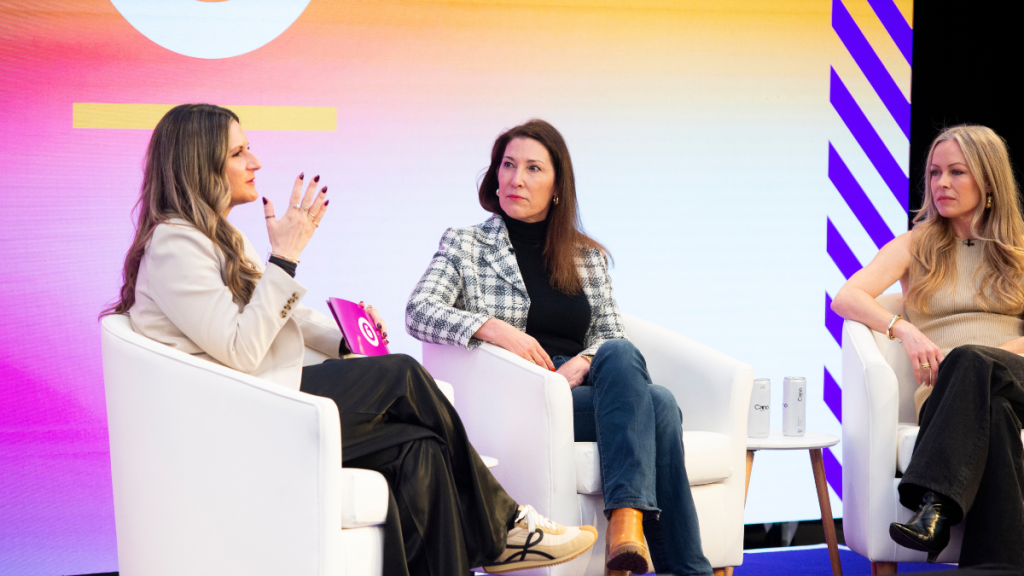
Travel data is a high intent category, and can be a marker for a wide range of purchases like insurance, clothing, or even skincare. Travel adjacent companies like financial firms, rides-hare companies, or even VISA firms can engage critically with consumers at crucial points in their travel journey where they are increasingly likely to engage.
Advertiser must break down silos with connect, omnichannel campaigns to reach wider audiences. “Think holistically and not in a silo’d capacity”, they say.
9.00am: Ready to go
Editor Jyoti Rambhai and business journalist Ellen Jennings-Trace are here at 180 Studios to see what’s happening at Advertising Week Europe this year.
We’ve had our morning brew and we’re ready to go. Stay tuned.