



From Rory Sutherland’s lecture on the disconnect between marketing and finance to moving beyond AI, Affiliate Leaders’ pulls together the big takeaways from MAD//Fest 2026.
Affiliate Leaders was on the ground at MAD//Fest 2026 in London talking to marketers about some of the biggest pain points and challenges they are currently facing.
Minus everyone moaning about the heatwave, some of the key talking points were around measurement, AI and fragmentation.
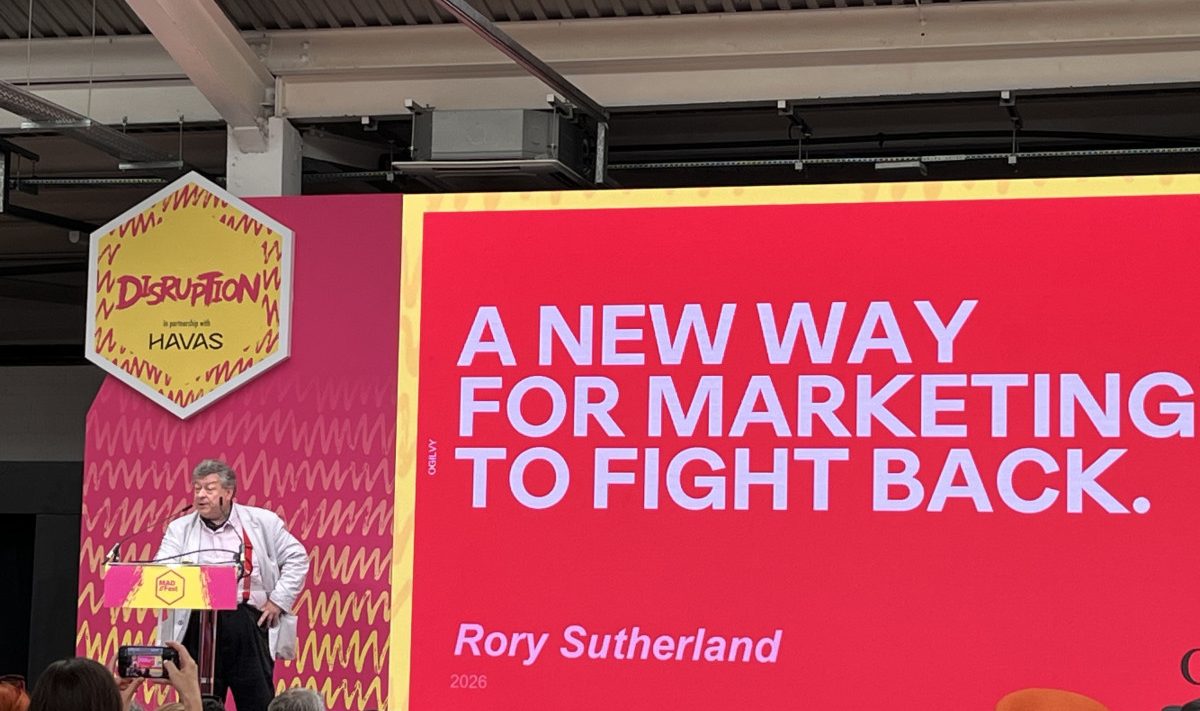
For the closing keynote, author, speaker, and vice chairman of the Ogilvy & Mather groups, Rory Sutherland, spoke about the fragmentation between creatives and their financial counterparts – or worse yet, the procurement department.
Sutherland explained there’s a disconnect between the creative process and the metrics used to measure them, arguing these “shouldn’t be entirely fixed”.
“If you set out to succeed in one way and you discover that you didn’t really succeed that well in that thing you’d intended to do, but you’ve succeeded massively in some other unanticipated way, okay? Then it’s not a failure. It’s just an unanticipated success, right?”
Sutherland gave the example: “If you go out to buy milk, forget to buy milk, but you buy a lottery ticket and you win half a million quid. That’s not a bad day, even though you failed to buy milk.”
However, often finance departments will simply say, “I’m terribly sorry. Your only metric for success is milk acquisition’. And therefore, you have to mark that down as a total failure”, which Sutherland pointed out is not necessarily the right approach.
To put it bluntly, the marketing guru said: “The process, in as far as it can be called a process, is basically talk sh*t until you get lucky.
“If you look at most great advertising campaigns, we all pretend they started with a brief and worked backwards. More than 50% of the time, they started with an idea and worked backwards.”
The biggest breakthroughs have come about by chance, and taking risks is the only real way to earn yourself some good luck. If businesses streamline processes to become as efficient as possible, then they can only really perform as expected or worse.
Sutherland’s message was taking chances, being patient, and broadening the success metrics allows space for the odd breakthrough. It goes back to his time-old saying on how “marketing is fat-tailed”.
The industry reaction
Sutherland’s keynote did feature one glaring omission – AI.
In fact, the theme of this year’s MADfest was ‘the human touch’ – which is perhaps telling of the wider industry sentiment (and beyond).
Affiliate Leaders spoke to some MAD//fest attendees to see what they took from this year’s conference.
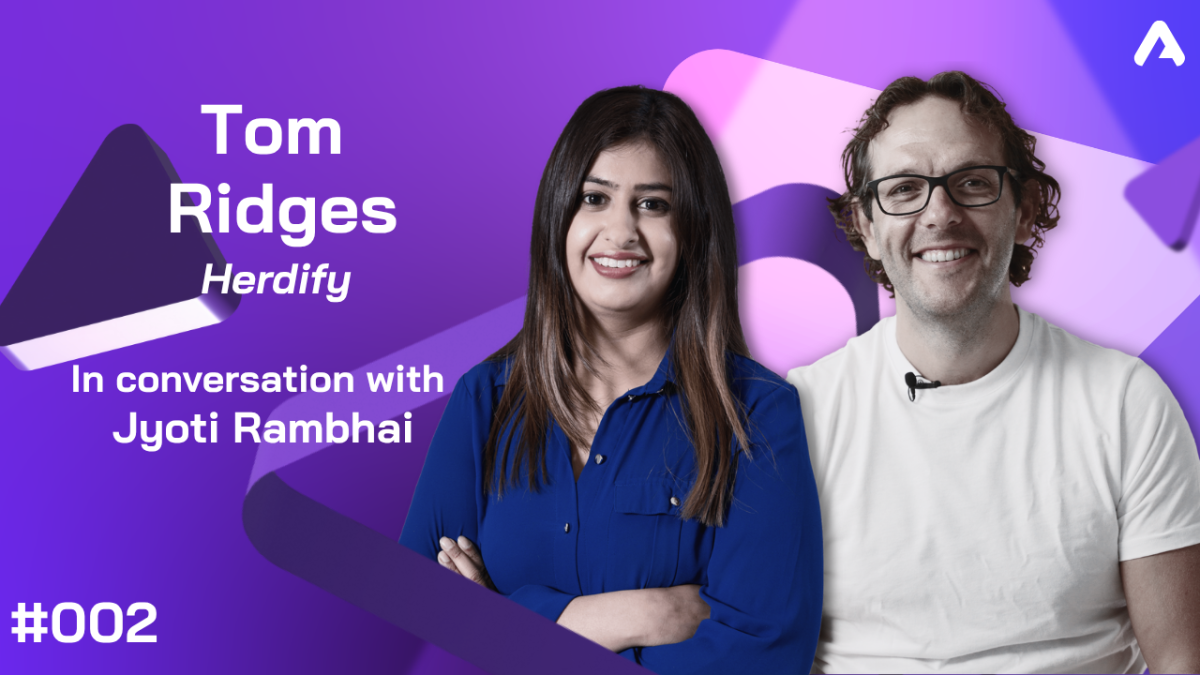
AI was, of course, a talking point at the festival this year, but interestingly enough, the conversation has shifted. Marketers are no longer asking “how can we use AI as much as possible” but are rather asking “how can we let our human creativity shine through?”, said Tom Ridges, chief executive officer and founder of Herdify.
“It seems while AI has had everybody questioning their place in the world, we’ve gone back to what it means to be human. Being human!”
“Over the last 30 years, since the advent of the internet, we’ve slowly, piece by piece, obscured the reason we do business (to serve a customer) into numbers on a spreadsheet or digital IDs to be optimised. And AI offers us huge advantages in this space, but it can’t replace the experience and range of emotions we feel from the real world. After all, we’re an emotional species.”
“Who would have thought the rise of the machines would be the catalyst for us to rediscover our humanity in business?” he continued.
Sandra Wagner, chief executive of AuraVeo, explained that AI is fantastic at surfacing deep insights, but it lacks the contextual nuance to properly execute them.
“The real opportunity for brands is bridging that gap to build a smooth partnership between human teams and AI agents. That hybrid approach is how brands move past the hype and deliver genuine business outcomes.”
Moving beyond AI
Ridges and Wagner are not the only one who’s used this year’s MAD//Fest to focus on the human side.
The conversation among marketers has clearly moved beyond AI, said James Urquhart, senior director of sales for Adform.
“The focus is now on practical applications, improving efficiency and understanding how AI can genuinely support teams in making better decisions. However, the discussions also reinforced that technology alone is not the answer. The real value comes from combining innovation with human expertise, collaboration and shared experiences.”
This year felt like a welcome break for many, who have been listening to the great wonders of AI in marketing for some time now. Marketers were some of the quickest and most enthusiastic adopters of AI technology, but it seems the AI fatigue is hitting hard.
Betty Underwood, marketing director at RAAS LAB, added: “In the midst of so much conversation about AI – from celebrations of productivity gains to fears over AI slop – it’s great to be having discussions about what’s uniquely human in the industry and how marketers can leverage AI for efficiency, but not lose Relevance, or the emotive, authentic connection they have with their audiences.
“For me, that’s exactly where culture and community come in. They’re what AI can’t replicate, and they matter for marketing as much as they do for wider society.”
Christoph Berg, founder and chief executive officer of MINT Square explained there were two clear themes at MAD//fest this year: “First, AI has become an execution conversation rather than a hype conversation. Agencies are now focused on embedding AI into everyday processes to improve efficiency, automate repetitive tasks and free up more time for strategic and creative work.
“Second, independent agencies had a strong presence throughout the event. It reflects growing demand for specialist expertise, agility and closer client partnerships. As technology becomes more accessible, these qualities are becoming increasingly important differentiators, allowing independent agencies to compete on expertise, adaptability and the value they create for clients.”
It’s clear the tide is changing against AI, and that people are looking to build their human connections while maintaining their efficiency and creative process.