


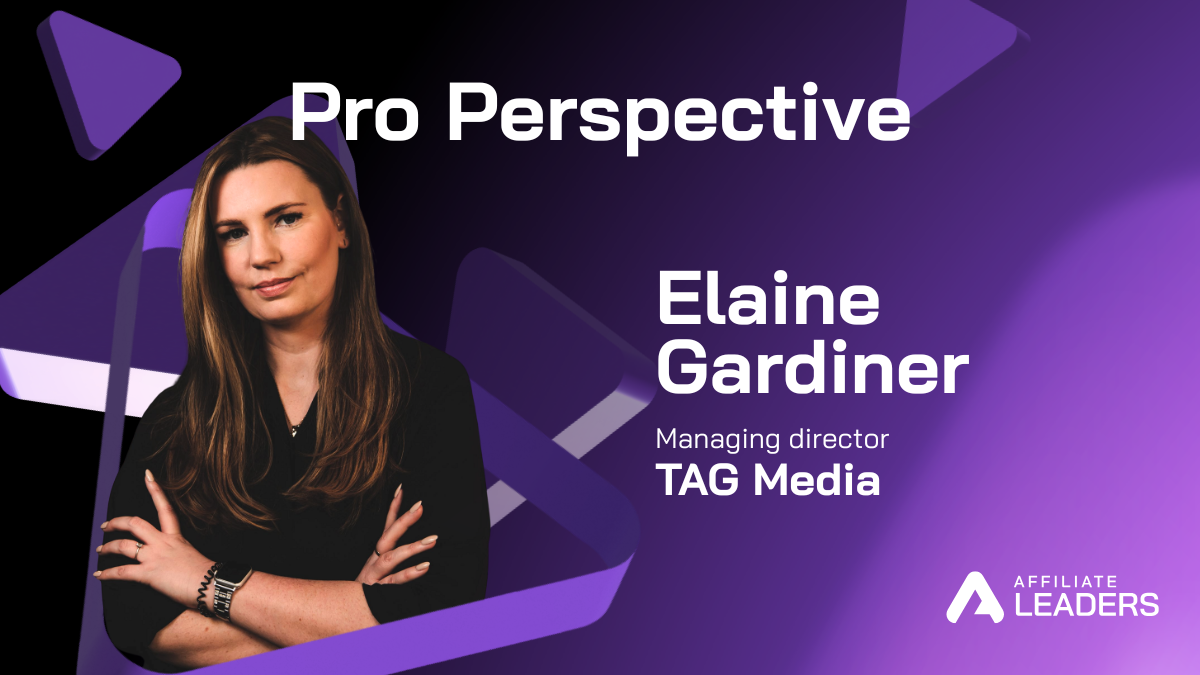
Elaine Gardiner examines how AI is reshaping affiliate teams and what that means for marketers and operators going forward.
There’s been a lot of discussion around whether AI will replace affiliate managers. Most people in the space have an opinion one way or another, but the general consensus is clear: AI can’t replace affiliate relationships.
When I started in affiliate management, your worth as an affiliate manager was your little black book, the contacts you could call on to get your brand placed on an affiliate’s website. That’s changed a lot. Contacts still matter, but their weight has diluted over the years as affiliate companies hire account managers who rotate frequently, and affiliate managers themselves share contacts more freely than they used to.
I’ve had plenty of discussions about automating that process entirely, taking the humans out of the deal, holding funds in escrow until both parties fulfil the contract. From the outside, it sounds like a clean solution. But having been in the trenches, it’s never that simple.
Take a basic example: an operator promises £200 CPA for 20 players, conditional on that target being hit. So much can go wrong outside the affiliate’s control – a payment provider goes down, tracking breaks, conversion rates tank. The list goes on, which is exactly why full automation isn’t realistic.
So for the foreseeable future, no wise company would fully automate its affiliate department. But that doesn’t mean AI has no role to play.
For years, every marketer has talked about ‘data-driven decisions’, a buzzword with little real substance behind it for most. The bigger companies had business intelligence teams and software, and if they were lucky, staff trained well enough to run their own reports.
But instant, accessible business intelligence has never been the standard – until now.
We’re in an era where companies are racing to adopt AI, and the pressure to do so is only growing. I’ve seen people panic-adopt it, assuming a single prompt will save them a day’s work. It’s not that simple.
AI is here to assist and automate – to remove the pain points, the ‘boring jobs’, and that’s precisely why teams are changing shape.
A typical affiliate team at a small-to-medium operator used to look like this: a head of affiliates, two or three affiliate managers, and a junior affiliate manager – titles vary, but the hierarchy was consistent. The junior was usually the newest hire, perhaps promoted from customer service or starting their first industry role, with little to no affiliate experience. This was their first rung on the ladder.
Their job was to support the team – the ‘boring jobs’, so the affiliate managers and head of affiliates could focus on what mattered more. That meant managing the inbox, handling communication channels, and being trained to replicate weekly and monthly reports: log into a system, select last week’s date range, copy the numbers into a spreadsheet, and pass it to the team to interpret based on their own experience. Early on, most juniors had no real understanding of what the numbers meant – they just knew the steps.
As AI becomes more advanced and accessible, these support roles are quietly becoming redundant in their old form. We’ll still have juniors learning the ropes, they just won’t spend their early months manually pulling reports they don’t understand.
Automated insights will be available to the whole team on demand, along with guidance on how to interpret them. Getting the numbers and alerts is one thing; closing the knowledge gap between junior and senior team members is another – and that gap is shrinking fast.
For example, a junior affiliate manager might get an alert that conversion has dropped for one of their affiliates, then be guided through troubleshooting the issue – either resolving it themselves or completing the groundwork before escalating.
This won’t just speed up team productivity by removing the daily grind of reporting and monitoring. It will free up time at the top, giving heads of affiliates and team leaders more space to be proactive, build relationships, and focus on the strategy that actually moves the needle.
AI won’t replace the affiliate team. But it will reshape it, quietly, role by role, report by report, until one day we look up and realise the team doesn’t look anything like it did five years ago. The only real question left is whether your team is shaping that change, or waiting to be shaped by it.
Elaine Gardiner is managing director at TAG Media and co-founder of affie.ai