

Affiliate Leaders speaks to industry experts to get their thoughts on the impact an under-16s social media ban in the UK could have on marketers.
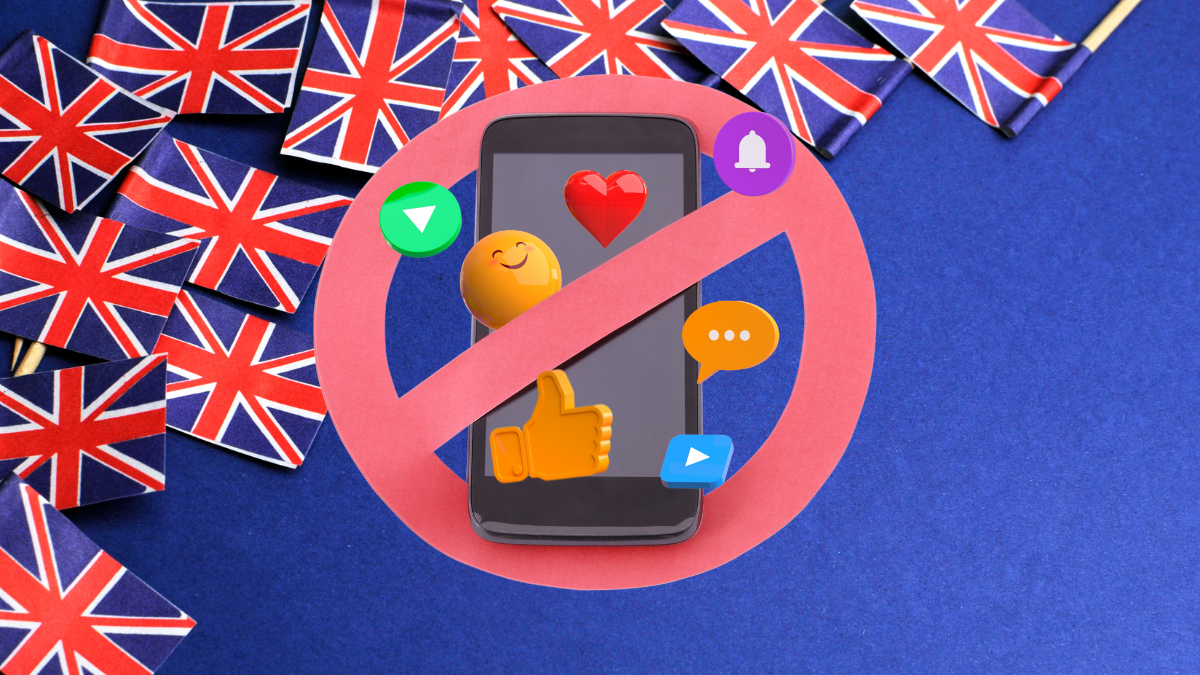
YouTube, TikTok, Instagram, Facebook, Snapchat and X are among the platforms affected in the flat-out ban on social media for under-16s, announced by UK Prime Minister Keir Starmer this week.
The UK government is planning to have the new law pass through the regulatory stages by Christmas, and come into full force in spring 2027.
Australia was the first country to introduce a social media ban, which came into effect in December 2025, and the UK is set to mirror its regulatory framework. And it’s not the only country looking to bring in tighter restrictions around social media users for young people.
Greece, Spain, Canada, Austria, Denmark, France, Germany, Indonesia, Malaysia, Poland, Slovenia and even Turkey are all in the process of passing bills or considering regulation around its use.
With so many markets looking to clamp down on social media use, Affiliate Leaders spoke to industry experts to find out what this means for brands using social as a core marketing channel.
Social media is like ‘public squares’
Mike Craddock, co-founder and chief executive at social media agency NewGen admits the reality of this ban could be “messier” as it means “fewer people watching our content”.
“If a chunk of younger users are removed from social platforms, brands that rely on younger audiences could see some impact on reach, views and trend momentum. A lot of content travels because young people are fast to pick things up, remix them, comment on them and push them into the wider culture,” he says.
“So if access tightens, brands may need to rethink who they’re really speaking to, where their audience actually is, and how much they rely on younger users to create that initial spark.”
Rob Blake, managing director, EMEA, Channel Factory, describes social media platforms as the “digital equivalent to public squares” where anyone with an internet connection can “voice their opinion”.
This legislation not only forces the likes of Meta, Google, ByteDance and Snap inc. to take a more responsible role towards under-16s, but also the content creators and brands that advertise on them.
Paul Bainsfair, director general, at industry body IPA, explains the UK is already “already subject to extensive and robust regulation under the CAP Code, with strict rules on content, targeting and placement across all media, including online”.
But the primary challenge is “how those platforms are structured, supervised and held to account”.
Short-term dip in adspend
With UK advertisers spending “£11.5bn annually on social media – a figure that grew 21% last year alone,” this could have a significant impact on adspend, explains Blake. “Brands are […] not passive participants in these spaces where young people consume content.”
In fact, since Starmer made the announcement, eMarketer has revised its forecast for UK digital adspend in 2027 to £17bn – that’s £1.3bn less than previously.
Analysis from the market research firm suggests that digital adspend would recover quickly once the industry gets a handle on the new social media landscape.
But Blake believes advertisers do not need to sacrifice adspend.
“Advertisers have both the data and the influence to prioritise content that meets higher standards, including environments that promote positive and age-appropriate experiences. Doing so does not require sacrificing the performance of their adspend; it requires redefining how success is measured,” he explains.
A ‘natural evolution’
For Simi Gill, head of digital at The Kite Factory, the news around a social media ban is simply a “natural evolution of the marketing landscape in a bid to be more compliant”.
“If you are already a responsible advertiser, then the effect won’t be as impactful as headlines are suggesting, as you shouldn’t be targeting children as a primary audience,” she says.
“For those that were, it will mean a push towards creating more authentic engagement with these younger audiences via more appropriate strategies and channels. So, it can be viewed as a positive shift towards responsible youth marketing that should be best practice in the industry.”
Sophie Berman, head of influencer at SocialChain, agrees, adding the rise of “harmful online communities, including parts of the manosphere that can influence and radicalise impressionable teenagers, highlights the importance of taking digital safety seriously”.
However, she also warns that these behaviours could “simply move elsewhere” into less regulated spaces with limited safeguards.
“Young people’s desire for connection, community and self-expression won’t disappear if access to social media is restricted,” Berman explains.
“[Therefore] the more interesting question is not simply whether young people should be on social media, but how we create safer digital experiences for them.
“Social media has become far more than a communications channel; for a huge amount of young people, it’s where they encounter culture for the first time, discover new interests, build communities and connections and develop shared cultural references.”
So for brands that are leaned into discovery and awareness on social media, it’s worth thinking about now how to engage a younger audience.
But “not in terms of finding workarounds to reach under-16s,” Rishan Weerakoon, strategy growth director, Yodel Mobile, notes. “But in terms of building more transparent, age-appropriate routes to engagement. Parents are already a bigger part of the decision-making journey than most marketers account for. That dynamic is only going to grow.”
As for the future of social media as a search, discovery and awareness channel, that is uncertain.
Craddock says: “The next generation of kids growing up won’t have the same automatic access, and that could slowly change how social platforms feel, who shapes trends, and how early people enter online culture.
“From a brand point of view, that’s something to keep an eye on. From a human point of view, it’s probably a good thing.”