


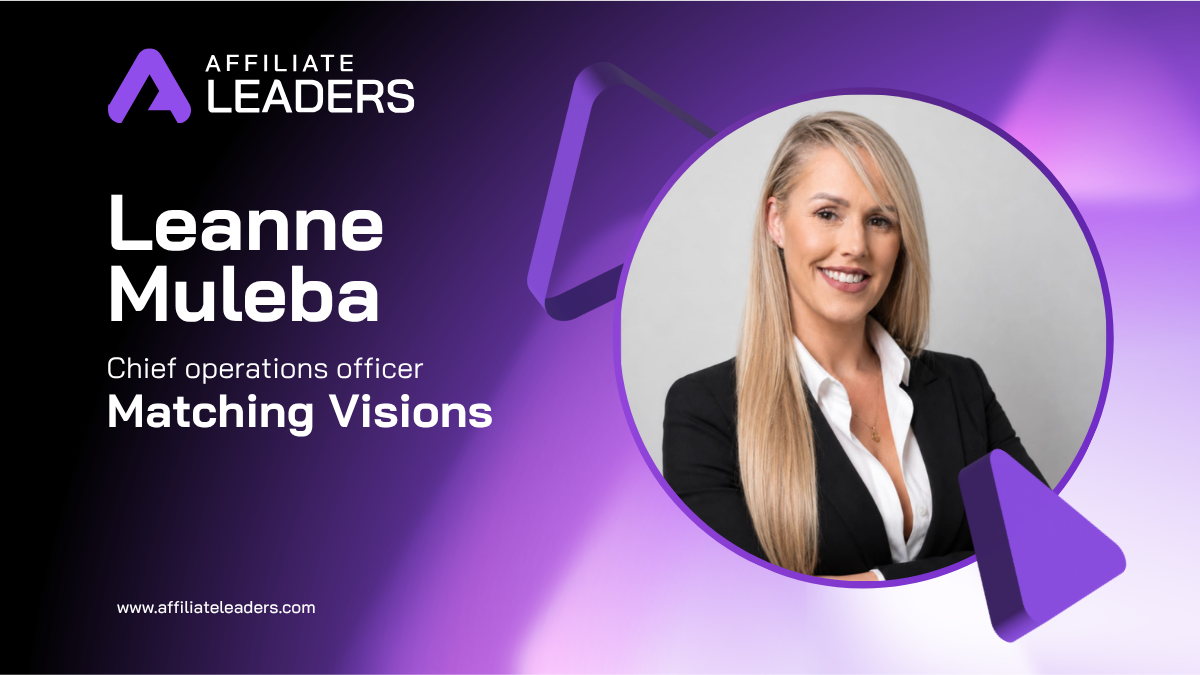
Matching Vision’s Leanne Muleba speaks to Affiliate Leaders about using content to build communities, trust and drive engagement.
SEO and paid search have historically been the bedrocks of igaming affiliation, but both are under pressure from algorithm changes and ad restrictions.
As a result, many traditional affiliate marketers have been forced to diversify, whether that’s looking more closely at community-driven marketing channels such as WhatsApp and Telegram, to live streaming and influencer – but even that has its own challenges.
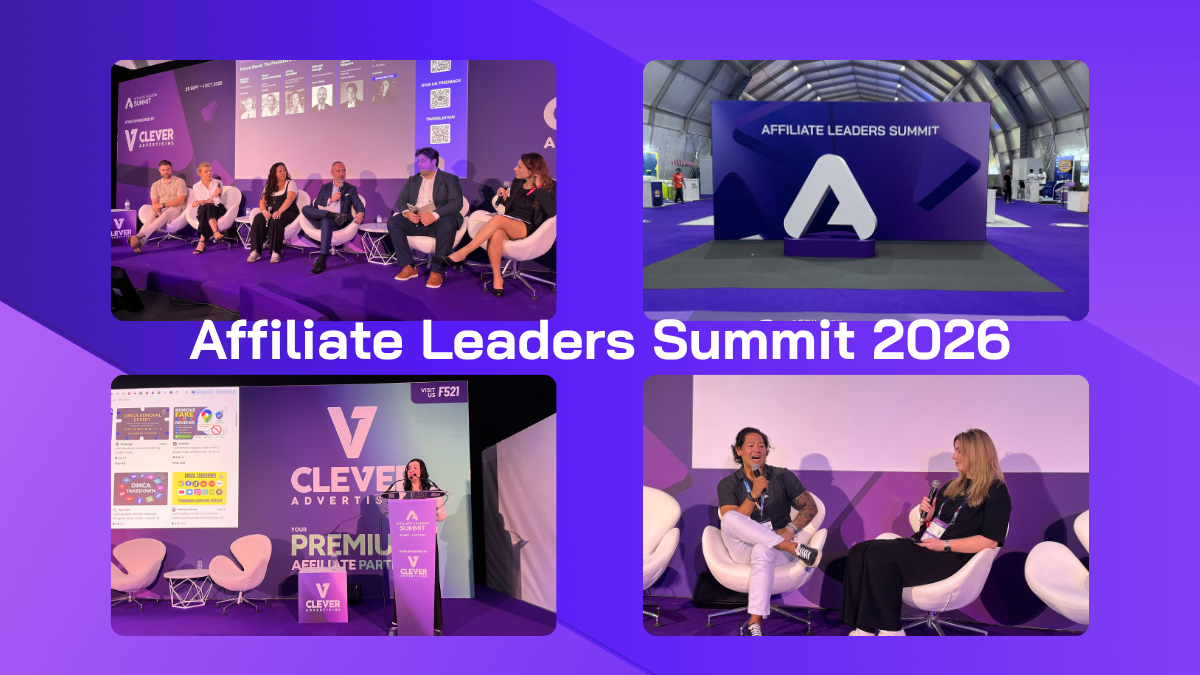
Ahead of her appearance at Affiliate Leaders Summit in Lisbon, Leanne Muleba, chief operations officer at Matching Visions talks to Affiliate Leaders about how building trust through content is becoming a key factor, no matter what marketing channel is used to drive engagement and FTDs.
Are affiliate marketers proactively pivoting to alternative channels, or is this shift being forced upon them?
It’s a bit of both. Some of the more forward-thinking affiliates have been diversifying for years, but others are definitely being forced to adapt because relying completely on SEO or PPC is becoming much riskier.
One algorithm update or advertising restriction can have a massive impact on a business overnight. So, we’re seeing affiliates looking much more seriously at Telegram, WhatsApp, social communities, influencers, streamers and other direct-to-player channels.
For me, the affiliates that will do best are the ones that don’t wait until their existing traffic source stops working before they start experimenting with something new.
What makes Telegram, WhatsApp and Discord so effective for player conversion compared with traditional review sites?
The biggest difference is engagement and trust.
On a traditional review site, somebody might visit, read something, click a link and leave. In a community, there’s an ongoing relationship. People ask questions, share experiences, discuss brands and come back regularly.
It also feels much more personal. If someone has followed a Telegram channel or community for months and trusts the person running it, a recommendation carries much more weight than simply seeing a casino ranked number three on a website.
And everything is mobile-first, which is incredibly important today. We’ve seen that these channels can be very valuable when the audience is genuine and properly managed.
Dark social and messaging groups are notoriously difficult to monitor. How do you ensure private social traffic meets regulatory and know-your-customer (KYC) standards?
This is probably one of the most important parts of working with alternative traffic. Just because the traffic comes from a private channel doesn’t mean compliance becomes less important. If anything, you need to understand the source even better.
At Matching Visions, we look at the actual channel, how the affiliate communicates with players, the markets they’re targeting, promotional methods and previous performance wherever possible. We also make sure the operator understands exactly where the traffic is coming from before anything starts.
The affiliate obviously doesn’t perform the operator’s KYC – that remains with the casino – but from our side we have a responsibility to make sure the acquisition method is transparent and acceptable to the operator.
We already use a process of checking channels, compliance and historical performance before matching these affiliates with brands.
Tracking user journeys across closed ecosystem apps – like moving a user from a Telegram broadcast to a mobile browser and into a casino app – can be messy. How are affiliates effectively solving attribution challenges in these non-traditional spaces?
It’s definitely more complicated than traditional website attribution, but it’s improving.
Good affiliates are becoming much more disciplined with unique tracking links, campaign IDs, dedicated landing pages, sub-IDs and separate tracking for individual channels or campaigns.
The important thing is not putting every Telegram group, influencer and campaign through the same link and then trying to understand afterwards what worked.
Operators and affiliates need to agree on the tracking structure before the campaign starts. It may never be quite as clean as traditional search traffic, but you can get very close if the tracking is set up properly from day one.
Influencer marketing and live-streaming have faced heavy pushback and platform bans in several jurisdictions over recent years. How are affiliate marketers monetising live-format content today without breaching platform policies or local advertising laws?
I think the industry has matured quite a lot here. The days of simply streaming gambling anywhere and dropping casino links everywhere are disappearing, particularly in regulated markets.
The stronger affiliates are building themselves as content creators first. The content needs to be entertaining enough that people actually want to watch it, rather than the entire stream simply being an advertisement.
They’re also becoming much more conscious of age restrictions, responsible gambling messaging, disclosure requirements and what individual platforms and markets actually allow.
Ultimately, if your entire business depends on finding ways around platform rules, it’s probably not a sustainable business model.
What metrics should affiliates use to prove the quality of alternative traffic?
First time deposits (FTDs) are important, but they only tell you the beginning of the story.
I’d look at second deposits, repeat deposit behaviour, conversion from registration to FTD, average deposit value, retention after 30, 60 and 90 days, gross or net gaming revenue (GGR/ NGR) per player and ultimately player lifetime value.
I’d also look at things like bonus abuse, chargebacks and suspicious behaviour because 500 FTDs mean very little if the players disappear immediately afterwards.
Sometimes an alternative traffic source might deliver fewer FTDs than SEO, but those players stay longer and deposit more. That’s the information affiliates need to show operators.
Quality has always been extremely important to us and operators understandably want affiliates that bring players who genuinely engage with their product.
How crucial is it for marketers to tailor their channel strategy to regional app preferences rather than taking a ‘one-size-fits-all’ approach?
Extremely important. I really don’t believe in a one-size-fits-all approach in affiliation. Something that works brilliantly in Finland might perform terribly in Brazil, Germany or Japan.
You need to understand how people actually communicate and consume content in that market. In some regions WhatsApp is part of everyday life, in others Telegram is much stronger, while somewhere else it might be a local social platform or completely different format.
We’ve always believed that understanding individual markets is incredibly important. You have to adapt to the way people behave rather than expecting the player to adapt to your marketing strategy.
Do operators ever show reluctance when accepting traffic from non-traditional or social channels, and how does Matching Visions build trust?
Absolutely. And to be fair, sometimes that reluctance is justified.
If someone simply says, ‘I have a Telegram channel and can send 1,000 FTDs,’ an operator is naturally going to have questions about where those players are coming from and what the quality will be.
That’s where a network like Matching Visions becomes very useful. We sit between both sides. We know the affiliate, we understand the operator and we can make sure both parties understand exactly what is being tested. We can start with controlled volumes, monitor the results and then scale when the quality is proven.
A huge part of what Matching Visions does has always been relationship management and building trust between affiliates and operators.
What distinguishes the affiliate marketer who builds highly engaged, monetisable communities from those who simply spam links in broadcast channels?
Value. If every message in your Telegram group says ‘deposit here’, ‘new casino’, ‘click this link’, people eventually stop listening.
The successful community owners actually know their audience. They create conversation, answer questions, share useful information, entertain people and build a personality around the community. Then when they recommend something, people pay attention because there is already trust there.
The biggest mistake is thinking that having 50,000 members automatically means you have a valuable community. I would much rather have 5,000 highly engaged users than 50,000 people who ignore everything you post.
Looking ahead, which emerging platform or traffic format do you think will become the ‘next big thing’ for igaming affiliates that isn’t fully on the radar yet?
The next major development will be the combination of AI, creators and private communities rather than one particular new platform.
We’re going to see much more personalised marketing where content, offers and communication are tailored to smaller groups of users rather than everybody seeing exactly the same thing.
I also think micro-influencers and niche communities are going to become increasingly important. You don’t necessarily need somebody with a million followers. Someone with 20,000 highly engaged followers in exactly the right market can potentially be much more valuable.
The interesting part will be how AI makes those communities more personalised and scalable without taking away the human element that makes them successful in the first place.
How important are events like the Affiliate Leaders Summit in helping educate traditional affiliates around the broader marketing trends?
Very important. Our industry changes ridiculously quickly and sometimes people become comfortable doing what has worked for them for the last five or ten years.
Events like Affiliate Leaders Summit expose affiliates to what other people are doing – whether that’s AI, social traffic, new technology, regulation or completely new acquisition models.
And there’s another side which is just as important: relationships. We spend most of our working lives sitting behind computers speaking to people on Telegram, WhatsApp, Slack or email. Meeting those people face-to-face builds a completely different level of trust.
That combination of education, sharing ideas and relationship building is incredibly valuable for our industry.
The Affiliate Leaders Summit is the global home of performance and affiliate marketing. Across three days, affiliates, operators, media companies and technology providers come together to discuss traffic generation, conversion optimisation, SEO, paid media and the commercial strategies shaping the future of affiliate marketing.
Co-located with SBC Summit at Feira Internacional de Lisboa and MEO Arena on 29 September-1 October. Get your tickets here.