


At a time of transformation for affiliate marketing in Latin America, Karina Ferraioli of Master Affiliates Network, discusses the industry’s growth, regulatory changes, and the need to diversify traffic sources in an increasingly competitive market.
During 2026, Master Affiliates Network consolidated its model. And through collaborating with operators and affiliates, it launched more than 150 campaigns; generated over 500 first-time deposits (FTD); and its network now exceeds 150 affiliates and 40 master affiliates
Karina Ferraioli , founder and chief marketing officer of Master Affiliates Network, sits down with Affiliate Leaders sister title, SBC Noticias, ahead of her appearance at Affiliate Leaders Summit and SBC Summit to discuss how it intends to strengthen its ties with operators, affilates and marketers.
This year has been a very important year for Master Affiliates Network. Looking back over the past few months, what would you say has been the network’s biggest achievement, and how are you positioning the business for the rest of the year?
I would say that our greatest achievement in 2026 has been demonstrating that our concept can become a real business. We started with a very new idea, bringing together operators, affiliates, and afiliate managers under a collaborative model, and in a very short time we have received strong validation from both the industry and the market.
We were selected for three major international pitch competitions: SIGMA Rome, ICE Barcelona, and iGB London, and we were also shortlisted for best newcomer at iGB London. But beyond the recognition, what matters most is the traction behind it all. We’ve launched over 150 campaigns, generated more than 500 FTDs, and built a network of over 150 affiliates and 40 master affiliates.
For the remainder of 2026, the focus is on transforming that initial validation into a scalable solution. We want to expand our partnerships with operators and strengthen our presence in key markets. The vision remains the same: collaboration over competition. Now the goal is to demonstrate that this model can scale globally.
Building a successful affiliate network requires a lot of trust between operators and publishers. From your perspective as CMO, what has been the main strategy this year to scale the network while maintaining quality traffic for its partners?
From a marketing perspective, our main strategy has been to grow through relationships built on trust rather than simply chasing volume. In affiliate marketing, more traffic doesn’t necessarily mean better traffic, so quality has always been a priority for us.
In fact, this is one of the reasons we created the master affiliate role. Affiliate managers already have strong relationships within the industry and know which affiliates are trustworthy, what kind of traffic they generate, and which operators might be the best match. By bringing these professionals into our ecosystem, we add an extra layer of trust and validation before traffic reaches the operator.
We also strive to understand the entire lifecycle of each campaign, not just the FTD numbers. Communication and feedback from both operators and affiliates allow us to understand traffic quality, identify what works, and make better connections in the future.
For us, scaling sustainably means growing through quality relationships. Again, it’s closely linked to our philosophy of collaboration over competition.
Constant updates to Google’s algorithm and rising advertising costs are squeezing margins for traditional affiliates. How are you helping affiliates cope with these SEO changes and diversify their traffic sources?
The biggest mistake right now is relying too heavily on a single traffic source. SEO is becoming more challenging, paid acquisition is more expensive, and platforms can change their rules very quickly, so diversification is becoming essential for affiliates.
At Master Affiliates Network, we strive to help affiliates by sharing knowledge, best practices, market information, and, above all, opportunities with different operators, markets, and acquisition models. We also encourage communication within the network so that affiliates can learn from what’s working for others instead of working in isolation.
Our approach isn’t about telling them which traffic source to use, but about helping them understand where the opportunities lie and connecting them with the right partners. Especially for small and medium-sized affiliates, having access to this knowledge and industry relationships can make a huge difference.
Once again, it all comes down to collaboration. When affiliates, master affiliates, and operators share feedback and understand what’s working, everyone can adapt more quickly to market changes.
With organic ranking becoming increasingly difficult, we’re seeing a shift towards apps, messaging communities, and localised media buying. What types of traffic or formats are currently performing best within the Master Affiliates Network?
What we’re seeing is that community-driven and highly segmented traffic is performing particularly well. Tipster communities, private messaging groups, Reddit communities, and other online niches can generate highly engaged audiences because there’s already a relationship and a level of trust between the publisher and the user.
Localised traffic is also becoming increasingly important. What works in one geographic area may not work in another, so understanding local behaviour, culture, payment preferences, and even how people consume content can make a big difference.
For us, this reinforces the importance of diversification. SEO and paid media remain valuable, but affiliates shouldn’t rely entirely on a single channel. We’re increasingly interested in partners who understand their communities and can combine different sources while maintaining traffic quality.
Ultimately, we’re not looking for a single, winning traffic source. We’re looking for the right combination of audience, geographic location, format, and carrier.
Brazil’s regulated online gaming market is completely transforming the landscape in Latin America. How has the new regulatory environment affected the way affiliates operate in Brazil, especially regarding advertising and compliance?
Brazil has changed significantly since the regulation, and for affiliates, the biggest change is that compliance can no longer be considered solely the operator’s responsibility. Affiliates also share that responsibility. Current rules cover third parties such as affiliates, influencers, ambassadors, and partners, and advertising must promote licensed operators and comply with responsible gaming and consumer protection requirements.
This has changed how affiliates approach campaigns. They must be much more careful with the brands they promote, how they present advertising, age targeting, responsible gambling messages, and claims related to potential winnings. For example, advertising must be clearly identifiable, cannot promise easy or guaranteed winnings, and must be targeted exclusively at adults.
From our perspective, this creates an opportunity for professional affiliates. The regulation raises the market standard and favours those who understand compliance, know their local audience, and are willing to build sustainable partnerships rather than pursue short-term conversions.
Brazil is also continuing to evolve. The 2026-2027 regulatory agenda specifically includes new regulations on affiliate advertising in internet applications, so affiliates and networks must remain flexible and closely monitor regulatory developments.
For Master Affiliates Network, this reinforces something we firmly believe: quality traffic is no longer measured solely by conversion. Where that traffic comes from, how it was acquired, and whether the entire acquisition process is sustainable and compliant also matter.
Beyond Brazil, markets like Peru and Argentina are also evolving rapidly. What are the main challenges and opportunities you currently see for affiliates looking to expand into different jurisdictions in Latin America?
The biggest challenge in Latin America is that we can’t treat it as a single market. Each country, and in some cases each region within a country, has its own regulatory framework, consumer behaviour, payment preferences, and advertising rules.
Argentina is a very good example because online gambling is regulated at the jurisdictional level, not through a single national framework. Affiliates need to understand where they are acquiring users and which operators are authorised in that specific jurisdiction. This makes expansion more complex, but it also creates opportunities for affiliates with strong local knowledge.
Peru is further along in this process. Its regulatory framework has been in place since 2024, and we are already seeing increased enforcement against unauthorised platforms. This creates a more structured environment where professional affiliates can build relationships with licensed operators and compete based on quality and compliance.
Then there are markets like Chile, which are undergoing their own regulatory evolution. For members, this means staying very close to regulatory developments and being prepared to adapt quickly.
But I see this complexity as an opportunity. Affiliates who combine strong local knowledge with compliance, localised content, and trusted communities will become increasingly valuable. You can’t simply copy a campaign from Brazil and launch it in Argentina, Peru, or Chile. Understanding each market locally will be one of the biggest competitive advantages in Latin America.
With increasingly strict restrictions on gambling advertising across the region, how can affiliates continue to create engaging, high-converting content without crossing regulatory boundaries?
The key is understanding that regulation doesn’t mean creativity has to disappear. It means that affiliates need to be smarter in how they communicate and put responsible marketing at the heart of their strategy.
Instead of relying on aggressive promotions or unrealistic promises, affiliates can focus on valuable content, entertainment, education, comparisons, sports information, tipster communities, and localised content that truly resonates with their audience. Authenticity and trust can become even more powerful conversion tools than aggressive advertising.
It’s also crucial to understand the rules of each market, because Latin America can’t be approached with a single strategy. What’s permitted in Brazil might be different in Peru, Argentina, or Chile. Affiliates need to work closely with operators, understand their compliance requirements, and adapt campaigns accordingly.
In fact, I see stricter regulation as an opportunity for good affiliates. It raises the bar for low-quality marketing and allows professional and responsible affiliates to differentiate themselves through better content, stronger communities, and long-term relationships.
The Affiliate Leaders Summit and SBC Summit is just around the corner. What are Master Affiliates Network’s main objectives for the event, and what types of partners are they most interested in connecting with?
SBC Summit is a very special event for us because last year’s edition was where we officially launched Master Affiliates Network. It was also my first conference representing the company, so returning a year later with everything we’ve accomplished since then makes it particularly meaningful.
This year, our main goal is to strengthen the relationships we built over the past year while also forging new connections. We are particularly interested in meeting affiliates who want to join our collaborative model and experienced affiliate managers who can become master affiliates and generate additional income through their industry networks.
We also want to use Lisbon to strengthen relationships with operators and affiliates, exchange ideas, understand where the industry is heading, and find partners who share our ‘collaboration over competition’ mentality.
Looking ahead, where do you think the affiliate marketing industry in Latin America is headed, and what is your vision for Master Affiliates Network in the coming years?
I believe affiliate marketing in Latin America is moving toward a much more professional, regulated, and localised ecosystem. Regulation will continue to raise standards, while affiliates will need to diversify their traffic, understand each market individually, and build stronger communities instead of relying on a single acquisition channel.
At the same time, I believe relationships will become even more valuable. As markets become more complex, operators will increasingly need trusted partners who understand local audiences, regulations, and traffic sources. This creates a tremendous opportunity for collaboration between local affiliates, affiliate managers, and international operators.
For Master Affiliates Network, our vision is to become a global collaborative ecosystem with a strong presence in the region. We want to grow through local talent and partnerships, expand our community of master affiliates and affiliates, and continue developing technology that facilitates the connection between the right traffic and the right carrier.
Ultimately, we want to help build an affiliate industry where growth is shared. Collaboration over competition isn’t just our philosophy; we believe it’s the direction the industry is heading.
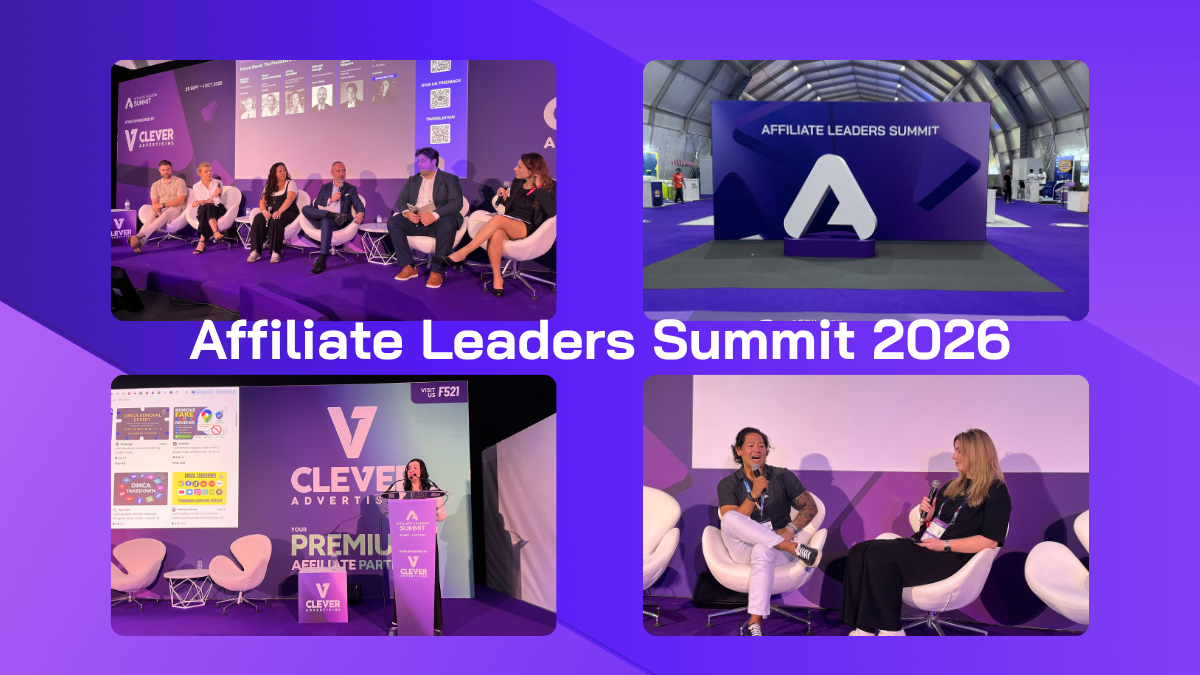
The Affiliate Leaders Summit is the global home of performance and affiliate marketing. Across three days, affiliates, operators, media companies and technology providers come together to discuss traffic generation, conversion optimisation, SEO, paid media and the commercial strategies shaping the future of affiliate marketing.
Co-located with SBC Summit at Feira Internacional de Lisboa and MEO Arena on 29 September-1 October. Get your tickets here.