
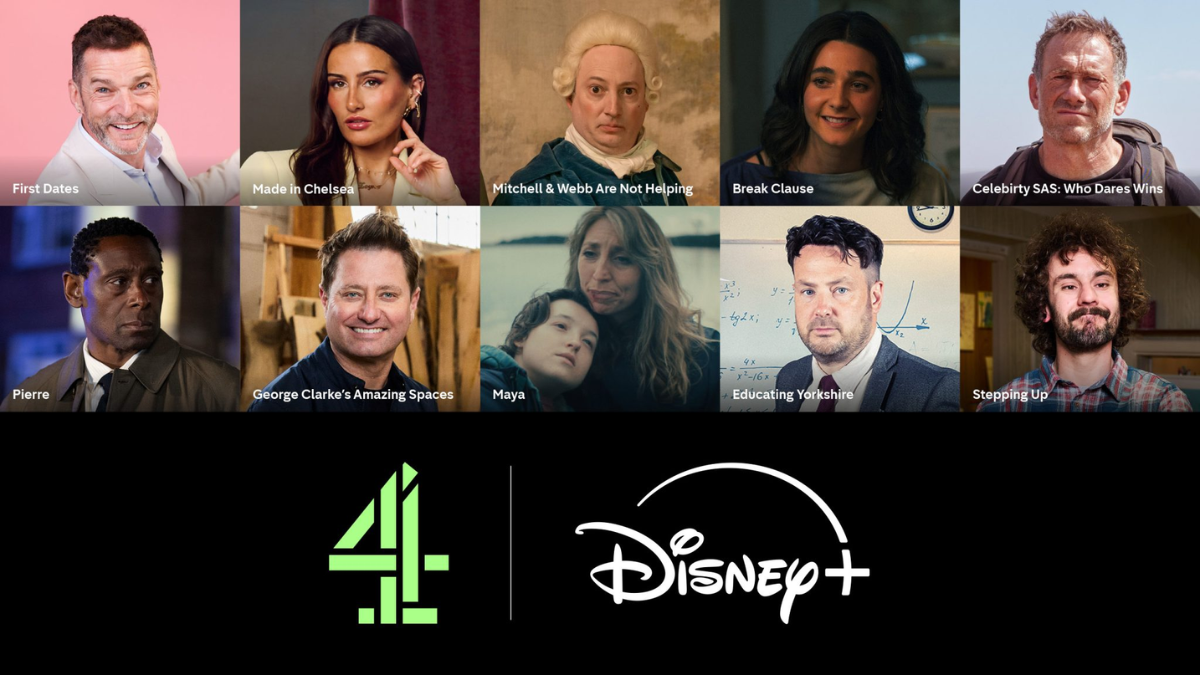
Channel 4 and The Walt Disney Company team up to make the British broadcaster’s programmes available to Disney+ subscribers.
Bosses at Channel 4 believe the British broadcasters deal with Disney+, will provide a “bigger shop window for its content and programmes”.
Announced yesterday, Channel 4 will plug its main content on the Disney+ platform, to boost the service with hundreds of hours of entertainment “at no extra cost to Disney+ subscribers”.
For Channel 4 chief executive, Priya Dogra, the partnership presents an opportunity to widen the broadcaster’s audience – an element that has been called into question.
“We’re thrilled to be working with Disney+ to give audiences even more ways to discover and enjoy Channel 4’s brilliant shows,” she said.
“Channel 4 is home to some of the UK and Ireland’s most talked about and trusted programming, and this new service will help those shows reach viewers in new places.”
The logic appears simple. Channel 4 content will be showcased to the audiences browsing Disney+ viewed as another platform to grab attention. British drama, comedy and factual television add depth to Disney’s subscription offer.
Demand in question
But calling the deal a landmark is a stretch according to media observers, who question whether there is any benefit to the partnership and who it elevates in the spectrum of UK media.
“More availability doesn’t automatically create more demand,” said Jon Manning, converged media lead for EMEA at performance marketing agency, PMG. “For most viewers, Channel 4 isn’t particularly difficult to find in the first place.”
That is the central question hanging over the partnership. Channel 4 already has a recognisable brand and its own streaming service. Another way of getting to its programmes may be convenient, but convenience by itself doesn’t make for a commercial breakthrough.
Dogra said the agreement shows there is more opportunity for the sector.
“This exciting step shows how collaboration between broadcasters and streamers can create more choice and value for audiences,” she stated.
There’s some truth in that argument. Viewers get more programmes through an existing subscription; Channel 4 gets another outlet for its commissions.
But the real prize is reaching viewers who would never open Channel 4’s app or pick its live channel. Disney+ could show them programmes they might otherwise miss.
A dedicated Channel 4 section gives the broadcaster a visible home within Disney+. But it also requires viewers to make a choice to enter it. Someone who has little existing interest in Channel 4 may not have much reason to click.
Diluting Channel 4 brand
Manning believes a British drama appearing naturally in a subscriber’s recommendations could do more for discovery. A valid point as programmes might be a stronger draw than the broadcaster’s badge.
For advertisers, the distinction is important. Additional viewing from people Channel 4 struggles to reach would strengthen the case for the partnership. Existing viewers switching platforms would be a less compelling outcome.
“For advertisers, the crucial question is whether this partnership delivers genuinely new audiences or simply shifts existing viewers from one platform to another,” Manning added.
Dogra’s ambition to reach viewers in new places is a reasonable starting point. The commercial test is whether those places deliver additional audiences, viewing and advertising value.
Channel 4 and Disney have opened another door to British programming. They now need to give viewers a reason to walk through it.
As Manning put it: “A new shop window isn’t the same as new customers.”
For Disney, this partnership builds on its deal with ITV, first announced in July 2025. Similarly, under this partnership, Disney+ get access to some ITV programmes via its streaming platform.