
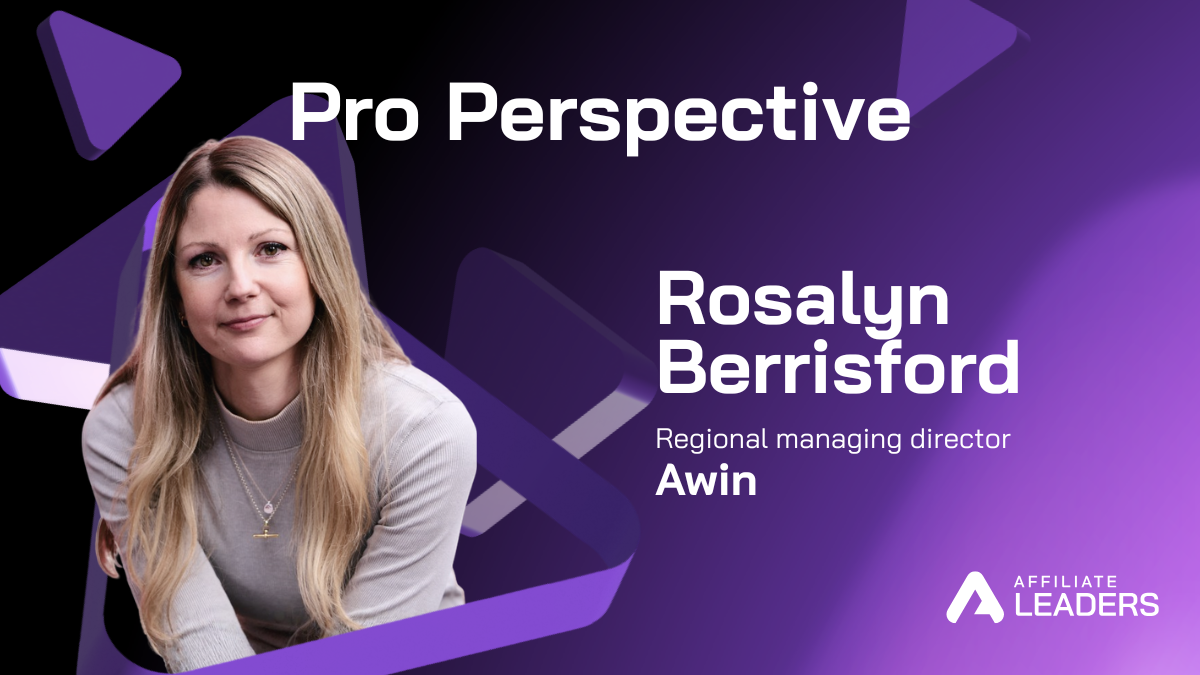
Rosalyn Berrisford discusses how a first-click model over a last-click model could be the modern way to approach affiliate marketing.
A content publisher spends years earning its readers’ trust, writes the review that persuades someone to buy, and then watches the commission go to whichever partner was present at the checkout.
Anyone in affiliate marketing knows the pattern, and the way people now shop makes it harder to ignore.
In the UK, online marketplaces account for 39% of purchase completions, according to Awin’s Influencing Retail 2026 research, so sales are closing in a few places shoppers already trust, while the persuading happens everywhere else, increasingly including AI assistants that fold publishers’ reviews into a single answer.
Brands have heard for years that last-click undercounts the partners who influence a sale, and most of the ones I speak to accept it. What many still lack is a practical way to describe what each partner adds, in terms they can take to a finance team.
Partners are best placed to provide that language, because they hold the evidence of where they sit on the way to a purchase and what kind of customer they bring. If they wait for brands to build it alone, it will be built from the figures they already have, and those still centre on the final click.
Bring the evidence before you’re asked
Most tracking can show where a partner appears in a customer’s path, how often it turns up ahead of a sale that another partner converts and how many of the shoppers it sends are new to the brand.
A content site that can show it reliably introduces new customers, or a creator who can show their audience keeps coming back to buy over several months, is handing the brand a reason to pay for that role.
Partners who bring those numbers to every quarterly review, without waiting to be asked, change the tone of the conversation, and it turns to what they contribute.
The research found 53% of 18 to 24-year-olds and 51% of 25 to 34-year-olds say they’ve bought something straight after seeing it from a creator, with no further research.
With those shoppers, a creator can introduce a product and close the sale in a single moment, while an older, more cautious buyer might treat the same creator as the first of several sources.
A partner that can describe how its role differs across its own audience will be far more persuasive than one asking for a higher rate across the board.
Ask for the commission model that fits the role
My advice to publishers who are nervous about last-click is to talk to the brands they work with about commission that reflects the job they actually do.
Paying on first click suits partners that consistently introduce customers, paying on assist rewards those who do the persuading partway through, and higher rates for new customers suit partners whose audiences are new to a brand.
All of these models are available today, and partners should feel confident pushing for the ones that matter to them. If a brand is hesitant, suggest a trial: move one part of the programme onto the new model for a quarter and compare the results.
A request backed by evidence and raised while the next quarter is being planned gets a very different reception from a complaint about attribution after a weak month. Brands want partners who help them grow, and a partner that can explain its contribution clearly is helping the affiliate manager win the budget argument internally.
Voucher and cashback partners have the most at stake
As programmes make room for creators, loyalty platforms and user-generated content, partners seen purely as closers are the easiest line for a brand to cut when budgets tighten. That puts voucher and cashback sites in an uncomfortable position, and the reputation is often unfair.
Many cashback and loyalty platforms now shape where their members choose to shop before those members have searched for anything, which is introduction work by any definition. A loyalty scheme reaches its members through points, offers and reminders every week, long before any of them is ready to buy.
At the other end of the purchase, 34% of shoppers across those same four markets now spend more time researching and comparing before they buy, and for many of them, confirming the price is right is what lets them commit.
Validation is a real job, and so is introduction. The voucher and cashback partners who can show, with their own data, that they do both will be valued for both.
Networks have their part to play, ours included, by building reporting that shows each partner’s role clearly and putting the same data in front of brands and partners alike.
The case for any individual partner, though, is best made by that partner. Affiliate marketing has long been good at proving that it pays, and the partners who can show exactly how they earn their commission will be the ones brands invest in next.
Rosalyn Berrisford is regional managing director at Awin