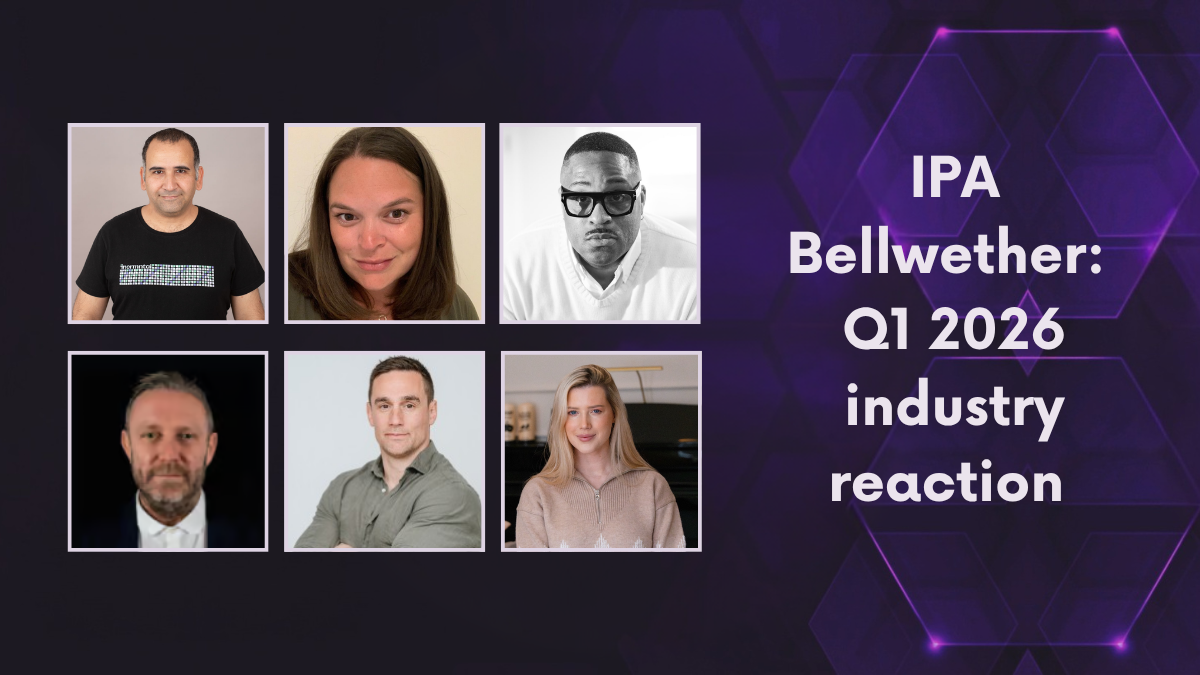


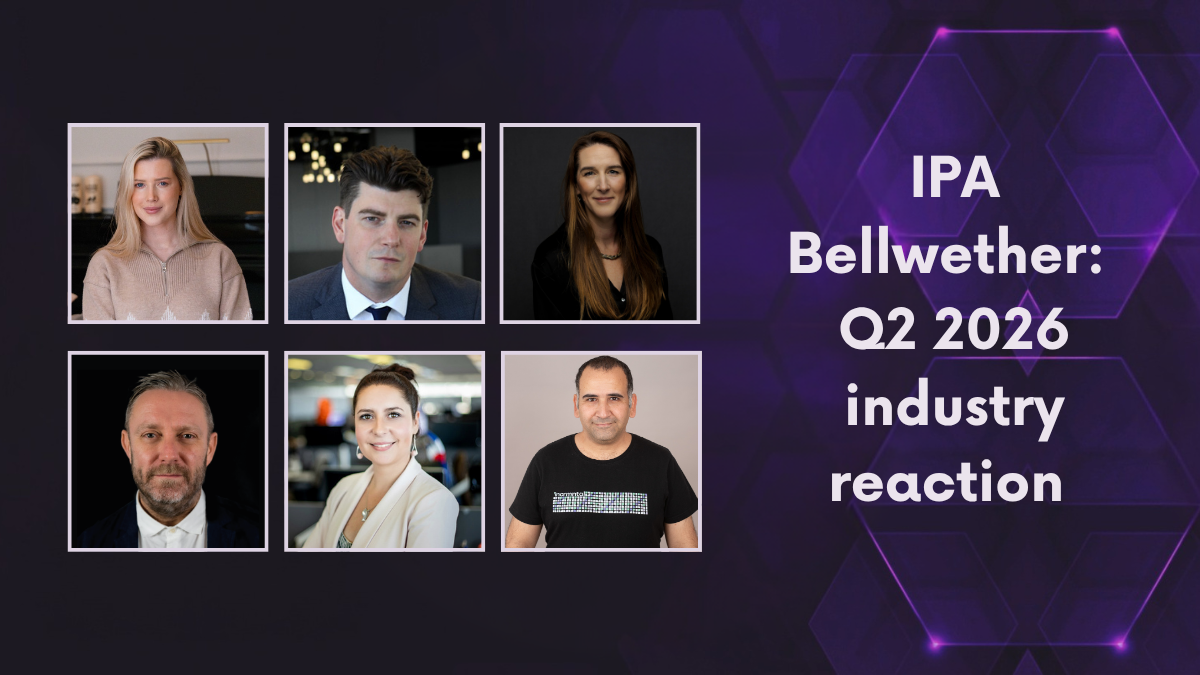
Affiliate Leaders spoke to experts across the advertising and marketing community to get their thoughts on the latest IPA Bellwether report.
The IPA Bellwether report for Q2 2026 outlined positive trends with an increase in marketing budgets and growth in video advertising – but overall confidence isn’t guaranteed to follow suit.
The Q2 report predicted adspend to grow by 2.1% in 2026, before rising to 2.3% and 2.4% in 2027 and 2028, respectively – despite purchasing power being affected by higher inflation.
This is reflected in an increase in marketing budgets, with almost a quarter (23.8%) of UK companies set to increase their spend, compared to 16.9%, who recorded cuts to their marketing budgets.
Renewed optimism was also illustrated in the form of video content. Events outperformed other categories again, with a net growth rate of 11% – although this is lower than the 14.7% from Q1.
Affiliate Leaders tracked down a range of experts from the industry to get their thoughts to the latest Bellwether findings – and not everyone is on the same page about what this means.
Budget and confidence growth
Laure Sauteraud, managing director of performance media for EMEA at Criteo says while rising marketing budgets are an “encouraging sign of business confidence,” they come with a raise in expectations. She explains that growth “will not come from spending more alone, but from spending smarter”.
“As consumer behaviour continues to shift rapidly, marketers need to respond with greater agility. Brands that can leverage rich, real-time commerce signals to understand changing intent, optimise continuously, and reach consumers at the right moment will be best positioned to turn increased investment into measurable business outcomes.”
The story here isn’t really about resilient budgets, but about rising standards, adds Maor Sadra, chief executive and co-founder at INCRMNTAL. Businesses aren’t as confident, but marketing investment is persisting because CMOs understand that growth requires investment, he says, but their tolerance for waste is changing.
“That’s why the industry is shifting from measuring activity to measuring decisions. It’s no longer enough to know what happened – you need to know where the next pound should go,” Sadra says. “In this market, that’s the difference between protecting budget and protecting growth.”
Others, like the chief executive of SuperAwesome, Kate O’Loughlin, take this as a “a sign that brand building with creators, community and fandoms is resilient in brands’ strategies, rather than simply chasing the next click”.
“The brands that win with the next generation won’t just interrupt culture. They’ll become part of it.”
That’s not all though. O’Loughlin explains the report illustrates an intolerance for waste in marketing budgets. “For example, I suspect that the revisions down on market research budgets are not a step back on wanting data about consumers, rather it’s about spending on ‘working’ media and activation with insight.”
AI at the forefront
Despite there not being a huge amount of AI content within the report, it’s unsurprising that it is heavily featured in the conversation.
“The real game-changer here is AI,” states Phil Acton, country manager UK for Adform. “Instead of replacing human talent, this technology is liberating them from manual optimisation and freeing up agencies and brand teams to focus on the creative work that stands out.”
The report confirms what many in the industry are already saying, which is the sector is moving past the experimental phase of AI and into a more secure, infrastructure-based stage. Steph Hallam, co-founder of RAAS Lab explains it’s “no longer about ‘if’ we use it, but about ‘how’ to use it to drive performance and grow market share”.
“Concerns about creative mediocrity stemming from AI are valid. As the technology has grown in use, so too has content and advertising that lacks authenticity – something audiences can see right through. This highlights a failure in execution rather than in the AI itself. The opportunity, however, lies in using it to enable creativity, agility, and relevance at scale. Rather than pumping out generic ads, AI can help to ensure maximum impact with campaigns that perfectly align with the context.
“We need to move beyond the poor practice of AI slop and harness it for sustained growth and optimisation. That’s where budgets should be invested,” she concludes.
Video strength
One of the key findings of the report is rapid growth in video tracks. Owen Griffiths, commercial director of The Sun breaks this down: “The video market has matured and I think that savvy marketers have realised that not all video inventory is born equal.
“It’s a very different proposition to be integrated into original content from a trusted media brand than it is to have your advertising sit amongst a pool of unchecked UGC content with targeting run via a black box algorithm rather than transparent insight based on quality first-party data.”
Shane Buckley, head of restaurants at Uber Advertising agrees adding that the surge in investment for video is proof that “strong creative earns its place in everyday moments that shape behaviour”, whether that’s in deciding where you eat, where you travel to, or where your next activity will be – this is when relevance matters. Advertising that can show up with good storytelling in the right context, add value, and build brand awareness will push forward in the market.
This is where the opportunity sits for brands, “combining high-quality creative with richer, full-funnel data”, he says. This enables marketers to build ads that feel more timely, useful, and connected to what consumers are doing.
“That same data is also what lets advertisers keep sharpening the creative itself: testing formats, making campaigns more interactive, and iterating based on what’s actually driving action. That’s what turns relevance into measurable outcomes, whichever channel it’s delivered through,” Buckley concludes.