



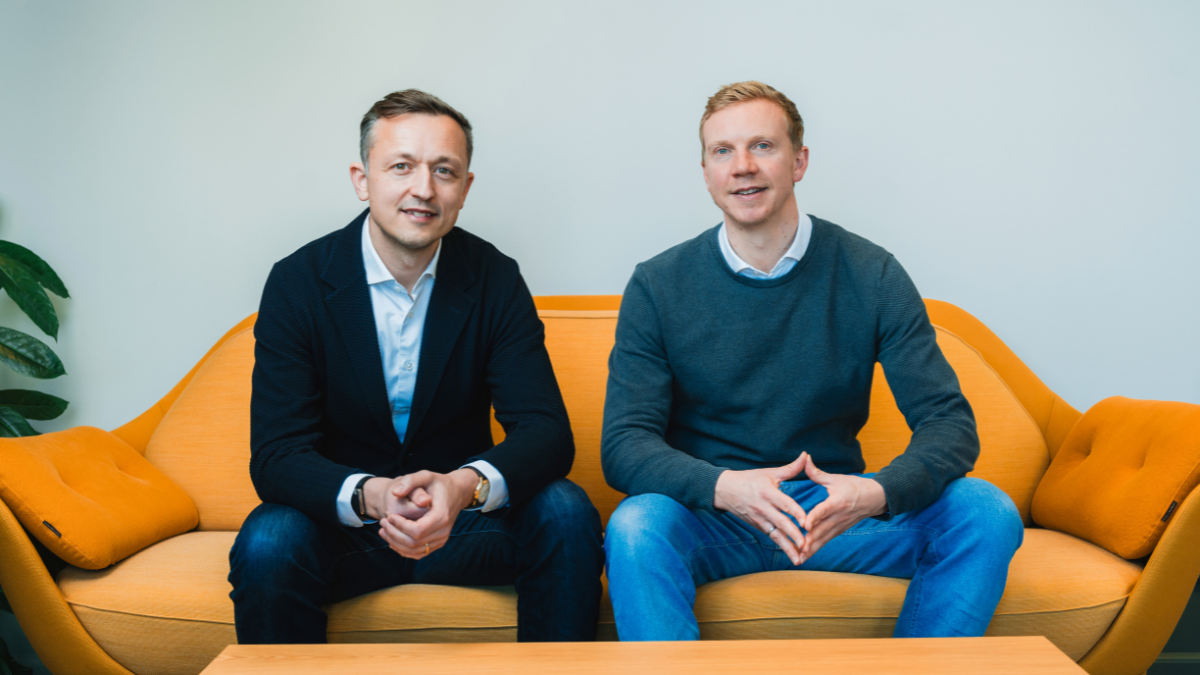
Last year saw Better Collective’s growth status interrupted. A situation founders Jesper Søgaard and Christian Kirk Rasmussen have vowed to correct regardless of generational headwinds and in the face of new competition.
“I try to not make it personal,” states Jesper Søgaard, co-founder and joint chief executive of Better Collective, an igaming media network. Yet founding partner and co-chief executive officer Christian Kirk Rasmussen interjects, “no…it is definitely personal for me”.
How can it not be? Søgaard and Rasmussen have dedicated 20 years and their entire professional lives in the development of Better Collective as the pioneering firm of igaming and sports betting media.
Founded in 2004, Better Collective is recognised as a Copenhagen-based technology company and industry champion, which developed a proprietary network of affiliate and media sites that delivered mass audiences to igaming partners.
While its status remains undisputed, it has been tested in the past two years due to shifting generational headwinds. Yet there is no retreat by Søgaard and Rasmussen, who mark 2026 as a return to growth in which transformative changes define the next era for Better Collective.
With speed and precision
“Looking back at the past two years, they are definitely not my favourite,” Rasmussen admits. “We’ve had to navigate headwinds, slow down parts of the business, and rebalance after a long period of hyper-growth.”
Both founders admit to “many sleepless nights” in how to strategise and reengineer Better Collective to mitigate new headwinds impacting all market make-ups. Søgaard retorts: “The entire sector is under difficult challenges. But our mindset has been to be simply realistic, take and implement actions, but don’t close your eyes to the situation.”
Being candid on realities, Søgaard reflects on Better Collective’s first imperative transformation to change the commercial model of its US network, due to the winddown of the “sugar rush dollar CPA deals”.
Søgaard led the project over two years. He reflects: “We’ve always believed short-term opportunities should not define our long-term strategy.
“The US CPA environment created an artificial growth curve for the industry. Moving back to revenue share was a necessary correction which aligns value with performance, retention and product quality. That’s where we want to play, and that’s where we believe the strongest companies will win.”
Beginning in 2024, the correction of its US commercial model forced a deeper recalibration of Better Collective’s organisation – the era of hyper-expansion needed to be followed by more disciplined controls.
Tough learnings
Last year (2025) was arguably its most difficult year in business for Better Collective. A year of tough adjustments and depressed margins, which saw the media company net its first EBITDA decline to €100m (-10%) in corporate history.
“For a company that has grown year after year, seeing that earnings decline is never comfortable,” Rasmussen reflects. “But it forces you to look deeper at the fundamentals of your business – what drives value, what needs to change, and how you build something that is stronger over time.”
In response, Better Collective deployed a €50m cost-saving programme, coupled with a full review of its media portfolio and operational structure – decisions that Søgaard says were driven by prudence, caution and a need to protect the company’s long-term manoeuvrability.
“It was clear that we had to take decisive action,” Søgaard explains. “The objective was not just to reduce costs, but to reshape how we operate – becoming more product-focused, more integrated, and ultimately more efficient on a global scale. These are changes we likely needed to make at some point, the market simply accelerated that process.”
The outcome is a leaner and more cohesive organisation. Better Collective has moved beyond the excesses of the growth cycle and is now structurally positioned to compete on sustainability, product depth and audience engagement.
“Markets like the US and Brazil didn’t just evolve – they changed their underlying economics almost overnight.“
Jesper Søgaard
No easy hands
Yet as the leader of the igaming media space, Better Collective found itself under intensified scrutiny. The group’s rapid ascent was in part fuelled by headline M&A deals, including the €180m acquisition of Playmaker Capital in 2024; and the $240m purchase of The Action Network in 2022.
The new assets had set a new benchmark of growth in the igaming media space that would prove difficult to sustain under shifting market conditions. Those acquisitions were designed to anchor Better Collective’s expansion across North and South America, positioning the company at the centre of high-growth markets, particularly Brazil. However, as regulatory realities began to reshape these regions in 2025, the company was forced into a more reactive stance.
“We had to play the hand we were dealt,” Søgaard remarks. “Markets like the US and Brazil didn’t just evolve – they changed their underlying economics almost overnight.
“Regulation tightened, taxation increased, and operator strategies became far more selective. When those fundamentals shift, you cannot continue with the same playbook. You have to adapt quickly, even if that means stepping back from the growth trajectory you initially planned, to ensure that what you are building is sustainable for the long term.”
During a challenging period of transition in 2025, the pair chose to balance integration of its major acquisitions with a broader industry slowdown, applying a dual pressure to both its operating model
and investor expectations.
Transitions aside, Better Collective remains firmly in the eye of the storm in 2026, as the market recalibrates to a new set of realities – higher taxation across key markets including the UK, Brazil and the Netherlands, combined with a broader deterioration in macroeconomic conditions that few operators or media networks can escape.
It has moved to provide its ‘back to growth’ FY2026 guidance of 10–18% EBITDA growth with a target of €110m–€120m. The target is locked alongside a longer-term ambition of achieving EBITDA margins of 35% by 2027–2028.
Prediction markets and new pretenders
Søgaard and Rasmussen acknowledge “many elements are uncontrollable” in the current climate. However, their comeback is set against a new wave of industry disruption – the rise of prediction markets in the US.
“Prediction markets are evolving within a different regulatory framework, but the overlap with our industry is quite clear,” Søgaard notes. “For us, it’s about understanding how that evolves and ensuring that we can adapt our products and content to remain relevant for users.”
Questioned on whether Better Collective will re-configure its US network for prediction audiences, Rasmussen says: “There is a lot of discussion around prediction markets right now. But at the core, it comes down to user engagement. If the product is good and the experience is strong, users will adopt it… that’s where we see an opportunity to play a role.”
Tech and data heavyweights, Genius Sports and Sportradar, are expanding aggressively in the igaming media this year. Attention is drawn to Genius Sports recent $1.2bn acquisition of US publisher Legend Media.
The price tag alone has drawn scrutiny, framed as a high-stakes gamble by Genius Sports to break into a cutthroat media environment. Yet for Søgaard, it serves as validation rather than threat.
He explains: “We see the entry of major data providers like Genius Sports and Sportradar into the media and affiliate space as confirmation of the strategy we pioneered at Better Collective. It proves that owning the audience is now a key currency in our industry.
“We welcome this competition because it drives market maturity. Our focus remains on our brands – building authentic communities, strengthening loyalty, and advancing our adtech infrastructure to convert audiences into high-value customers.”
There is no hiding from reality: competition is intensifying, margins are tightening, and execution risks have never been higher. For Søgaard and Rasmussen this next phase was never going to be anything but personal.