
The US midterm elections has seen political adspend hit record levels and more money wagered on the outcome than ever before. But what does that really say about the elections?
Today, voters in the US are heading to the polls for what has been described as one of the most high-stakes vote during Donald’s Trump’s second presidency. The 2026 midterm elections are tipped to be one of the most expensive political advertising cycles in history, but what is driving that spend?
The tense party committee war chest, competitive landscape, a reshaping of the House map and even the surge in prediction markets have made a contribution. But the biggest driver of spending is coming from outside the two parties – the political action committees (Pacs).
It’s the biggest trend defining political advertising in 2026, says Peter Sengenberger, managing partner of Global TV Experts US. If you “follow the money, more is going into state and local elections than ever before”.
“Pacs have become massive and billionaires are making large contributions to get their preferred candidates elected. It all comes back to money,” he explains.
Record-breaking political adspend
The 2026 election cycle is projected to reach $11.6bn in adpsend, according to AdImpact – that’s an increase of over $795m from the initial forecast in September 2025.
Not only will midterms surpass the 2022 record, which saw adspend hit $8.9bn, it is also on track to eclipse the $11.2bn spend from the 2024 presidential elections.
According to AdImpact, the spending by both the Democrats and Republicans on advertising was pacing ahead of the previous 2022 midterms in the run-up to polling day.
Analysis of the Federal Election Commission (FEC)’s data by AdImpact has reinforced the notion this campaign is set to be the biggest and most expensive on record. Cash-on-hand among the major party committees and super Pacs hit $775m in Q1 2026 – up by more than a third (36%) from $555m at the same point in 2024.
To put that into perspective, at the same point in the 2022 midterms, the figure stood at $656m and in the presidential elections of 2020, it was $481m.
The latest FEC filings, which run to mid-October, has shown that more than $9.5bn had been spent in this election cycle, with Pacs and super Pacs attributing to over half at $5.5bn.
Donors making up the Pacs and super Pacs include George Soros through his organisation Geosor Corp and Fund for Policy Report; former New York City mayor and businessman Michael Bloomberg; alongside several billionaires such as Jeff Yass, Elon Musk and Richard and Elizabeth Uihlein.
Musk, according to Brennan Center for Justice, has donated the most at $445.7m.
So how is all this money being spent?
Broadcast TV still anchoring media plans
Broadcast or linear TV remains the dominant channel for political advertising, accounting for 48% of total election cycle spending on media.
AdImpact revised its forecast for spend across TV earlier this year to $5.6bn (initial projections sat at $5.3bn). This upward revision was largely driven by the statewide races.
Meanwhile, spend across connected TV (CTV) continues to rise and is becoming one of the fastest growing media channels. It is predicted to reach $2.7bn and will account for 23% of total spending during the election cycle.
To compare, CTV accounted for just 12% of political adspend in 2022, climbing to 21% in 2024 and representing a cumulative amount across that period of $3.4bn. AdImpact suggests that CTV’s ability to “reach granularly targeted audiences at scale has made it particularly valuable for House advertisers navigating redrawn districts”.
Cable has conceded ground to CTV. Although its estimated adspend increased by $140m to $1.4bn, its total share is set to only account for 12% of spend.
Sengenberger describes this as an “acceleration into streaming layered on top of broadcast, with cable paying for it”. He points out that both Netflix and Amazon have historically maintained strict anti-political ad policies or limited campaign options, which pushes a lot of political CTV towards YouTube, Roku, Hulu and FAST (free ad-supported streaming TV).
However, what surprised Sengenberger – aside from “a midterm outspending a presidential year” – is how little the investment has done for streaming prices.
“Connected TV CPMs (cost per thousand impressions) are still running roughly 10–15% below last year. Political dollars narrowed the decline in Q3 and early Q4. They didn’t reverse it,” he tells Affiliate Leaders.
“Supply is growing faster than demand, and even a record political cycle can’t absorb all the inventory Tubi, Roku and the FAST channels keep adding.”
But that’s not all. For Sengenberger, plenty of political buyers are still chasing the cheapest impressions available instead of the audiences they actually need.
“That’s a lot of money buying reach it can’t verify. The real test is Q1 2027. Once the political money leaves, we’ll see what the CTV market looks like on commercial demand alone. I expect a plateau, not a drop,” he explains.
Outside of TV, spend across Facebook, Google, Snapchat and X (formerly Twitter) is expected to reach $1.6bn, according to AdImpact. This is a 9% increase on the initial figures the research firm forecast.
The weight of prediction markets
Then there’s the surge in prediction markets. With more than $1.5bn wagered on the midterm elections, the likes of Polymarket and Kalshi are arguably facing the biggest test yet of how reliable they are at forecasting political races.
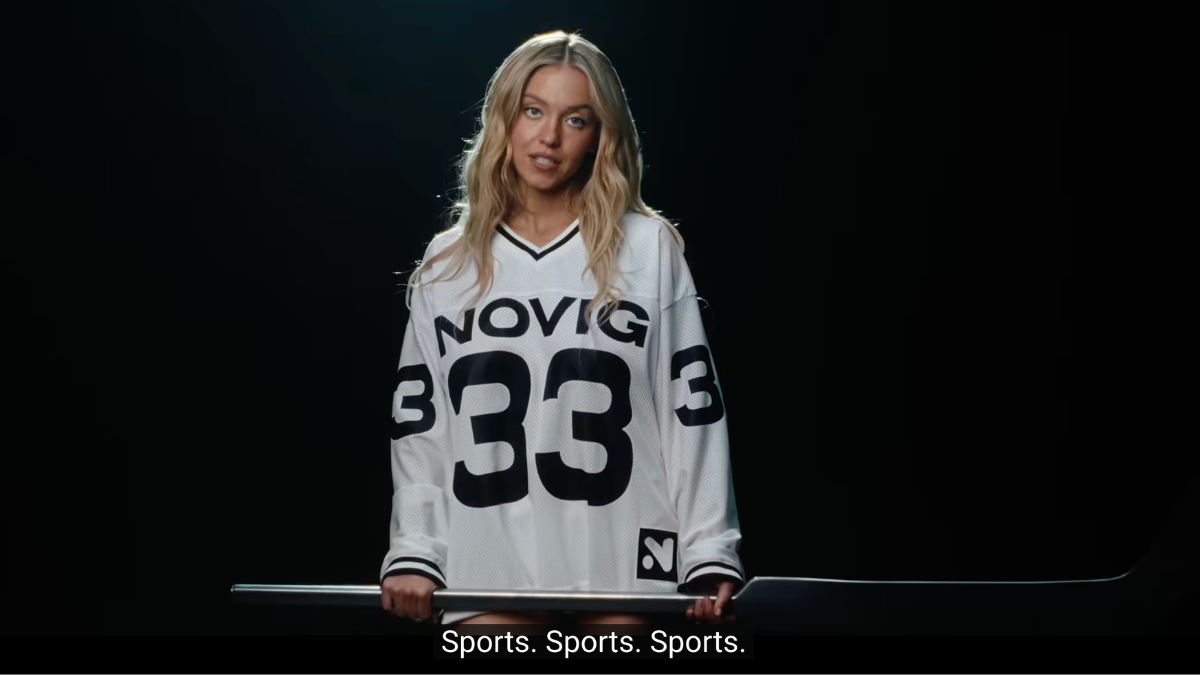
“Prediction markets are in a land grab right now. Kalshi, Polymarket, Novig and a handful of others are all fighting for attention, and it’s one of the fastest-growing categories I’ve ever seen take off,” says Sengenberger.
“Every so often a new type of business enters the market and upends everything. This is one of those moments.”
Figures from the Anti-Corruption Data Collective show across Kalshi, Polymarket and Polymarket US, more than $431m has been placed in bets on the midterm elections so far. By comparison, that figure was only $92m across the entire 2024 presidential election cycle.
As of today (Tuesday 3 November), Kalshi forecast Senate control to be leaning towards the Democrats at 75% and House control at 94% towards Democrats. Polymarket had similar odds, with 78% on the blues winning the Senate and 95% on the party winning the House.
These prediction market platforms have been “advertising aggressively,” says Sengenberger. Part of the reason is because there has been some doubt about the accuracy of the betting odds after some high-profile misses during the US primaries and in the Brazil elections.
Yesha Yadav, associate dean at Vanderbilt University Law School, told Reuters: “Tuesday does, in fact, represent a real test for the new wave of prediction markets.”
She highlighted that if the results are significantly different from the prediction-market odds, it could have an impact on the industry’s reputation, and conversely its how it expands.
It’s probably why many of these companies have been “shrewed” about how they show in this space, adds Sengenberger.
“Their odds now show up inside political programming on both sides of the aisle. You’ll regularly hear news networks and large podcasts tout a sponsorship along the lines of ‘our prediction partner Kalshi gives this race a 62% chance’. People are getting to know Kalshi and Polymarket through that integration into the daily news cycle, well before they ever see a traditional ad,” he explains.
It’s all about the polls
When it comes to elections, news organisations, publishers, and even the voters have always paid close attention to the polls, taking note of which way the pendulum is swinging.
The 2026 US midterm election cycle has taken things up a notch. The surge in prediction markets could signal a new means of polling that sticks for the long-term.
“They are [prediction market] coming up more and more in day-to-day conversations,” says Sengenberger. “News coverage uses them to hammer home a point about the odds of something happening in the near term. That’s spreading beyond politics to world events, although sports is still where most of the activity is.
“Polls are part of why people are curious. They’ve been badly off in a number of key races over the last few decades, and I’m not sure the political class gives them as much weight as it used to. Some of that probably comes down to methodology.,” he explains.
“A lot of polling still runs on an older structure that over-represents certain types of respondents compared with the general population.”
However, right now, it’s too early to tell whether prediction market betting odds could be built into media plans to decide which channels to allocate spend to. But what is clear, Sengenberger concludes, is that higher adspend doesn’t not necessarily mean more voters targeted.
In a fragmented streaming environment, the biggest issue has been duplication of audiences across multiple platforms. It does not suggest who is going to win or the marketing channels which had the biggest impact, all it shows is where money is being spent.
This election cycle has been all about the dollar.