

The United Strand’s 493 day wait for a haircut was a sub-plot to West Ham United’s draw with Manchester United that gripped the nation. But as it commandeered media consumption, it also exposed a worrying flaw in gambling safeguards of a younger generation.
For a younger audience infatuated by influencer culture, much of the chatter on social media in the lead up to the game was largely centered aroundThe United Strand; with 1.5 million followers on Instagram, 1.4 million on TikTok and 35,000+ followers on X, his content dwarfed that of new Manchester United Manager Michael Carrick.
Even as the game started, Frank Ilett was joined by a myriad of influencers during his live stream on Kick, as around 300,000 fans tuned in to watch. Largely fun content bolstered fan engagement. However, the proliferation of the Stake logo across the stream that encapsulated views from a major younger audience should ring alarm bells for regulators and the wider gambling industry.
Stake was arguably the most prominent partner of the Kick stream, even having a presence on the clothes worn by Ilett as his clips reacting to the game went viral across social media.
It marks a wider trend of guerilla marketing from unlicensed operators that have penetrated social media algorithms through the weaponising of influencers and trends.
Duncan Garvie, Founder of BetBlocker, spoke exclusively to iGaming Expert about the relationship between influencers and the unlicensed industry on social media: “It needs to be acknowledged that Stake are only one of several unlicensed gambling operators that have massive brand awareness amongst UK consumers at this time. This isn’t an outlier in terms of marketing strategies.”
The United Strand’s virality among younger audiences should make onlookers uncomfortable about this branding being plastered on his stream. It also underlines a major flaw within the safeguarding of an adolescent audience.
Garvie added: “This highlights a huge problem in advertising regulation in the UK. Licensed gambling operators would come under intense scrutiny engaging with marketing channels that appeal to younger audiences. But these rules are built into the UKGC gambling licensing conditions.
“As influencers are not required to be licensed, and as these unlicensed brands are unrestricted by UKGC edicts, it leaves these stakeholders free to partner-up in a way that completely undermines any marketing protections that the licensing system is intended to deliver.”
He continued: “This is compounded by the fact that influencers are driving younger consumers through to unlicensed gambling operators. We are losing our young population to the black market, and once they’re gone, it’s unlikely they’re going to come back.
“More needs to be done to require the streaming platforms to ensure that their content creators are marketing products that are legally fit for the markets they’re reaching.”
Recently, Grainne Hurst, Chief Executive Officer of the Betting and Gaming Council (BGC), underpinned the need for a “serious approach to advertising”, fuelled by a focus on curtailing the black market. She warned that illegal operators undertake aggressive advertising strategies that can pose a major risk to consumers.
It’s previously been suggested that the number of advertisements from the regulated betting companies has continued to fall compared to the influx of marketing materials from the black market, with a recent report commissioned by the BGC showing that spend from unlicensed operators is reaching further than ever before.
It detailed that illicit operators are spending between £500m and £700m on advertising each year, compared to £1.15bn for the regulated industry – split between £341m on broadcast advertising and £768m on digital advertising.
The report stated: “Future threats posed by advertising by illegal operators include the use of generative artificial intelligence to create appealing advertisements outside the bounds of regulatory restrictions.
“Developments in personalisation may allow illegal operators to target potentially lucrative customers more easily, many of whom may be vulnerable.”
Partnership pile on
Stake isn’t the only brand that has been associated with the rising popularity of The United Strand; at the end of last year he agreed a collaboration with Paddy Power and most recently also announced a deal with Argos.
Through his partnership with Paddy Power, he engaged in a viral marketing social media campaign that garnered thousands of views across a plethora of platforms.
Furthermore, Ilet posted a social media link to 365Scores, which is an Entain-owned affiliate and featured a mock haircut on the lineup of the United team.
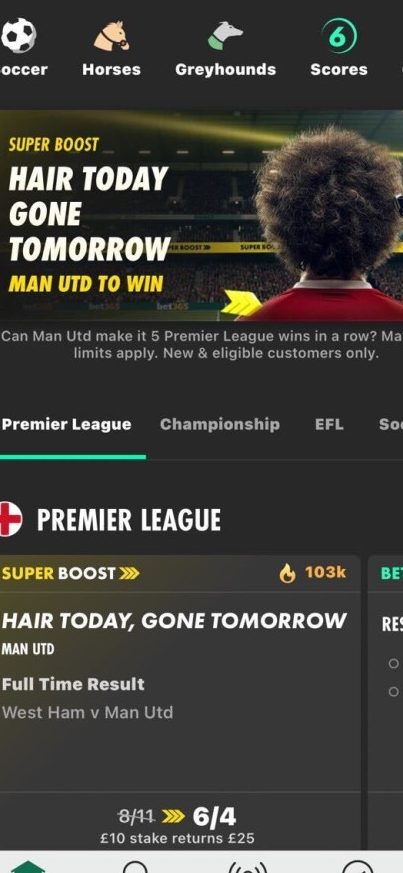
There was also an unrelated bet365 promotion that tapped into the fandom of the United Strand, titled ‘Hair Today, Gone Tomorrow’, splashed across the front page of the leading UK operator’s mobile app.
Stake’s UK departure
The provocative marketing strategies of Stake have already led to the operator departing the UK, after its controversial campaign featuring adult film star Bonnie Blue drawing widespread condemnation.
Filmed outside Nottingham Trent University, the campaign prompted an investigation from the UK Gambling Commission after it went viral across social media and featured Stake branding.
Off the back of the investigation, the Australian-based operator confirmed it will cease to have a presence in the UK market after TGP Europe Limited (TGP), which operates the site as part of a white-label arrangement, confirmed it will be shutting the site. The operator has, however, continued to have a presence on the streams and social media clips that are frequently viewed amongst UK audiences.