

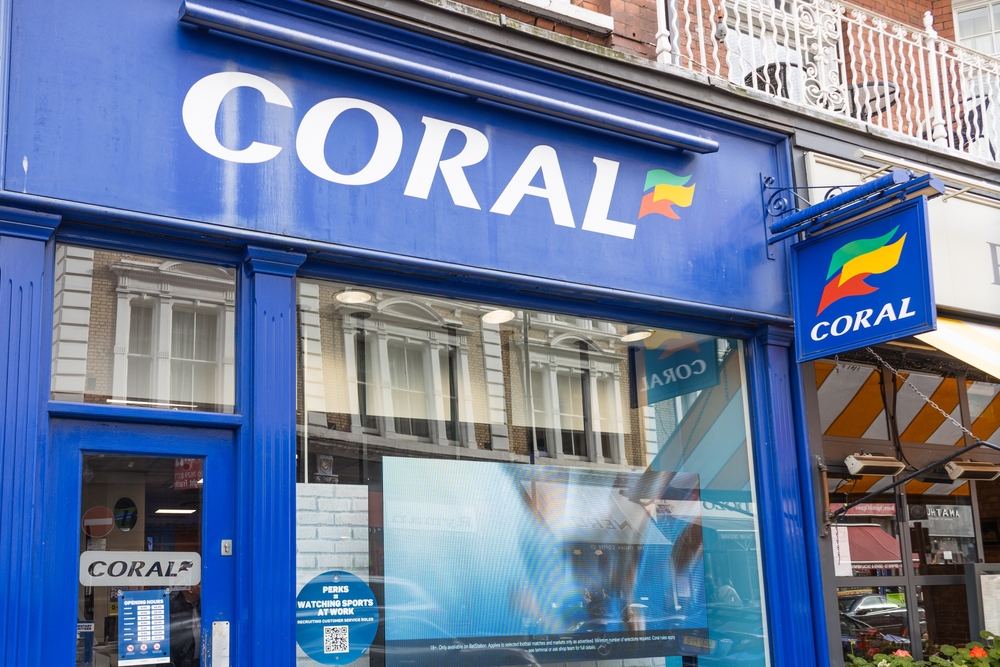
UK bookmaker Coral has ended its over 50-year association with the Cheltenham Festival as a direct result of the UK’s decision to hike gambling tax.
Headlined by an almost doubling of remote gaming duty from 21% to 40%, beginning April 2026, operators up and down the UK will be forced to fork out millions of pounds more in tax. It is a decision that has led to stark warnings that they will be forced to scale back on spending, including sports sponsorships.
Now, Entain, Coral’s parent company, has taken the “regrettable” decision to step away from the Cheltenham Festival, including ending its sponsorship of the Coral Cup, which Coral has been the title sponsor of since its inception in 1993.
Simon Clare, Entain’s UK consumer PR director, said: “The sheer size of the government’s recent tax increase on betting operators means we are having to take very difficult decisions as we look to mitigate some of the huge impact.
“The significant change in the taxation landscape for betting operators means we need to drive even more value out of the events we sponsor, and review with even greater scrutiny where we invest our marketing spend, which has resulted in the end of the Coral Cup sponsorship.”
Though Coral will remain active during the Cheltenham Festival through promotions across its online platform and retail stores, the decision serves as a concerning warning for the future relationship of UK sport with the gambling industry.
Cheltenham Festival is one of the country’s most prestigious horse racing meets, drawing 250,000 spectators in person across the four days of racing, alongside millions of viewers on television.
The fact that Entain does not view sponsoring the event with Coral as providing adequate value signals the perceived financial stress that will be caused by the UK tax hikes.
Alongside an increase in remote gaming duty, UK Chancellor Rachel Reeves also announced as part of her Autumn budget, a new general betting duty rate for remote betting of 25% from April 2027, excluding self-service betting terminals, spread betting, pool bets and horse racing.
Though horse racing initially appeared to be spared following extensive campaigning during the lead-up to the announcement, it is now becoming clear that the knock-on effect of the tax changes could be just as catastrophic as first feared.
Reacting to the news, Louie French, Conservative politician and shadow minister for gambling, posted on X: “ We warned Labour that hiking taxes would negatively impact funding for UK sports, cost jobs and fuel the black market. If bookies are cancelling funding for Cheltenham, lower-profile sporting events will surely be next.”
An exodus incoming?
In the wake of the budget reveal, UK operator BetGoodwin announced that it was cutting all horse racing sponsorship in what it described as a “black armband day for small to mid-sized UK online bookmakers”.
Meanwhile, Entain has projected that the tax upheaval will have a negative financial impact of £200m before any mitigations. However, the company informed investors that it would be seeking to minimise 25% of this figure through cutting spending on marketing and promotions.
Similarly, fellow multinational gambling groups Flutter and Evoke also committed to marketing cuts – despite the former renewing its sponsorship of the PDC Darts World Championship with Paddy Power at the end of December 2025.
Coral and Entain’s decision, given its size and standing within the UK gambling market, is likely to send shockwaves through horse racing and the wider sporting landscape.
No sport is more directly intertwined with gambling than horse racing, and as it contends with the challenge of increasingly dwindling attendances at meets up and down the country, an exodus of sponsorship would add significant strain to the sport’s already precarious finances.
Elsewhere, a litany of sports teams, leagues and tournaments will be sweating on their own associations with the gambling industry, wondering if they will be the next on the chopping block as firms seek to tighten their belts ahead of the upcoming economic turbulence.