



A prolonged crisis would be comparable to the oil crisis of 1973 and result in adspend flatlining, WARC reveals.
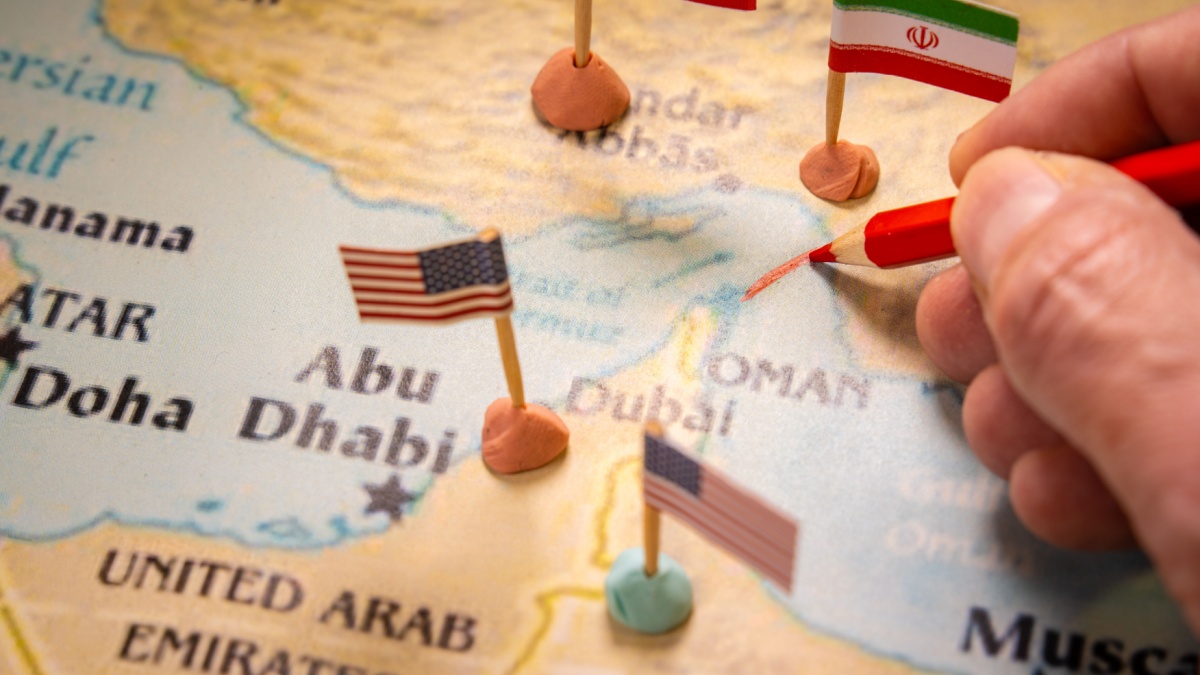
As much as $94bn of global adspend growth is at risk due to the Gulf crisis, WARC research has revealed.
Despite uncertainty, WARC has upgraded its forecast for global ad growth to 10.4% or $1.32trn, but turbulent geopolitical outlooks could wipe out as much as $49.9bn, or just over 4% of growth in 2026.
WARC has published its Q1 2026 forecast update, outlining projections for global advertising spend. This research includes three scenarios based on potential repercussions from the conflict.
In the event of a “short-lived, contained shock; temporary oil spike, Hormuz disruption avoided”, the travel and transport sector would be affected the most with a 3.5% industry wide adspend decrease.
In this scenario, WARC predicts ad market growth could still reach 10.4% in 2026, as it only risks 0.2 percentage points of global economic growth; adds just 0.5 percentage points to inflation; and real household spend is likely to dampen by 0.3 percentage points.
The effects are relatively modest, and the primary impact would be felt through higher energy bills in importing markets, with the assumption that oil prices will hold at around $100 per barrel for around six months.
The second, more disruptive scenario – the “extended shock” could see oil prices elevated for one to three years with partial supply disruptions. In this case, 1.6 percentage points could be cut from ad market growth this year, which equates to around $19bn.
If the crisis continues into 2027, forecasts suggest a further $13.3bn would be cut from ad market growth, resulting in a decrease of up to $32.3bn in global growth over the next two years. This could mean a 0.5 percentage point drop in global GDP and a 1.1 percentage point increase in inflation.
The final, most extreme scenario outlines the effects of a severe shock, with a prolonged closure of the Strait of Hormuz, and oil prices reaching $150 per barrel. In this instance, it could remove 7.3 percentage points and $93.9bn from ad market growth over the next two years; cut two percentage points from global economic expansion; and add three percentage points to inflation
This could see adspend growth flatten or even fall in over-exposed product categories. Consumer confidence would collapse and real household spend could fall year-on-year. Adspend growth would be limited, such as food (up 0.7%) and leisure and entertainment (0.2%); while travel and transport could see budgets cut by 5.8%.
The global ad market would still grow 6.2% in 2026, in this scenario, but it would be 4.2 percentage points behind WARC’s baseline forecast – which is equivalent to nearly a $50bn loss. A prolonged shock to the market like this – which is comparable to the 1973 oil crisis – would carry over into 2027, resulting in a further $44bn loss in adspend growth.
James McDonald, director of data, intelligence and forecasting, WARC, and author of the research, said: “Even in a contained scenario, an oil shock of this nature acts like a tax on consumers – pushing up prices while eroding real spending power.
“In a more prolonged or severe disruption, we move into stagflation territory, where sectors like travel, automotive, food and consumer electronics take a direct hit from both rising costs and falling demand.
“The net effect is a meaningful squeeze on discretionary spend that puts up to $50bn of anticipated ad market growth at risk this year, as brands pare back their media investment in a bid to preserve thinning margins.”