

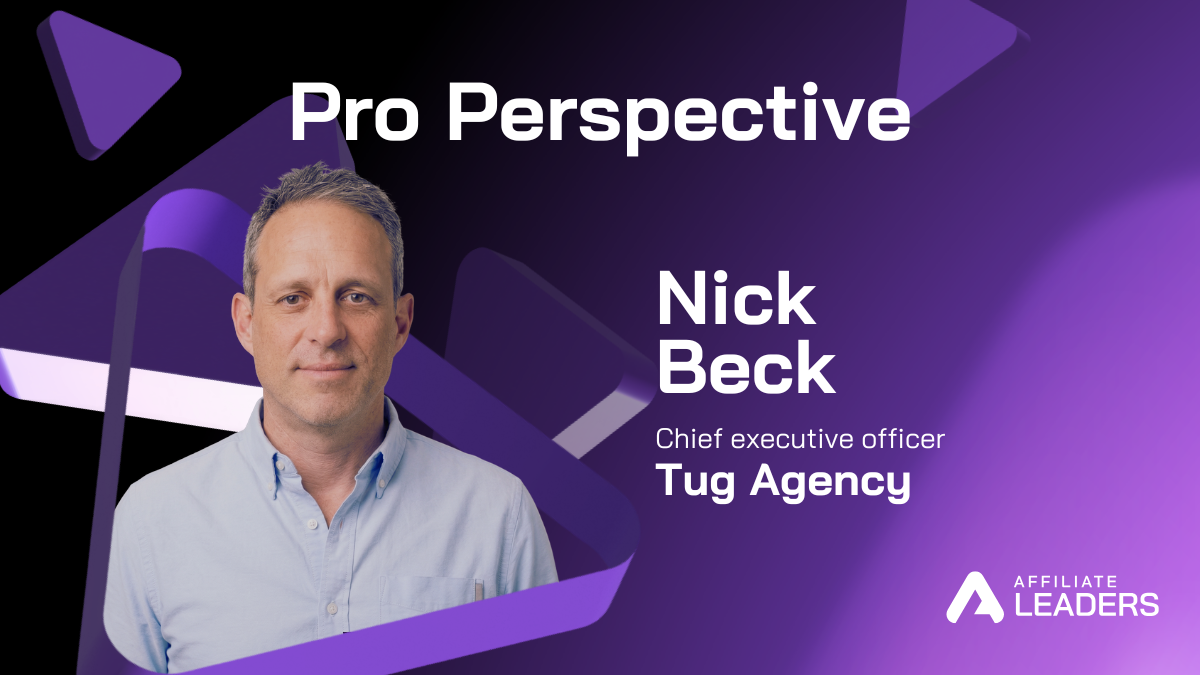
In a new guest series from Affiliate Leaders, Nick Beck from Tug Agency examines the new state of SEO and what affiliates should be thinking about when comes to their marketing strategy.
The SEO industry is still arguing about rankings and traffic. That debate already feels outdated.
For years, SEO has been treated as a performance channel. We know this: the logic was that more visibility meant more traffic, and more traffic meant more opportunity to convert. We’re now seeing search behaviour shifting in ways that quietly move SEO much closer to ‘brand’ than ‘performance’. Yes, brand is back.
Branded searches are being used to investigate rather than navigate. And inclusion in recommendation sets matters more than owning a single high-volume keyword. For affiliate marketers, the shift means SEO is no longer about capturing demand, but how it influences which brands even make the shortlist.
1. The first change is where discovery actually happens – inside AI interfaces
People are forming opinions inside AI interfaces, social search environments and recommendation engines before they ever type a query into Google. AI Overviews, ChatGPT, Perplexity and even TikTok search are doing something that used to belong to editorial media: shaping the shortlist.
By the time someone reaches traditional search results, the set of potential brands is often already formed.
This is why the industry’s obsession with ‘zero-click search’ just misses the bigger shift. The more important change is that discovery itself is moving upstream. If a brand isn’t appearing in recommendation environments, affiliate content or comparison ecosystems early in the journey, ranking later may not help as much as it used to.
SEO is no longer just about answering questions. Increasingly, it’s about being included in the answers that shape intent.
2. Branded search is now an investigation
The second shift is the changing role of branded search. For years, the division of labour between channels was tidy. SEO captured non-brand discovery, while paid search captured brand demand.
When someone searches for a brand today, it often isn’t navigation. It’s an investigation. They have already encountered the brand somewhere else – perhaps in an AI response, a social recommendation or an affiliate review – and now they’re validating whether it’s credible.
They read reviews. Compare alternatives. Look for reassurance. In other words, branded search now behaves less like a bottom-funnel action and more like a mid-funnel behaviour.
SEO experts have pointed to the rise of zero-click search, while others have highlighted how Google increasingly surfaces authority signals and expert commentary in results. Both trends point to the same reality: search results have become a credibility check.
For affiliate ecosystems, that matters. Review content, comparison articles and partner recommendations are no longer just traffic drivers. They actively shape how brands are evaluated once someone begins researching. That makes organic visibility inside those environments a brand signal as much as a performance one.
3. Competitive inclusion now matters more than keyword ownership
The third change is how competition works in search. Traditional SEO strategy revolves around keyword ownership: find the biggest category term, rank first and capture the traffic.
But recommendation systems behave differently from search rankings. AI tools rarely recommend a single option. They generate shortlists. And once a shortlist exists, the competitive dynamic changes from discovery to preference.
So the real strategic question is shifting. Not simply ‘are we ranking number one?’, but ‘are we consistently one of the brands being mentioned?’.
For affiliate marketers, this is particularly important. Visibility across comparison content, recommendation engines and review ecosystems determines whether a brand enters consideration in the first place.
If a brand is missing from that set entirely, owning the category keyword later may not change much. SEO begins to behave less like a capture channel and more like a presence channel.
This shift also exposes a weakness in how SEO performance is usually measured. Sessions, rankings and click-through rates were designed for a world where search-initiated discovery. But if SEO increasingly influences perception and validation, those metrics only tell part of the story.
What matters just as much is whether a brand appears in recommendation environments, whether organic visibility strengthens branded demand and whether search exposure contributes to incremental behaviour across the wider marketing mix.
This is exactly why brands should focus on incrementality rather than attribution theatre. Platform dashboards are very good at telling you what happened inside the platform. They are much worse at telling you what would have happened anyway.
If SEO strengthens brand preference earlier in the journey, its impact often shows up somewhere else: higher conversion rates, stronger branded search demand and improved performance across other channels.
Those are brand effects, not just traffic effects.
The industry likes to periodically declare that SEO is dying. It isn’t.
What is actually happening is more interesting. Search is evolving from a traffic-acquisition tactic into something closer to brand infrastructure – the environment where people verify claims, compare options and decide whether a brand deserves a place on their shortlist.
That changes how SEO should be planned, measured and integrated with affiliate ecosystems. Not as a silo chasing keywords, but as part of the system that determines whether your brand is considered at all.
Nick Beck is chief executive officer at Tug Agency