


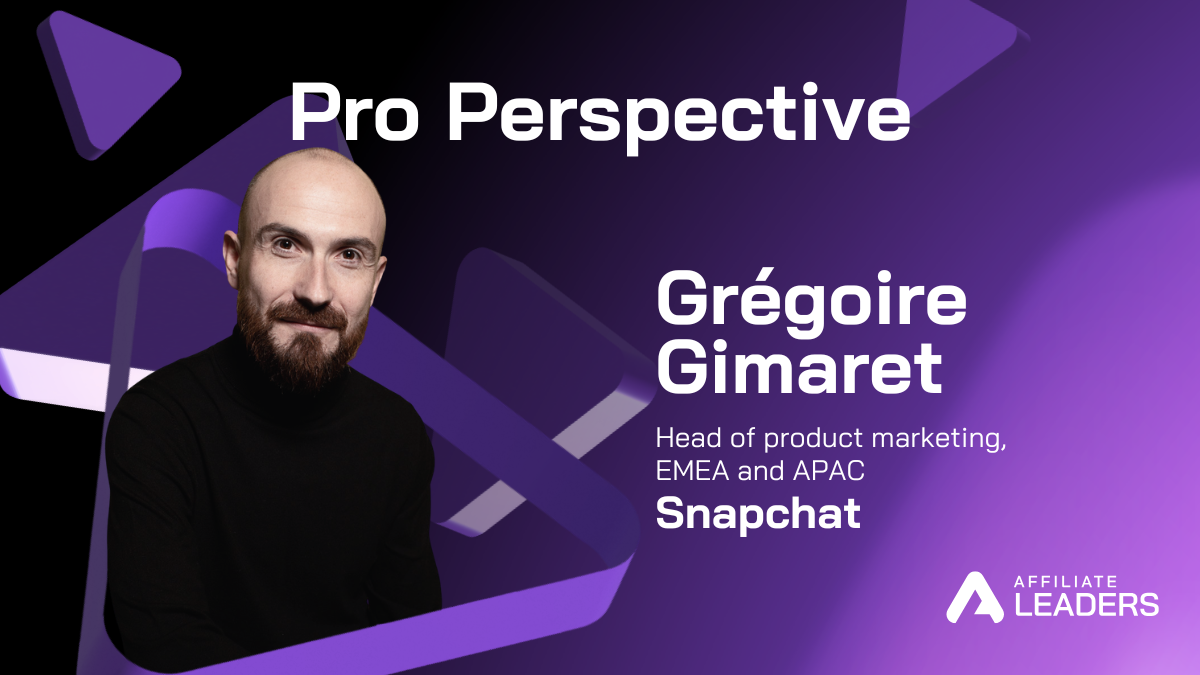
Snapchat’s Grégoire Gimaret discusses why marketers need to rethink optimisation and look beyond the established channels.
For years, app marketers have been taught to think about performance in familiar terms: reach, clicks, installs and cost per acquisition. And for good reason. These metrics have helped brands scale quickly and build increasingly sophisticated acquisition engines.
But today I’m increasingly hearing a broader question getting asked: where will the next wave of growth come from?
The economics of growth are changing. Customer acquisition costs continue to rise, with some estimates suggesting a 60% surge, while the performance marketers can extract from established channels is becoming harder won.
Are you simply buying more of the same performance, or investing where you can create new growth?
Spending smarter starts with understanding where audiences, attention and influence are moving.
Follow the audience, not the old media plan
Consumer behaviour has changed considerably. People are spending more time on their phones, but what they do there is changing too. Conversations with friends, product discovery, recommendations, research and purchase decisions increasingly happen within the same digital environments.
Think about how quickly this behaviour has evolved. A group chat can be where someone decides which restaurant to book, whether a pair of trainers is worth buying or where to go on holiday. A creator can turn an unfamiliar product into a must-have. A recommendation between friends can move someone from curiosity to consideration in seconds.
Yet performance strategies can still concentrate spend on the channels and formats that have historically delivered the greatest volume. When everyone is competing for the same audiences, impressions and moments of attention, scale alone becomes a less useful measure of growth.
In the UK, 49% of daily Snapchatters are not daily YouTube users, while a third are not on TikTok, according to a new GWI incremental reach analysis. This highlights Snapchat’s ability to help brands reach incremental audiences, rather than simply re-reaching consumers already reached through other platforms.
Spending smarter means following the audience rather than simply following the old media plan.
Broaden the definition of performance
For app marketers, that means looking beyond impressions and installs to understand the quality of attention, incrementality and whether a channel is bringing genuinely new customers into the funnel.
A campaign delivering a low cost per install may look efficient on paper. But if many of those users already know the brand, or would have downloaded the app through another channel anyway, how much new growth has actually been created?
Equally, a campaign reaching fewer people but introducing an app to a new, high-intent audience could ultimately create greater value.
That distinction matters as brands look beyond the audiences they already know. The objective shouldn’t only be to find more people to serve an ad to. It should be to find new opportunities for growth, particularly in environments where people are actively communicating, discovering and making decisions.
It also means thinking differently about the journey between attention and conversion.
Gaming is a good example. Rather than simply asking someone to watch an ad and then download a game, marketers can give potential players an opportunity to experience the product first.
Supercell did exactly that when promoting Clash Royale on Snapchat. Playable ads allowed Snapchatters to experience a snippet of the game before deciding whether to install it, delivering a 37% lower cost per install and 19% higher ROAS compared with its business-as-usual strategy.
The lesson goes beyond gaming. Better performance doesn’t always come from buying another impression. Sometimes it comes from making the experience more relevant once you have someone’s attention. It can also mean getting smarter about what happens after the install.
Deblock, a financial app, recently tested a more unified approach to measuring and optimising its campaigns through Snap’s Unified Attribution setting. The result was a 25% lower cost per install and 28% lower cost per completed onboarding, while also delivering 43% more installs. Importantly, the users acquired through the test remained active for longer, suggesting that efficiency and quality do not have to be competing priorities.
Look beyond established environments
As consumer behaviour changes, the path from discovery to action is becoming less linear.
A conversation with friends can lead to discovering something new, researching it and ultimately engaging with a brand, without people necessarily experiencing these as separate stages of a funnel. For marketers, this makes the context in which attention happens increasingly important.
There are signs these more conversational environments can contribute to performance too. Sponsored Snaps, for example, brings advertising into chat, a space primarily used for communication between close friends and family.
More broadly, the evidence suggests that reaching people in different environments can add value beyond simply increasing reach. For example, a recent analysis by Measured found that advertisers can see a 19.3% higher incremental return on adspend from Snapchat compared with the blended incremental return across social advertising in the e-commerce market. The broader takeaway is that where brands invest can have a meaningful impact on the incremental value they generate.
The point is not that one environment is inherently more valuable than another. It is that performance depends on more than scale alone. Where an ad appears, what people are doing at that moment and how naturally the format fits that behaviour can all influence the value of an impression.
Diversification + optimisation = smarter growth
None of this means replacing one performance channel with another.
It means diversifying the acquisition mix so brands aren’t overly dependent on a small number of established channels, while testing where new audiences and new sources of incremental growth are emerging.
It also means rethinking optimisation.
If the only objective is to drive the lowest possible cost per install, marketers can end up repeatedly competing for audiences who are already familiar with a category or brand. If the objective is sustainable growth, another question becomes just as important: how many of the people we’re reaching would we not have reached elsewhere? And beyond acquisition, are those users actually going on to become valuable customers?
That puts incrementality alongside efficiency. It makes the quality and context of attention more important. And it shifts optimisation from simply buying more media towards identifying where investment can create genuinely new value.
Ultimately, I want to make it very clear that spending smarter does not necessarily mean spending less.
It means challenging the assumptions built into existing media plans. It means following audiences as their behaviours change, testing the environments where new opportunities are emerging and measuring success against the growth those investments actually create.
From where I sit, the next generation of app growth will belong to marketers who don’t simply ask where performance has come from before, but where attention, influence and new customer opportunities are moving next to help them spend smarter.
Grégoire Gimaret is head of product marketing, EMEA and APAC at Snapchat