
The advertising watchdog has banned mobile game ads which misrepresent game play, despite “Not Actual Gameplay” disclaimers.
The UK’s Advertising Standards Agency (ASA) has banned a number of mobile game ads for their misrepresentations of the games they promote.
The ads affected were from game companies King, Scopely, and Omnilojo.
The advent of generative AI has seen a flood of ads featuring gameplay ,which does not match the actual game offering. Consumers are often presented with promotional material which depicts a more complex game, only for the actual mechanics to be simple and unappealing.
In fact, as much as 30% of all mobile game playable ads misrepresent the gameplay experience, rising to 35% among casual games with playable ads, which use mechanics that don’t reflect the game, according to Segwise’s 2025 mobile advertising analysis.
While another study by ACM games found as much as 98.3% of ads analysed (59 out of 60 ads across 12 different games) contained misleading content, with only one single ad featuring actual gameplay footage.
It’s not clear if the ads barred this week by the ASA were produced with AI, or why the ads differ from the games themselves, but these bans do illustrate a trend among mobile gaming ads to partially, or in some cases fully misrepresent their own gameplay in favour of a more polished looking ad.
In a statement, senior ASA investigator Freddie Alcock said: “Mobile game ads must give people an accurate impression of the gameplay they can expect and mustn’t mislead them with scenarios or features that aren’t representative of the actual game. It’s important that people are able to make informed decisions about the games they choose to buy or download, so we’ll continue to take action in this area where we see ads breaking the rules.”
Farm Heroes Saga hubris
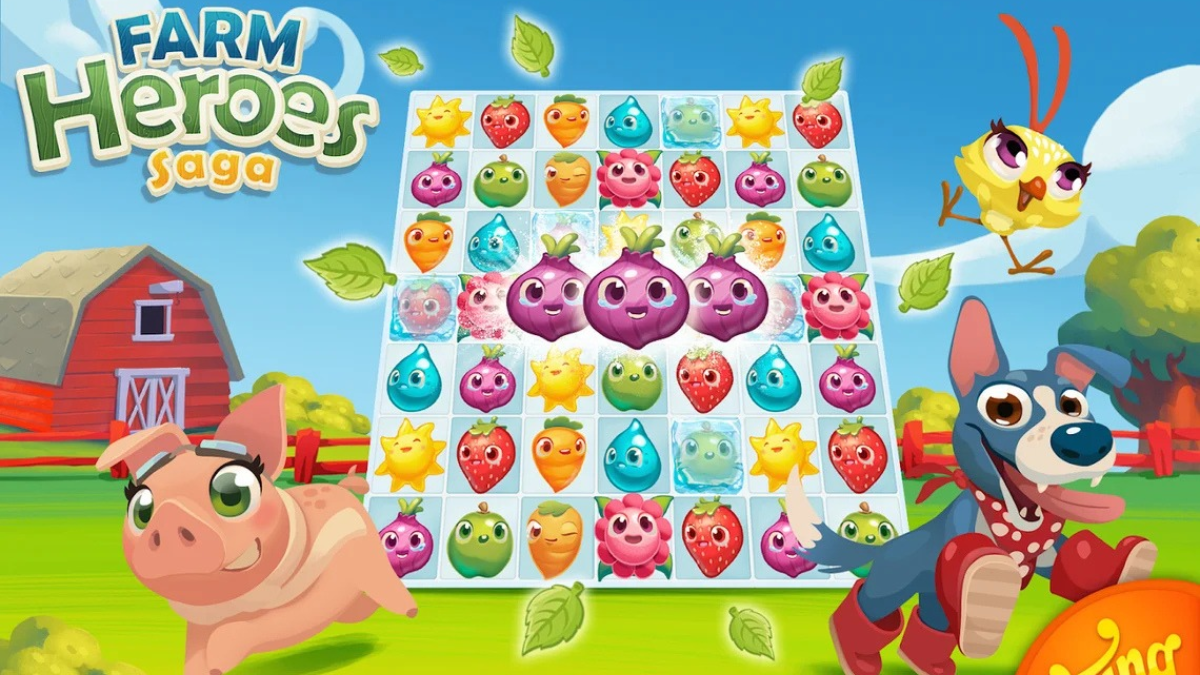
The ads from King.com related to a game called ‘Farm Heroes Saga’. The content featured disclaimers explaining the ad footage was not part of the gameplay within their app, but this disclaimer did not prevent the ad from being deemed “misleading.”
Among the banned promotions was a paid-for ad run on Facebook for mobile game Farm Heroes Saga.
The ad featured animated animals in various scenarios, with what looks to be depictions of a puzzle game and hands swiping cursors into different positions. King.com confirmed the mechanics of the game matched the promotional material, but included different objectives, obstacles and themes.

A disclaimer at the bottom of the ads alternated between: “Not in-game footage,” and “not actual gameplay”.
The ASA determined the ad presented Farm Heroes Saga as a match-three puzzle game. It said although the disclaimers were present, consumers were likely to understand the “falling nails, hatch, cow and saw as part of the gameplay scenario being advertised”.
“We therefore considered the qualification was unlikely to alter that understanding and was likely to contradict, rather than clarify, how consumers would understand the game,” the regulator stated in its ruling.
The misleading play
The ASA has confirmed it is broadly looking to crack down on ads with misleading depictions of gameplay in mobile games.
As such, it has also banned three paid-for Google ads for Dark War Survival, a mobile game from Omnilojo Pte Ltd, as well as two paid-for Facebook ads for Pixel Flow!, a mobile game from Scopely Inc.
The Omnilojo ads were prohibited based on “misleading” impressions given by the promotional material, which featured graphic scenes that appeared to be highly realistic, but were ultimately not representative of the gameplay. It also claimed the game had won the ‘2026 Game Creative’ and ‘2026 Survival Game awards’, which were deemed to be misleading.
In response to the ASA’s complaints, Omnilojo acknowledged the ads could have done more to distinguish between those world-building sequences and the game’s core interactive gameplay features.
The Singapore-based firm also added the ads could have provided more context to explain the game’s main gameplay and accepted that, as a result, some consumers might have understood the story sequences shown in the ads to represent the game’s core gameplay.
The ASA ruled: “We understood that the advertiser intended the claims to refer to the game having been featured and recommended on Google Play and the Apple App Store, and did not intend to suggest that formal third-party awards had been won.
“However, that did not alter the impression created by the ad. Because consumers were likely to understand the claims as objective claims that the game had won awards, and because the advertiser had not shown that such awards had been won, we concluded that the claims were misleading.”

Similarly, the ads for Pixel Flow!, which showed short puzzles rotated and shaped by a hand icon, and a ‘piggy’ character, which the watchdog concluded was misleading and the “playing experience differed materially from the gameplay depicted”.
Two different gameplay elements were shown in the ad, which the ASA determined would reinforce the impression that the gameplay shown was part of the experience.
Additionally, an ad from Vistrex Ltd for mobile game Idle Zombie Miner: Gold Tycoon, was found to have “misleadingly” given the impression of real gameplay. The ad featured a cartoon zombie driving a bulldozer to collect resources, with the screen later showing windows of gameplay.
This ad was not reported to have included any disclaimer warnings stating the content was not real gameplay experience.
The rulings contribute to the ASA’s ongoing action against mobile game ads which do not match the app offerings.