
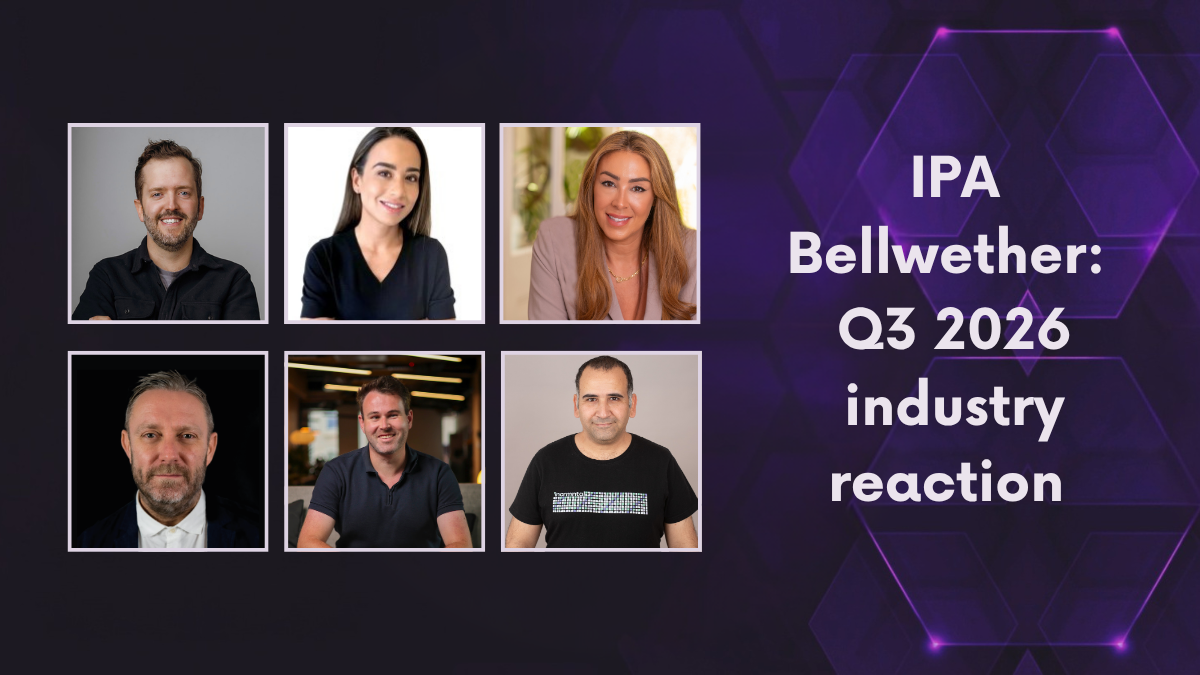
Affiliate Leaders spoke to marketing experts from across the industry to get their thoughts on the latest IPA Bellwether report.
The IPA Bellwether Q3 2036 report saw UK marketing budgets rebound to the highest levels in more than two years.
More than a quarter (25.6%) of marketers increased their budgets during the last quarter, with spend across main media jumping from 1.5% in Q2 to a nine-year high of 9.8%.
While marketing budgets saw a positive uptick, business confidence still remained in negative territory. This “contradiction”, makes it “even more vital marketers don’t assume that spending more naturally equates to growth”, warns Maor Sadra, chief executive and co-founder of INCRMNTAL.
“More marketing budget is great news. Unless you’re simply putting more money to waste,” he says.
“The sharp rebound in online advertising is encouraging, but if marketers are using bad signals to decide where budgets should go, it’s likely they’ll end up spending more on conversions that would have happened anyway. Just because a platform claims credit for a sale, it doesn’t mean it drove it.”
Sadra’s comments were echoed by several marketers Affiliate Leaders spoke to about the latest Bellwether report, with many rising concerns around attribution and measurement in particular.
Can adland keep up with the pace of change?
Matt Bahr, co-founder and chief executive of Fairing, questions whether measurement is keeping pace with how rapidly search and discovery is changing.
He says: “More purchasing decisions are being influenced by AI assistants, creators, podcasts and other channels that don’t always leave a measurable click. A customer might discover a product through ChatGPT or a TikTok influencer, then search for the brand days later to make a purchase.
“Traditional analytics often give search the credit, while the channel that introduced the customer to the product goes unrecognised.”
However Kieran Greene, founder and chief executive at Shinka argues it is the whole advertising ecosystem that’s lagging behind. He questions whether the “infrastructure used to buy and sell advertising is keeping pace with the market”.
“In video and digital out-of-home (OOH), publishers are managing increasingly sophisticated inventory and multiple sources of demand. But more demand doesn’t automatically mean better returns.
“Fragmented technology and a lack of transparency can make it difficult for publishers to understand how their inventory is valued and whether different demand sources are competing on an equal footing,” adds Greene.
Short-term vs long-term strategy
So what does this mean for the advertising industry going forward?
For Holly Dewsbury, head of agency development, EMEA at Uber Advertising, whether brands are using search, OOH, video or social media, it’s all about “making those interactions count”.
“Consumers don’t live in channels; they live in moments,” she explains. “From the daily commute to deciding what to order or where to go next, people move between different needs and intentions throughout the day.
“These everyday moments reveal what people need, what they’re thinking about, and what they might do next. For brands, that’s an opportunity to move beyond simply being seen and become genuinely relevant.”
Dewsbury goes on to add that brands shouldn’t lose sight of long-term growth and that “brand-building and performance shouldn’t be treated as separate objectives”.
Hannah Barnett, vice president, brand sales UK and EMEa, at LiveRamp echoes a similar sentiment. She says: “While short-term activation plays an important role in driving immediate results, the greatest opportunity lies in balancing this with long-term brand building and customer value. Understanding which investments are delivering genuine incremental growth is key to achieving both.”
Bhar agrees and suggests brands should combine “customer-reported attribution with existing measurement methods” to help marketers make “better decisions about where that additional investment goes”.
Whereas for Greene, the key is to make it easier for publishers to sell their inventory while retaining control over how it is traded.
“Independent mediation allows different demand sources to compete in the same auction, giving publishers greater transparency into who is bidding and how their inventory is being valued,” he says.
“As investment grows, publishers need to ensure that growth translates into better returns, not just more complexity.”
Using AI to build credibility
Trust, transparency and authenticity were the three key pillars advertisers agreed that could help turn this increased spend into better returns and at the centre of that is AI,
Managing spend across video digital OOH (DOOH) and online marketing channels is often easier said than done, highlights Phil Acton, country manager UK, at Adform.
“Ahead of the Autumn Budget, advertisers will look closely at how to make these larger budgets work smarter, especially when campaigns span multiple channels and the risk of wasted spend increases,” he says.
“That’s why agentic AI is becoming increasingly useful for media buyers. It can analyse live data, automate workflows and shift budget towards what’s performing best, helping teams make quicker, more informed decisions and get more from their omnichannel campaigns while making every pound count.”
For those using search, Adam Jabłoński, head of account management strategy, RTB House, believes “AI search puts a premium on credibility and authenticity”, meaning brands need “advertising that earns its place on the page”.
“That starts with relevance: ads must meet people where their intention is. Deep learning can read those intent signals at scale and turn them into more efficient, engaging campaigns,” he explains.
“As we head into 2027, AI will continue to change how people search and discover. Brands that understand intent and respond with relevant creative will ensure extra ad investment drives incremental outcomes.”