

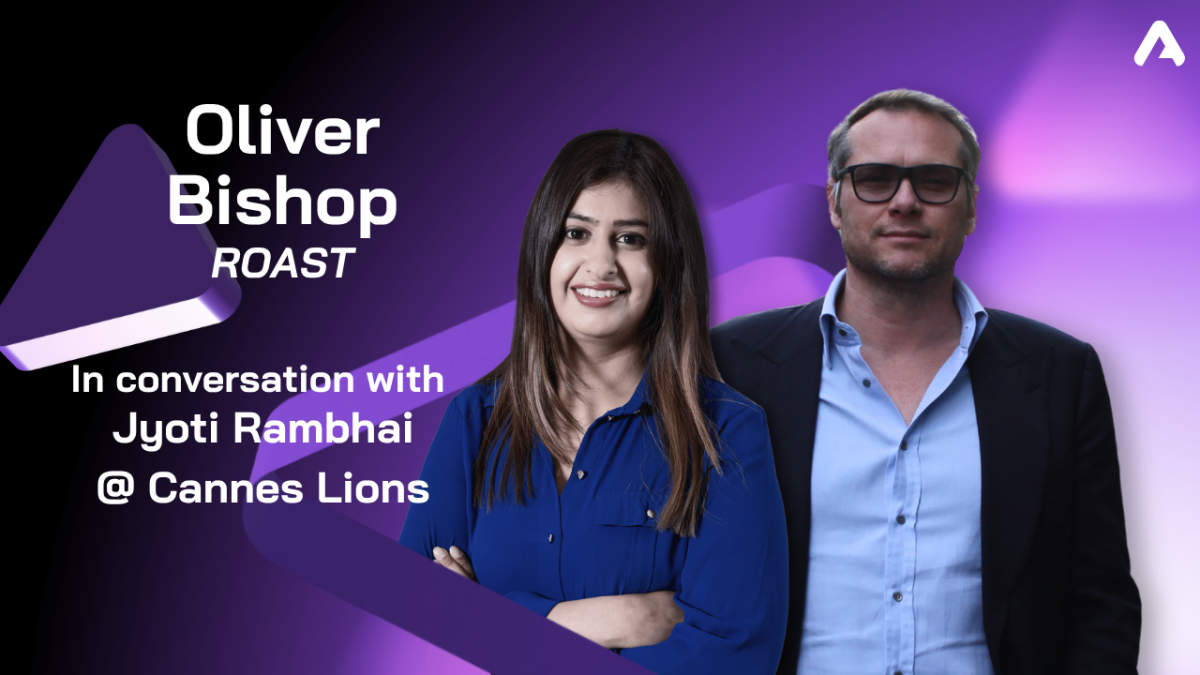
Affiliate Leaders’ editor, Jyoti Rambhai, sits down with ROAST’s Oliver Bishop to chat about AI search and the biggest evolution that marketing is experiencing at this year’s Cannes Lions.
AI has completely disrupted search marketing. This is not news, it’s something adland has been anticipating for quite some time.
Earlier this year, Google cemented this evolution when it announced a wave of changes to search at its I/O conference, which essentially puts AI at the heart of discovery.
Despite all the arrows pointing this towards essentially a zero-click era, it was still a hot topic of discussion across the Palais at Cannes Lions this year.
Google has put “search back at the forefront” of marketing, Oliver Bishop, chief executive and co-founder of performance marketing agency ROAST, tells me.
“We’re effectively seeing from our clients, most brands are losing between 10% to 30% of their organic traffic on Google. It’s tough, because people are suddenly thinking they’re losing loads of traffic and that it is being replaced by the LLMs or the AI search engines – but that’s not necessarily what’s happening.”
While AI search engines are producing more informative results, which is resulting in fewer click-through rates, the bigger challenge Bishop points out is brands “not necessarily know what’s happening to these users or where they’re going” afterwards, especially as “you’re still getting brand impressions”.
“What we’re not seeing – unless you’re doing some very strong measurement – is whether or not people are leaving and then coming back to go through your site. The exception is if your have a more transaction website, less informative and are selling something.”
LLMs still lack sophistication
This is why organic socials are becoming more important, he explains. “Appearing on platforms like Reddit and Facebook, where you can’t manipulate those search results as it’s very much customer-led, is becoming essential.”
Bishop, who has been riding the waves of search marketing and SEO almost since its inception in the early 2000s, says its “worrying that some of the results on LLMs are not always accurate”.
“The old school SEO tools of getting higher up in Google search results haven’t changed. Just as before, results can be manipulated. They can be manipulated through people putting lists together.”
Bishop uses the example of a quiz he put together for ROAST in which he asked ‘who won the last Formula1 World Championship’, to which the LLM gave the answer of Lewis Hamilton. The correct answer was Lando Norris.
“You always have to double check. The LLMs are not quite as sophisticated in some areas,” he says. “However, they are strong in the longer search queries – things that people want to have an answer to without going to a certain centre.”
At the time of the interview, we were sitting in the sweltering heat of Cannes, ahead of England’s game against Ghana in the group stages of the FIFA World Cup. Therefore, to keep things relevant, Bishop explains a good example of where LLMS are strong would be to a query such as: “Find the best odds for England winning by two goals or there being seven yellow cards in the match or 19 corners.”
“This is where LLMS are coming back with stronger results, they are scraping website content to find the most relevant answer from a neutral source perspective.”
And therein lies one of the answers. For betting companies (and other brands), they need to “create more content”. But not just anything, it’s about “creating extra content for those more complicated search terms and feeding back on those results,”.
“You’ve got to think about what people are looking for and use that to produce something relevant. However, you have to be careful,” he warns. “If you produce too much content and it’s not seeming to be actually helping, then it won’t actually do you any good.”
Ultimately though, Bishop says “you have to have a good product”, where people can give you reviews on community-driven social media sites like Reddit and Facebook.
‘We’re fighting over less real estate’
So where does that leave traditional search?
“Search is becoming more holistic,” adds Bishop, who set up ROAST in 2015. “It’s less about your website and more about other sites, what people are saying about you… it’s a plethora of different elements.”
Add to that, chatbots like ChatGPT have introduced paid advertising, which offers another “exciting” avenue.
“It’s not just simply bidding on certain keywords and you’ll appear in the search results,” he says. “It’s slightly more complicated, which is why everyone should be testing it.”
Bishop explains that advertising on LLMs is more of an audience-based metric, “you need to know who you want to target, if they work at a company of ‘this size’ and has ‘x, y and z’ , coupled with your keywords and search terms”.
“We’re fighting over less real estate, so it’s harder to appear in the search results and let alone get people clicking on you and you need to know you’re not wasting your money. You’ve got to do it correctly.
“It’s like the early days of Google, even back then, it was easy to waste your money if you didn’t know how to bid on keywords.”
Bishop highlights there is a “gap in the market” for someone to get paid advertising right in the LLMs. But things are changing fast and one of the biggest challenges is getting c-suite buy-in that keeps up with the change of pace.
This is where “hand on heart, we have failed”, admits Bishop. “We were talking to clients at the start, talking to the search teams who we were working with, telling them the importance, the shift that’s coming.
“The response was ‘we’ll look into it’ or ‘we’ll do it later’. And even though we’re knocking down doors, trying to get in front of the c-suite, traditionally they have always been much more brand orientated.
“The shift came – like back in the old days when people would stick their brand name into Google to see where they appear – when c-suite put their company names into say ChatGPT and not getting back many answers.”
The c-suite is now taking notice and the nice thing about that, Bishop adds is, “they are seeing the speed of change and understanding the importance of brand equity in terms of peoples’ opinions”.
Search and discovery has become multi-faceted. Traditional SEO matters, but so does the content on the website and most importantly, for Bishop, what users on social media platforms say about the brand. Opinions matter in the AI era of search.