


Google search is saying goodbye to the ten blue links and introducing AI-powered information agents, the tech giant announced at its I/O conference.
Google search is about to get its biggest upgrade in over 25 years that could have huge impacts on advertisers, publishers, and the many organisations that rely on it for their operations.
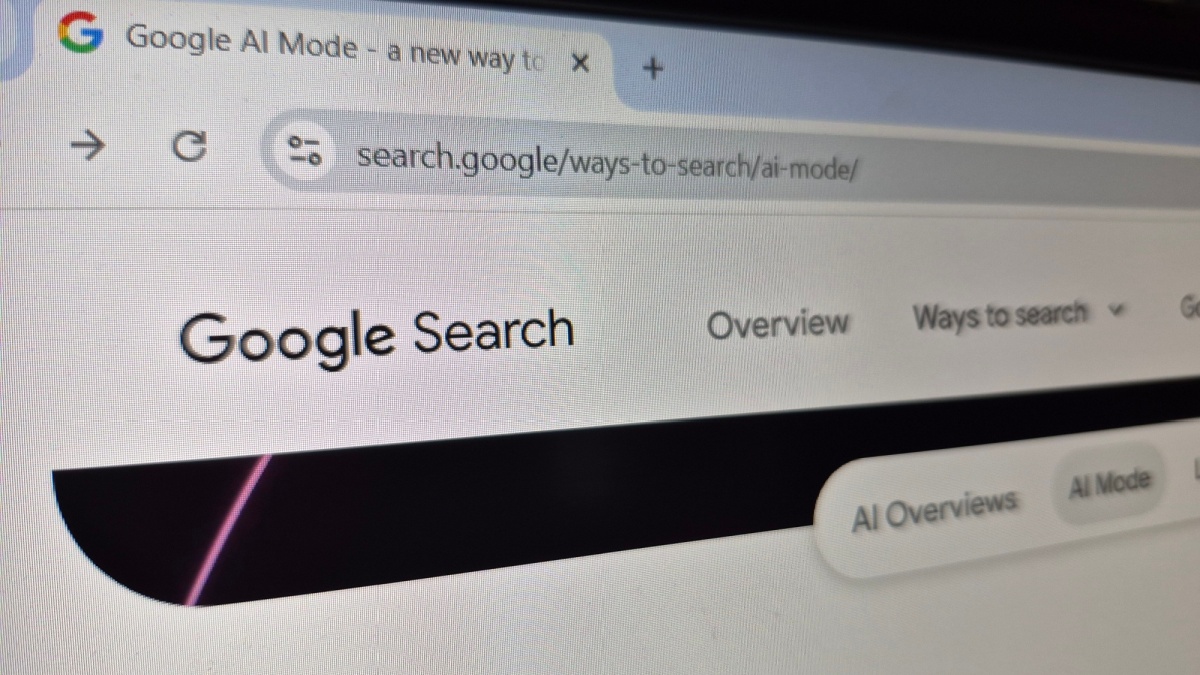
At Google’s I/O conference , the tech giant revealed plans for AI search with the most transformative coming to AI Mode. Google will still provide a range of search results, but will move away from keyword search and into a more intent-based model.
This includes a reimagining of the ‘intelligent search box’. Google is ditching the list of blue links that have become the synonymous with search itself, and is introducing AI-powered interactive experiences in AI mode – bringing “information agents” to scrape content and provide tools to help users build “mini apps”.
“Often, you aren’t asking one-off questions — you have an ongoing task you find yourself searching for over and over, like planning a wedding or managing a home move,” said Elizabeth Reid, Google’s vice president of search.
“Search can go a step further, building you custom dashboards or trackers that you can continue to come back to and make progress on. You can think of these like mini apps for your own specific tasks.”
Updates include the introduction of search agents, which can be customised and managed within the search engine – giving users the latest information on the topics they’re interested in by monitoring for changes across social media posts, news sites, and blogs.
Google is also expanding the data collection on its users with Personal Intelligence. This connects Gmail, Google Photos, and Google Calendar to build a deeper profile on its users to understand the ‘context’ behind their search intent.
The Alphabet-owned company said the new system, build in partnership with Google’s DeepMind team, uses Gemini Flash 3.5 and will be rolled out to all users, free of charge, this summer.
new system was built in partnership with the Google DeepMind team and uses Gemini Flash 3.5. It will roll out to everyone who uses Google, free of charge, this summer.
A fundamental shift
This will mark a significant difference not just for users, but for the internet as a whole. Google is undeniably one of the central touch points for the internet itself, and this announcement hands over the traditional search journey over to AI agents.
Google has suffered some backlash from this update, with many pointing out that search is the lifeblood of many businesses and industries, so the removal of click-through techniques and de-prioritisation of search traffic is likely to have huge consequences for websites.
“Google is essentially killing search traffic, thereby removing the biggest source of income for sites. Worse; it is in fact removing the most stable source of income. Because newsfeeds are, by nature, unpredictable; whereas search usually provided a base for traffic,” says Tom Bacon on X.
The result is obvious. Some sites cannot afford to operate without that base, and so shrink. Other sites cannot afford the same staffing, so let people go, and reduce output. In a very strange way, Google is essentially trying to kill the internet. /4
— Tom Bacon (@TomABacon) May 19, 2026
These changes are likely to dramatically affect Google referrals to publishers, who are already suffering in an increasingly zero-click environment. Publishers have very little time to adapt to these new updates, with many already struggling to keep up with Google’s fast evolving SEO guidelines – especially ad-dependent media operations – which are likely to get worse with this update.
While this currently only applies to searches within AI Mode, it represents a fundamental shift in the infrastructure of search going forward, with Google investing billions into the development of AI tools, models, and agents.
AI subscriptions update
New updates are also coming for Google AI subscribers, with AI Ultra plans – specifically tailored to the over 8.5 million developers, technical leads, and creators who build apps and content within the tech giant’s models.
This will come in the form of a $100/mo subscription, with a five times higher usage limit than the Pro plan and priority access to the new agent-first development platform, Google Antigravity.
The AI Ultra plans also come with Gemini Spark for US users – a 24/7 AI agent that will “connect the dots across your Google products and take complex tasks off your plate”, added Reid.
A whole host of new updates outline the direction of change that Google has been heading in for a while now, clearly putting its confidence in the new technology of AI agents.
“Part of the reason we focus on delivering frontier models — highly capable, but also very efficient, fast, and at a lower price — is because we want to bring it to as many people as possible, and so I think that’s an area where we will shine,” said Sundar Pichai, chief executive at Google, in a press briefing ahead of I/O.