




Advertising helps keep sports funded and functioning, but when it creeps into the fan and player experiences – where do we draw the line?
As a sports fan, advertising and marketing has become a reality that viewers have had to become accustomed to – like it or not, it is a huge part of the funding behind sports, and often makes large sporting events possible.
In some sports, the advertising is becoming more and more invasive. Anyone who watches Formula One will be very familiar with sponsor logos crammed into every available space on the driver’s suits, cars, barriers. Even on race weekends the driver’s schedules are packed with marketing and media events.
This, of course, is because Formula One is an enormously expensive sport, and the sponsors, advertisers, and marketing opportunities help to fund the experience. In fact, some drivers are given their seats, in part, because they bring in sponsorships (sorry Latifi!).
That being said, not all sports are anywhere near as expensive to run as Formula One, yet advertising feels as though it’s becoming a more important part of them all.
So, when does it all become too much? Where do viewers draw the line? And will advertisers, sporting bodies, and tournament organisers step in to make the experience more enjoyable for audiences?
The good
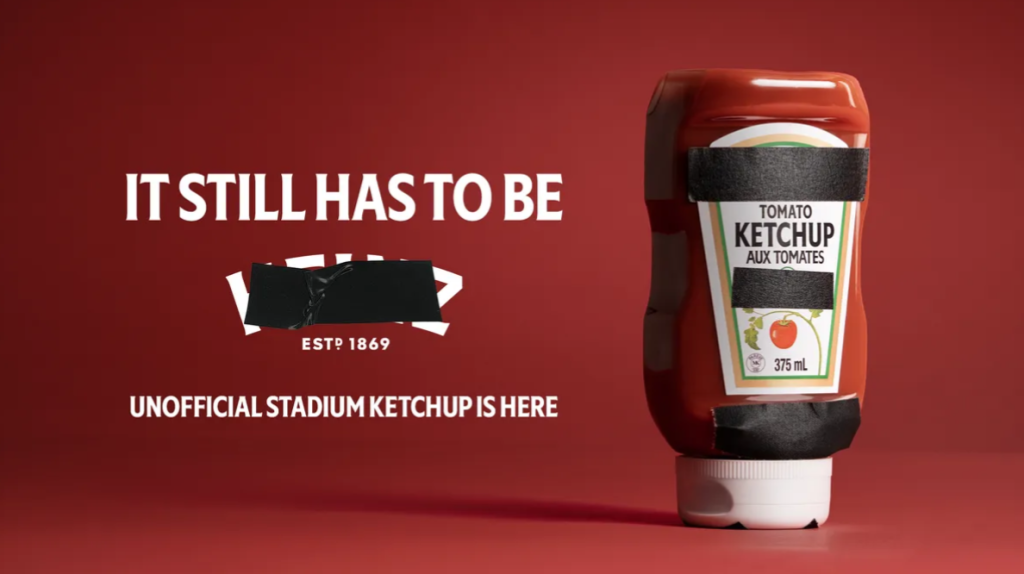
There are some glimpses of gold in sports marketing. For instance, in the 2026 FIFA men’s World Cup, Gillette, Levi, and Heinz took advantage of the strict ad rules and got creative with their non-ad campaigns by covering up their stadium sponsorships in interesting ways.
Athlete led campaigns have seen real success too. Adidas tapped into the ’90s nostalgia with its well-received ‘Backyard Legends’ campaign, featuring Messi, Zlatan, Bellingham, and Yamal.
The reason these more subtle and tasteful ads do well, is because they play into what the audiences want to see – their favourite stars showing off their technical skills – done in a way that feels playful or they poke fun at ad culture itself.
The bad
Most of all, audiences don’t want the ads to be intrusive, or to distract from the main event. But, unfortunately that’s not always how it goes.
One of the most egregious cases of an intrusive ad during play was during the rugby Nations Championship, shown on ITV.
During these matches, as many as six on-screen ads are shown at once – and they’re unnatural looking to say the least. It’s even worse when play moves to the area that the ad falls – where it appears as a weird superimposed hue, making play difficult to follow.
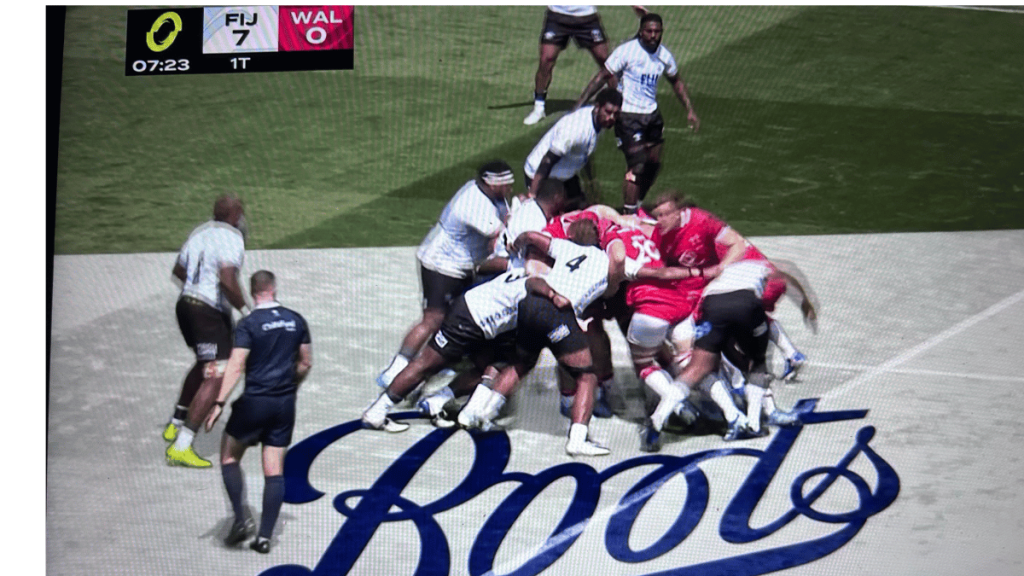
“I’ve decided I’m just not watching any games with digital on-pitch ads anymore,” says Reddit user DayMurky617. “If I’m not being respected as a viewer, I’m not going to give them my eyeballs. There’s plenty of other sport to watch on TV that [don’t] treat me with contempt.”
This isn’t the first time that rugby union has been at the centre of an ads controversy. During the Six Nations, ITV recently ran an experiment in which the screen would be split for 30 seconds, once per half, usually during scrum set, in order to play an ad side-by-side with play.
This has since been ditched, as the overwhelming feedback was negative, and the broadcaster failed to even sell the ad slots for the Nations Championship.
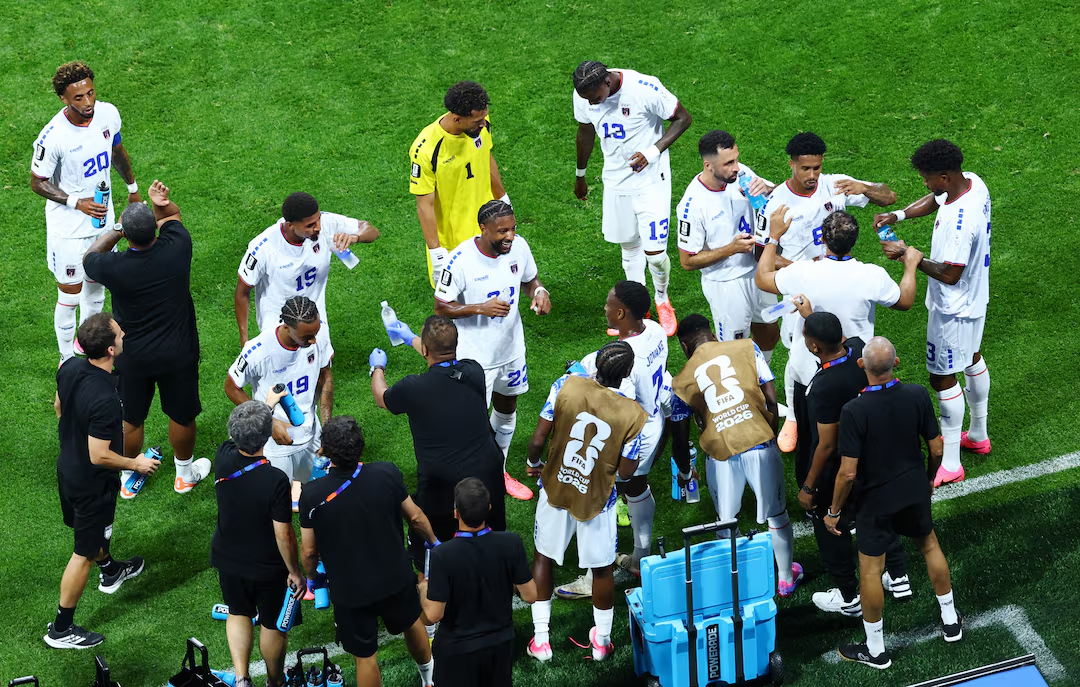
Then there is the hugely unpopular hydration breaks, at this year’s World Cup, which fans, pundits, and players alike have seen for what they really are – another way for FIFA to make money via advertising.
This FIFA 2026 World Cup is the first to include mandatory hydration breaks for all games, and critics have even pointed out the flow of the game is disrupted so much that it has led to significant momentum changes, which may have often helped facilitate goals.
This is where sports advertising really fails. Not only is it unsightly and distracting, but it infuriates the audiences, alienating the viewers and creating a sense of resentment around the broadcaster, advertiser, and even the sport itself.
Sports fans are pretty forgiving when it comes to advertising. There are stadium sponsors, kit sponsors, ads at half-time, and a hundred different other ad forms. But, what undeniably puts them off is when these subtract from the game, and are obvious money-grabs that don’t support the sport.
It’s a positive that advertisers recognised the split-screen ads were a step too far and UEFA has ruled out mandatory hydration breaks for the European Championship.
The ugly
There is, unfortunately, one step further. This is when real-life ads in sports actually cause a safety concern.
Thankfully, this doesn’t happen often – but there have been two high-profile examples recently, which illustrate the risks for advertisers that might find themselves at the centre of a safety debate.
The first, is the infamous trip up from Zeynep Sönmez, the Turkish world number 66 who was forced to retire from the French Open after she stumbled on a Lacoste ad block placed at the back of the court.
Zeynep Sonmez, yaşadığı bu talihsiz kazanın ardından çiftler maçından çekilmek zorunda kaldı… #RolandGarros
— Eurosport TR (@Eurosport_TR) May 29, 2026
🙏 Geçmiş olsun Zeynep. pic.twitter.com/8WkRgRpa1z
This, while not the fault of the advertiser, did bring about a debate about the intrusive and frankly dangerous placement of on-court ads. No advertiser wants to be in the news for causing an injury, especially not one so avoidable.
Similarly, England footballer Jordan Henderson broke his arm after hopping over an advertising board during celebrations after England’s win against Mexico, in the World Cup round of 16.
BOAS NOTÍCIAS PARA A INGLATERRA! 🏴
— Luiz Carlos Largo (@LARGOESPN) July 8, 2026
O meio-campista Jordan Henderson sofreu uma grave lesão no pulso durante a comemoração da vitória da Inglaterra sobre o México.
Henderson pulou uma placa de publicidade após o apito final, caiu de mau jeito e acabou lesionando o pulso,… pic.twitter.com/8YD54QqwQt
It can be easy for advertisers to lose sight the sports themselves when they reduce these events to metrics and measurements – but there should be a more holistic approach to fan and experiences. Advertisers should be particularly careful not to detract from the spirit of the sport, or to provoke fans, as this will cause resentment and invite unwanted controversy.