


From OpenAI’s new AI-powered browser, to the rise in social media platforms for discovery, affiliate marketing is moving away from the traditional PPC model
The search landscape has been evolving rapidly. Changing consumer behaviour, technological advances and regulatory pressures have created a perfect storm that is rippling through the industry.
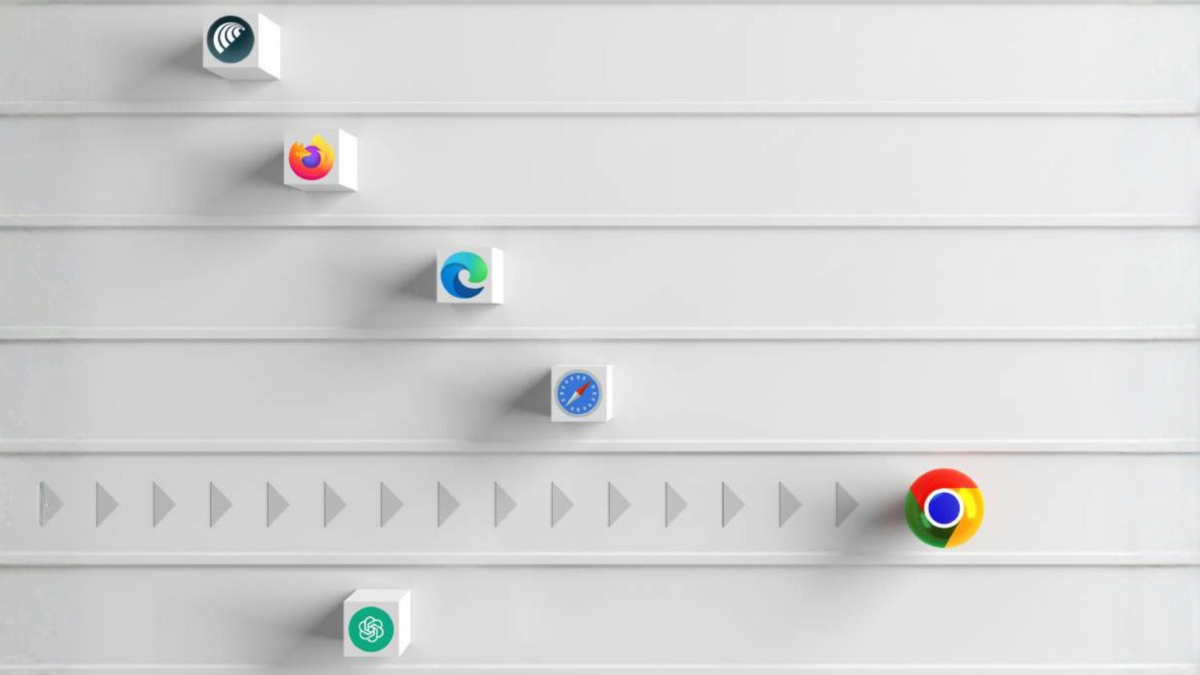
In the past year, Google’s dominance in this arena has been challenged by Al-powered engines including Microsoft-backed OpenAl’s ChatGPT, Perplexity’s Comet, as well as social platforms like Reddit and TikTok.
Since 2015 Google has had above 90% of the global market share in search, according to Statista. In Q4 2024, it dipped for the first time to 89.7% and hovered around this for the majority of 2025 – before recovering to 90% in October 2025.
But with Adobe acquiring SEO and analytics platform Semrush; OpenAl launching Atlas – both towards the end of 2025; and Meta rumoured to also be building an Al-powered browser, the search space is only set to become more competitive in 2026.
Changing strategies
So what does all this mean for affiliates who have relied on traditional SEO and PPC strategies?
These new Al-powered browsers are not only “changing the way people search, but also retrieving information”, says Jesper Harbers, data and strategy director at digital marketing agency 8MS. He notes it is important for marketers to understand that Al search is not necessarily the same as Atlas or agentic browsing, which “actually does a lot of the ‘thinking’ for you”.
“The traditional SEO principles like trust, reputation and relevance still matter, but users will interact differently with more conversational queries,” adds Harbers.
That is partly because many of the new browsers use what Google has defined as credible and
relevant as their benchmark. But Atlas goes one step further in that “you get Google search results” when you do a search using the browser, explains Michael Norris, chief marketing officer at Youtech – a digital marketing shop.
Norris describes Atlas’ interface as being very similar to Chrome, including some of the buttons being in the same place. The big change is there is the option to also ask ChatGPT anything and it just looks at your screen.
“Chrome has something similar with Gemini, but I found the ChatGPT version a lot better,” he believes. “The ChatGPT [Atlas) browser also has agentic capabilities – I can start doing something then just ask it to take over, and it will. Google Chrome does not have that yet.
“But the thing that really gets me is when you search in Atlas – you’ll get the ChatGPT answers to your questions, similar to Google’s Al Overviews – then you get Google search results, which actually simplifies SEO.”
‘Al is giving search superpowers’
Ahead of the release of ChatGPT-5 in August 2025, there was speculation that OpenAl moved away from using training data and synced up with Google. The launch of Atlas confirms this, claims Norris.
If Atlas is simply scraping Google search results, it begs the question of whether OpenAl’s new browser is redundant.
Currently, the allure of Atlas is the ability to use ChatGPT at the same time. Perplexity’s Comet works slightly differently – it is more of a personal assistant that you can link up with emails, calendars and optimise meeting notes.
For marketers, following Google’s recently updated SEO guidance, which gives publishers insights into the type of content that performs best when users are asking longer and more specific questions with its AI tools, could be one way to navigate the evolving search landscape.
The tech giant confirmed to Affiliate Leaders that it is incorporating the latest AI features, including built-in Gemini and agentic browsing capabilities, into Chrome. Its goal is to provide the fastest, safest and most helpful browser in the world.
Google acknowledges that “AI is giving search superpowers”, therefore it is focused on building a search experience that highlights the web – not just links or answers. AI Overviews and AI Mode uses the firm’s core search ranking systems and the links included in these search results are dynamic, changing based on information that is most relevant, helpful and timely.
So, the million dollar question: can any of these new players truly disrupt the Alphabet-owned company’s dominance?
“Nobody can really predict what the future in search may hold,” Harbers says, “especially since there are now rumours that OpenAI is going public at a $1 trillion valuation. But there is now more diversity than there has been and that is something we follow closely. We look at the stats on a monthly basis to see if there are any shifts in user behaviour – especially the younger generation as they are quicker to adopt new technology.”
Norris agrees, adding that he’d be “very surprised” if Chrome was unseated as the top browser. “Its market share is still extremely high and I think the best any of these other browsers can hope for is to just chip away at that little bit and over time slowly start to gain some traction,” he says.
The click-through era is dying
Then there is the ads side of the business. OpenAI is supposedly planning to introduce ads in ChatGPT, with reports claiming there is code showing testing on different types of ads has already begun. However, CEO Sam Altman declared a ‘code red’ in December, telling employees to improve ChatGPT first, which could delay the rollout of initiatives in the pipeline such as ads.
Perplexity has also been experimenting with ads in its AI services and has already got some brand and agency partners on board, including, Whole Foods Market, Universal, McCann and PMG. The company wrote on its website: “Ads will appear in the US to start and will be formatted as sponsored follow-up questions and paid media positioned to the side of an answer.”
Both these could be a serious competitor to Google and take a share of its search ad model. However, Google’s Q3 earnings report showed its search ad business grew by 15%. AI Overviews and AI Mode contributed to drive more search queries, with AI-related queries doubling from Q2 2025 and usage accelerating throughout Q3 to more than 75 million daily global users. And paid clicks and CPCs were both up 7% year-on-year in search.
At the time of writing, the tech giant is reported to be releasing Gemini 3 in late 2025 or early 2026. And with dominant large language models (LLM) like ChatGPT ultimately using Google, it provides a “sense of security” for SEO marketers to focus primarily on “optimising for Google updates”, says Norris.
However, with the emergence of AI-powered conversational engines, the era of clickthroughs is dying. The traditional affiliate marketing model has been built on the click-through principle, which may be why it is important for marketers to have an omnichannel approach and “integrate on platforms like YouTube and Instagram as well as AI search”, notes Harbers.
“Its become a lot more important for those teams to work together and have a cohesive strategy as they no longer work in isolation,” says Harbers. “And within that, measurement, because if you’re looking at whether something is a search engine result page or AI search, then you get to know where these touchpoints are.”
Norris echoes a similar sentiment warning that while there’s not going to be a “catastrophic massive change in user behaviour overnight, affiliates should expect to see less site traffic year-on-year”. Therefore affiliates “need to start looking at these things through a different lens”.
As the research is now done outside a brand or operator’s website, it is becoming much harder to track. So for where affiliates can no longer use a urchin tracking module (UTM) because users are not clicking though, Norris suggests using an offer code, as that would “allow you to continue having the same measurement capabilities”.
“Measurement will be paramount,” he explains, “you have to find a solution that’s going to be measurable. But for the industry [adland] as a whole, we have to get used to working with less data than we have been.”
The game is changing and affiliates need to ride the storm if they want to remain relevant.