



Christian Lee does a deep dive into the agentic AI movement, looking at what affiliate marketers in gaming can learn from the retail sector.
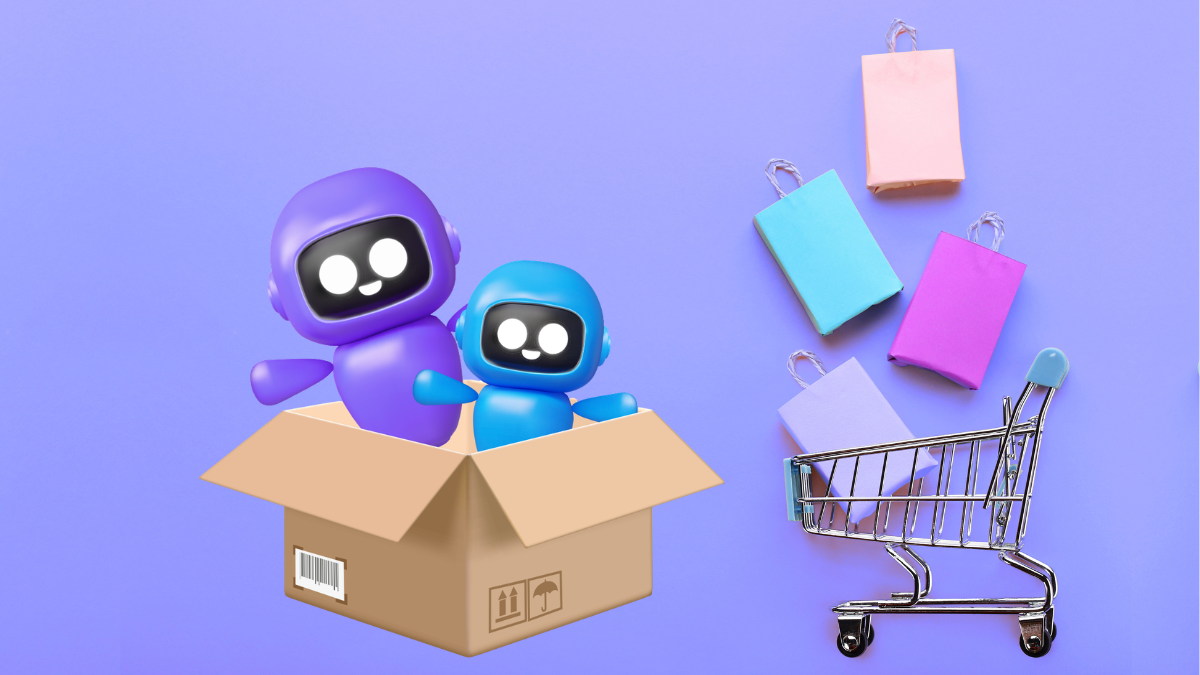
Imagine a world where everyone has a personal shopper at their fingertips, ready to not only facilitate processing, but also offer suggestions and price comparisons.
With the power of AI agents continuing to escalate, this now appears to be closer to reality as tech giants such as OpenAI and Amazon unveil their own AI-led shopping experiences in the form of Rufus and Instant Checkout.
While this streamlining may sound like heaven for those who can often be overwhelmed by the myriad of choices on offer for something as simple as a pair of blue jeans, what does it mean for affiliates?
As a sector that traditionally relies on clicks and rankings, removing steps from the retail experience presents a significant challenge.
“It’s the biggest risk and opportunity I think in the space,” Dom Coleridge, commercial director at Scale Digital, tells Affiliate Leaders. “Nobody knows the true answer yet as to how we can manipulate [these engines] in some way to work with us.”
Although it appears to many to be a whole new world, Coleridge emphasises that in some ways, the challenge remains the same.
Louis Venter, chief executive of MediaVision, is in agreement that a major shift is now taking place in marketing.
“Visibility isn’t just about ranking on Google, but about being understood and surfaced by intelligent systems,” he says. “Marketing strategies must evolve from linear funnels to dynamic ecosystems where content, real-time demand data, and highfidelity authority signals work together to feed AI models the right information.”
“We’re competing for people’s leisure time, so you have to make it sexy enough for them to still engage with your brands”
Cristian Barbosa, the COO and co-founder of InsightPlay.ai
It’s ‘just a matter of time’ for gaming
The challenge now for affiliates and marketers is working with the shift in user experience and user interface brought about by agentic shopping and the wider integration of AI.
As Cristian Barbosa, the COO and co-founder of InsightPlay.ai, notes, consumers are now coming to expect that anything on the internet is viewed through a “personalised assistant” type of conversational UI/UX.
“If big companies like Amazon are making this type of effort in implementing this transformational UX shift with an AI agent to interact with their customers, I would be doing the same thing if I were an operator, a media company or an affiliate,” he elaborates.
“Regardless of the fact that if these tools are super ready to use right now or not, I don’t believe that’s the question. With the rate of iteration of AI solutions in general, it’s just a matter of time before it’s actually very usable for end consumers.”
However, the gaming industry also has another layer to consider.
Although any bet is a transaction, the act of gambling is also a form of entertainment, meaning the sector faces the challenges posed by innovation in retail, but also the infinite forms of entertainment competing for the attention of consumers’.
“It’s not just replicating the same formula as e-commerce or fintech,” reiterates Barbosa. “We’re competing for people’s leisure time, so you have to make it sexy enough for them to still engage with your brands.”
So what does the future hold? What will retail and gaming look like for the next generation of consumers?
Venter says: “Retail will become increasingly predictive, personalised, and passive. Consumers will expect AI to anticipate their needs and make intelligent recommendations based on context – what they like, when they buy, even their mood.”
For Barbosa, it will be all about using AI agents to reduce clicks. He paints a world akin to the early days of bookmaking where a punter would call and place a bet over the phone.
“Your personal assistant will have a name, remember your name, remember your betting preferences and have day-to-day engagement with you.
“It’s a matter of not only having those agents interact with you within the sportsbook or within the casino, but also outreach and call you in the middle of the game or interact with you either through telegram or WhatsApp to tell you how your bet is going, if you want to get out of your bet early or double down,” he explains.
Reducing clicks may be a ‘scary prospect’
Martyn Hannah, founder of Comparasino, is in agreement that AI could be used to assist players and navigate this sometimes complex industry.
“From our point of view as an online casino comparison site, AI could be used to help players find brands that offer exactly what they’re looking for in an online casino or bonus.
“In the UK market alone, there are hundreds of sites for them to play at, each offering something different when it comes to bonuses, payments, games, payout speeds and rewards. Finding an online casino that matches with your preferences is easier said than done,” he says.
While reducing the need for clicks may well be a scary prospect, it doesn’t need to be, Barbosa continues. An affiliates’ core audience remains, so it is now about how to tap into what they need.
“There is a lot of value and a lot of modes for affiliates in terms of how they can get their current native audiences and transform that into personalised experiences,” he explains.
“It’s about knowing your audience, building those agents for your specific audience so that every user that gets to your website gets the value that they’re actually looking for.”
The sentiment of everything changes, but at the same time remains the same, suggests Coleridge.
Although he contends that simple purchases such as a pair of socks may be facilitated by one or two prompts, more considered purchases, such as flights, will still require greater human interaction.
He adds that people may start to become more conscious of making their own choices if AI agents begin to only offer one option.
“If you’re just giving someone one option because it’s the only thing that’s allowed, I think people would naturally go, ‘I don’t like that’. They would go back to Google, or use Instagram, TikTok or other platforms,” says Coleridge.
“The future belongs to those who can react first and activate seamlessly, across SEO, content, and PR”
Louis Venter, chief executive of MediaVision
AI assistants offers opportunities
Comfort is often the enemy of innovation, and Coleridge also suggests that some of the biggest opportunities may be on offer for niche companies that may have been overlooked while affiliates previously stuck to tried and tested strategies.
“There’s a lot of partners that offer good stuff that never gets tested because the brand just says I haven’t got a budget for it. But if they did try it once they’d probably have a longer term partnership with it,” he explains.
What is increasingly clear is the brands that move first to address this new normal will be best placed to take advantage of the AI agent boom as consumers embrace a new kind of shopping experience.
“Success is no longer about getting a user to click a link; it’s about being the trusted, definitive product recommended by the AI agent that is orchestrating the purchase. The future belongs to those who can react first and activate seamlessly, across SEO, content, and PR,” says Venter.
“Brands that start preparing now – optimising product copy at scale, building out collections to target query fan out, structuring their data, refining content signals, and understanding how AI systems interpret authority – will be far better placed when this becomes mainstream.”
Although there must be caution, warns Hannah, especially in an industry like gaming which is bound by a somewhat unique level of regulation in many aspects, the opportunity to integrate AI assistants offers opportunities for affiliates and operators to foster stronger links.
He concludes: “Allowing players to use their AI assistant to more easily discover online casinos and bonuses that hit the mark feeds into how we could use it as a comparison site.
“For operators, this would lead to more quality referrals from their comparison site partners, as the player would arrive at their brand knowing it was a good match and not ultimately being disappointed because they can’t deposit with Google Pay despite thinking they could.”