




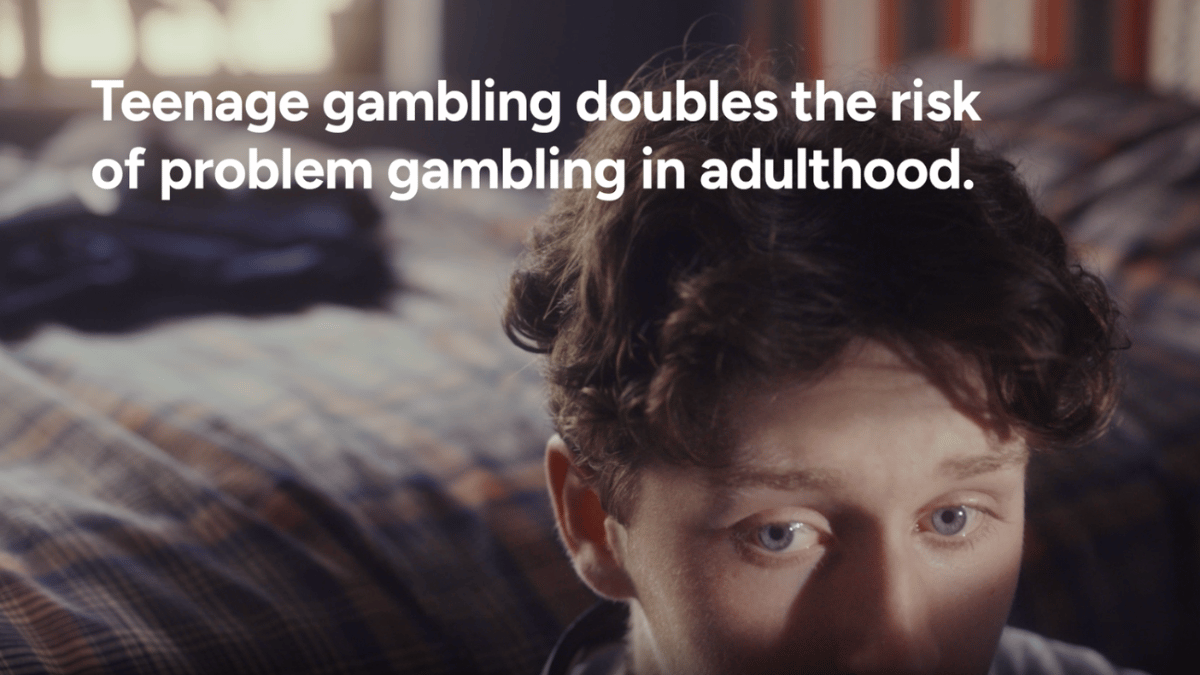
The ad addresses some of the signs that could help parents spot signs of a gambling problem.
The Gambling Regulatory Authority of Ireland (GRAI) has launched a campaign to encourage parents to be vigilant against children exposed to gambling harm.
The campaign looks to tackle signs of gambling harm among young people and help parents spot the signs early on, allowing them to intervene.
Produced in partnership with the Health Service Executive (HSE) Addiction Services, the ad features a teenage boy clearly struggling with a gambling problem. The boy’s mother (presumably) is concerned, but seems unsure at the root cause of the issue.
The ad points out that an issue with gambling in a teenager doubles the risk of problem gambling in adulthood – and urges parents to “read between the lines to spot the signs”.
Anne Marie Caulfield, chief executive of the GRAI said: “We have launched this campaign to help parents start an important conversation about the risks of underage gambling. Children and young people are among the most at-risk members of Irish society when it comes to gambling exposure and harm. Children’s brains are still developing the judgement and impulse-control systems used to weigh up risk, which makes gambling appealing to them.
“With online gambling available at any time of the day, it is easy for the warning signs to be hidden. The guidance the GRAI developed with the HSE Addiction Services sets out some of the key behavioural signs to look out for in your child.”
Leaders take
The ad clearly addresses the stigma for young people around gambling, and the difficulties they often feel telling their parents or guardians.
It also identifies the isolating nature of a gambling addiction by addressing some of the tell-tale signs such as self isolation, a lack of sleep, and borrowing money.
Research from the GRAI revealed that problem gambling is an issue for one in 30 adults in Ireland – with the men under thirty most at risk. This is a hard hitting ad, that should help drive awareness and help towards addressing a serious issue before it becomes a long-term problem.